Subscriber Exclusive
Essential Guide to Shawl Shapes: Techniques and Creative Construction
Learn which shawl shape gives you the drape, wrap, and styling options you love most.
Learn which shawl shape gives you the drape, wrap, and styling options you love most. <a href="https://farmfiberknits.com/essential-guide-to-shawl-shapes/">Continue reading.</a>
https://farmfiberknits.com/cdn-cgi/image/format=auto/https://www.datocms-assets.com/101500/1747767584-9562zucker_10090924.jpg?auto=format&w=900
Wearing shawls is de rigueur at every fiber fest and knit night these days. With the diverse styles, shapes, and constructions out there, the humble shawl has been imagined and reimagined a thousand ways. They are so fun to knit! And shawls provide an opportunity to use a precious or unusual yarn and to play with lace, texture, and creative construction methods.
What is your favorite shawl shape? I love a long, shallow triangle that can be wrapped like a scarf around the neck. But narrowing down to just triangles isn’t enough—because triangular shawls can be knitted a multitude of ways—top-down, side to side, bottom up, and so on. The same is true for other shapes.
What do shape and knitting direction mean for a shawl? Let’s take a look at some examples in the Farm & Fiber Knits library.
Knitting a Triangular Shawl
One of the most common modern shawl shapes, the triangle requires shaping in pattern. This takes clever design work.
The Top-Down Triangle
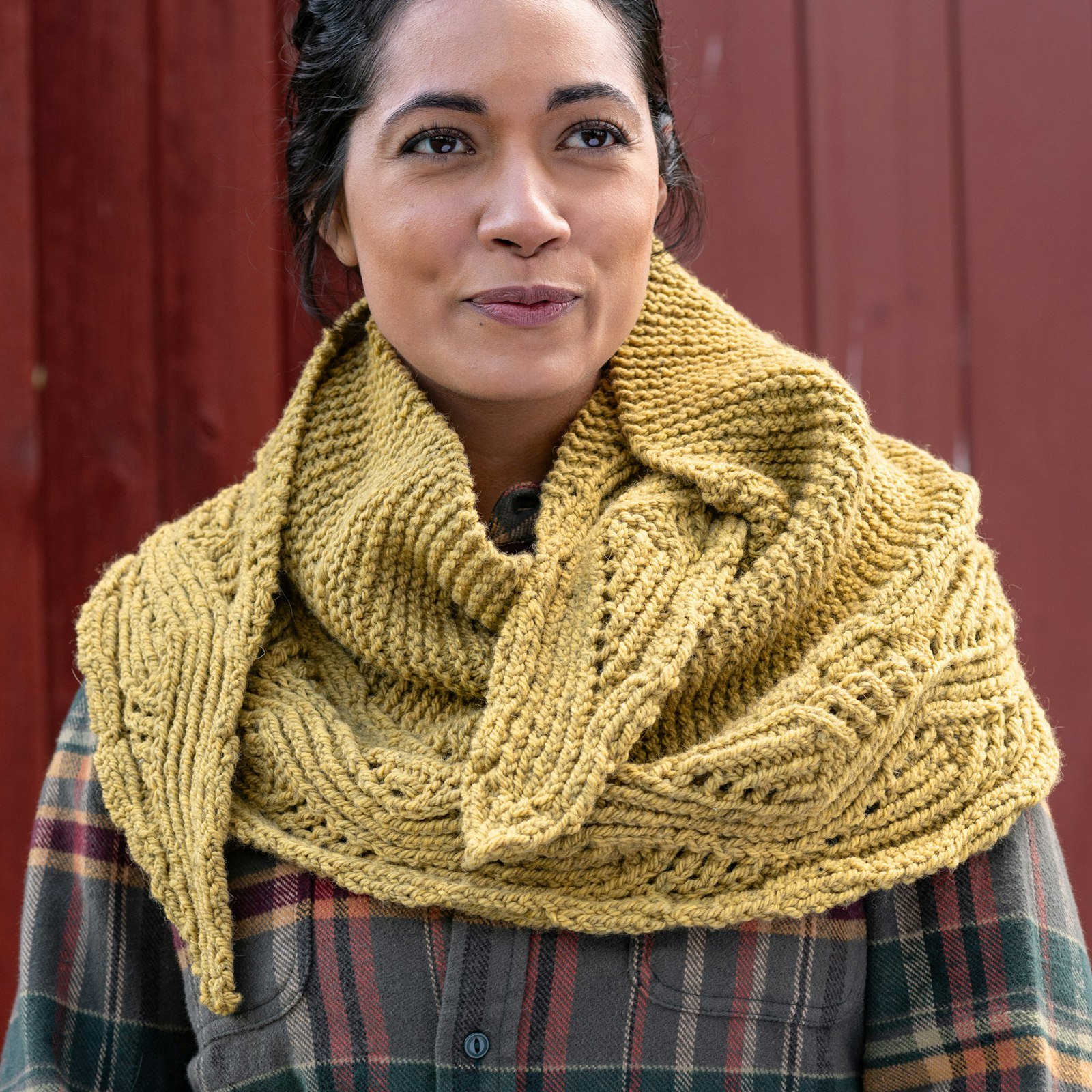
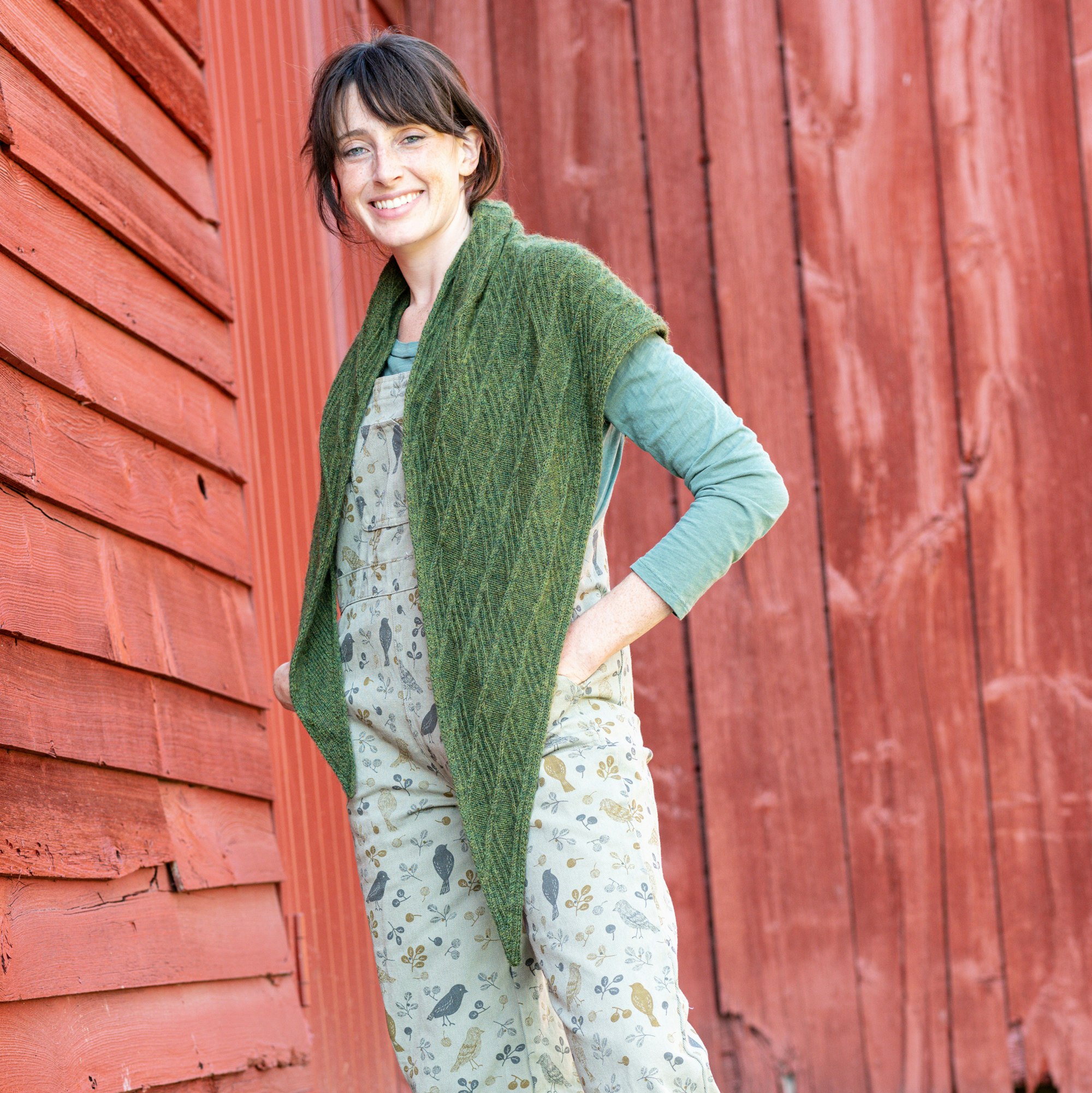
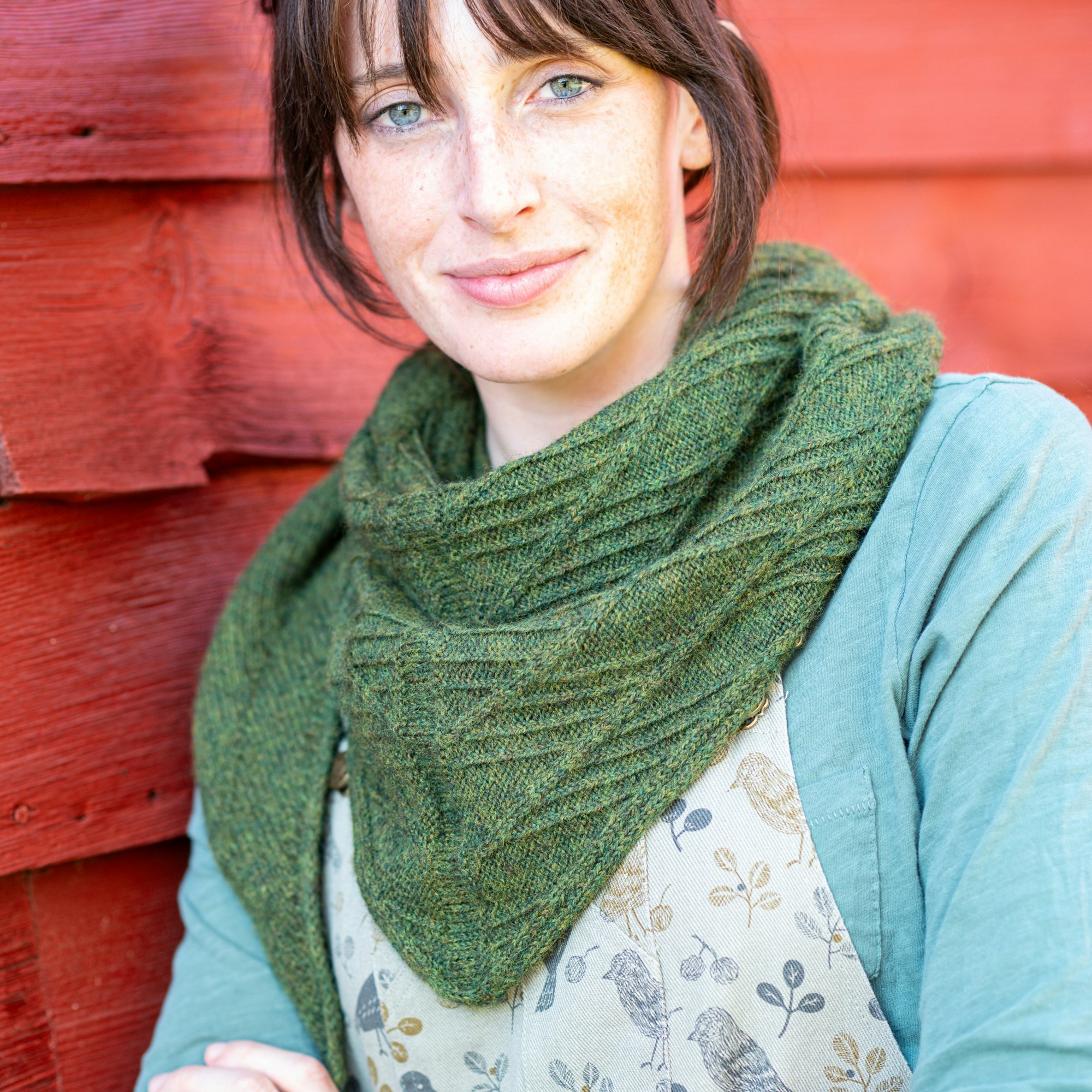
A super-clever construction method here is the top-down triangle, which is worked from a few stitches starting at the top, long edge of the triangle. Here are two examples worked this way: The Chameleon Shawl and Coco’s Wrap. (Find links for all the patterns at the bottom of the page.)
SUBSCRIBER EXCLUSIVE
Wearing shawls is de rigueur at every fiber fest and knit night these days. With the diverse styles, shapes, and constructions out there, the humble shawl has been imagined and reimagined a thousand ways. They are so fun to knit! And shawls provide an opportunity to use a precious or unusual yarn and to play with lace, texture, and creative construction methods.
What is your favorite shawl shape? I love a long, shallow triangle that can be wrapped like a scarf around the neck. But narrowing down to just triangles isn’t enough—because triangular shawls can be knitted a multitude of ways—top-down, side to side, bottom up, and so on. The same is true for other shapes.
What do shape and knitting direction mean for a shawl? Let’s take a look at some examples in the Farm & Fiber Knits library.
Knitting a Triangular Shawl
One of the most common modern shawl shapes, the triangle requires shaping in pattern. This takes clever design work.
The Top-Down Triangle
A super-clever construction method here is the top-down triangle, which is worked from a few stitches starting at the top, long edge of the triangle. Here are two examples worked this way: The Chameleon Shawl and Coco’s Wrap. (Find links for all the patterns at the bottom of the page.)[PAYWALL]
Click on any of the images in the galleries below to open them in full-screen mode and to learn more.
In this shape, after a clever start (including picking up stitches along the cast-on edge to create a multi-directional foundation), you increase at 4 points across the rows, shown as 1, 2, 3, and 4 on this diagram:
 Illustration by Angela K. Schneider
These increases serve to create two triangles that expand from the top outward, on either side of a central spine (marked here with dots). The final rows and bind-off occur across the long bottom edges of the triangle(s). This orientation gives the knitting a diagonal look, which is lovely when decorated with lace or other stitch patterns.
The top-down triangle makes a fairly deep shape, by the time the “wings” are long enough to wrap the upper body. If you prefer a shallower triangle, I have an option for you!
The Side-to-Side Triangle
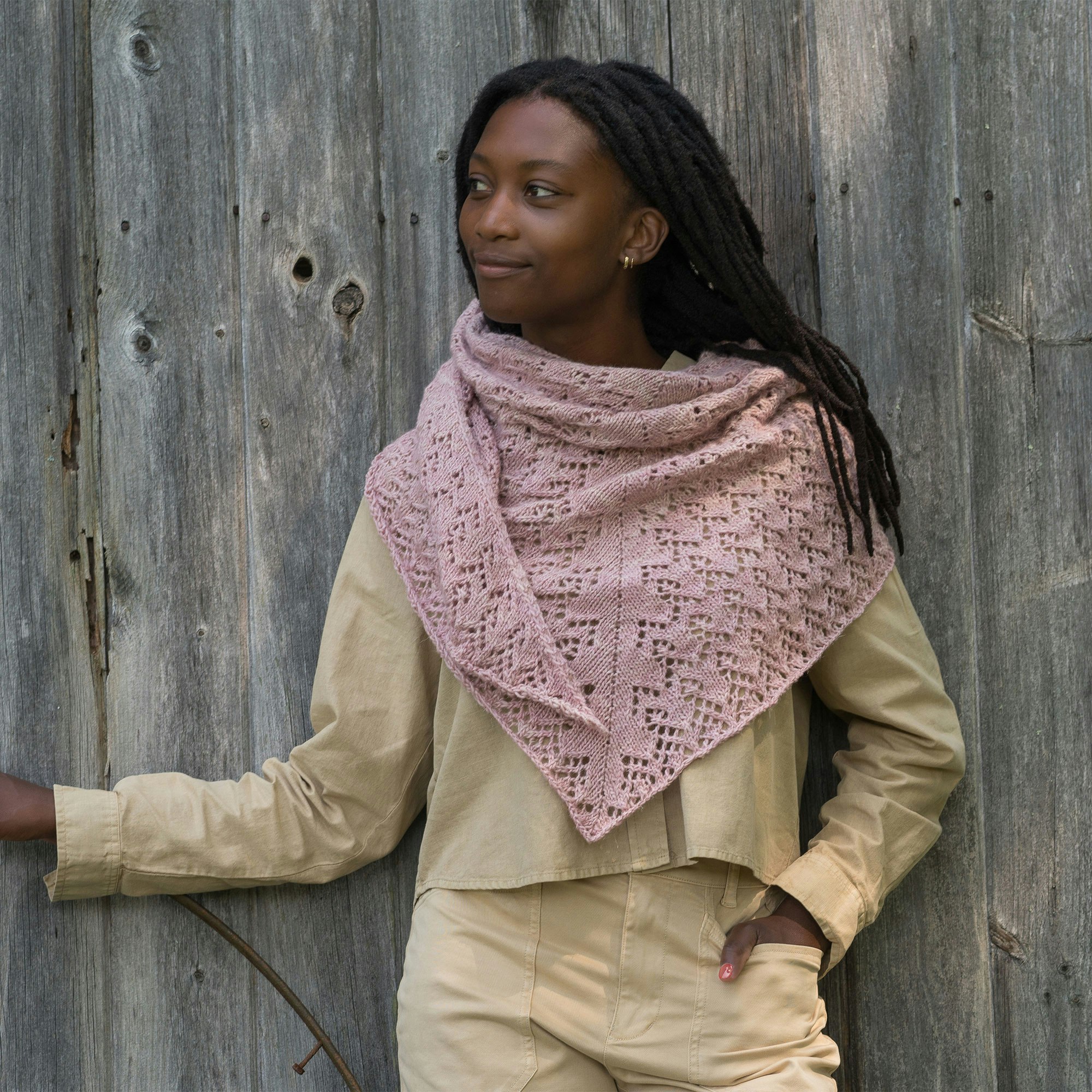
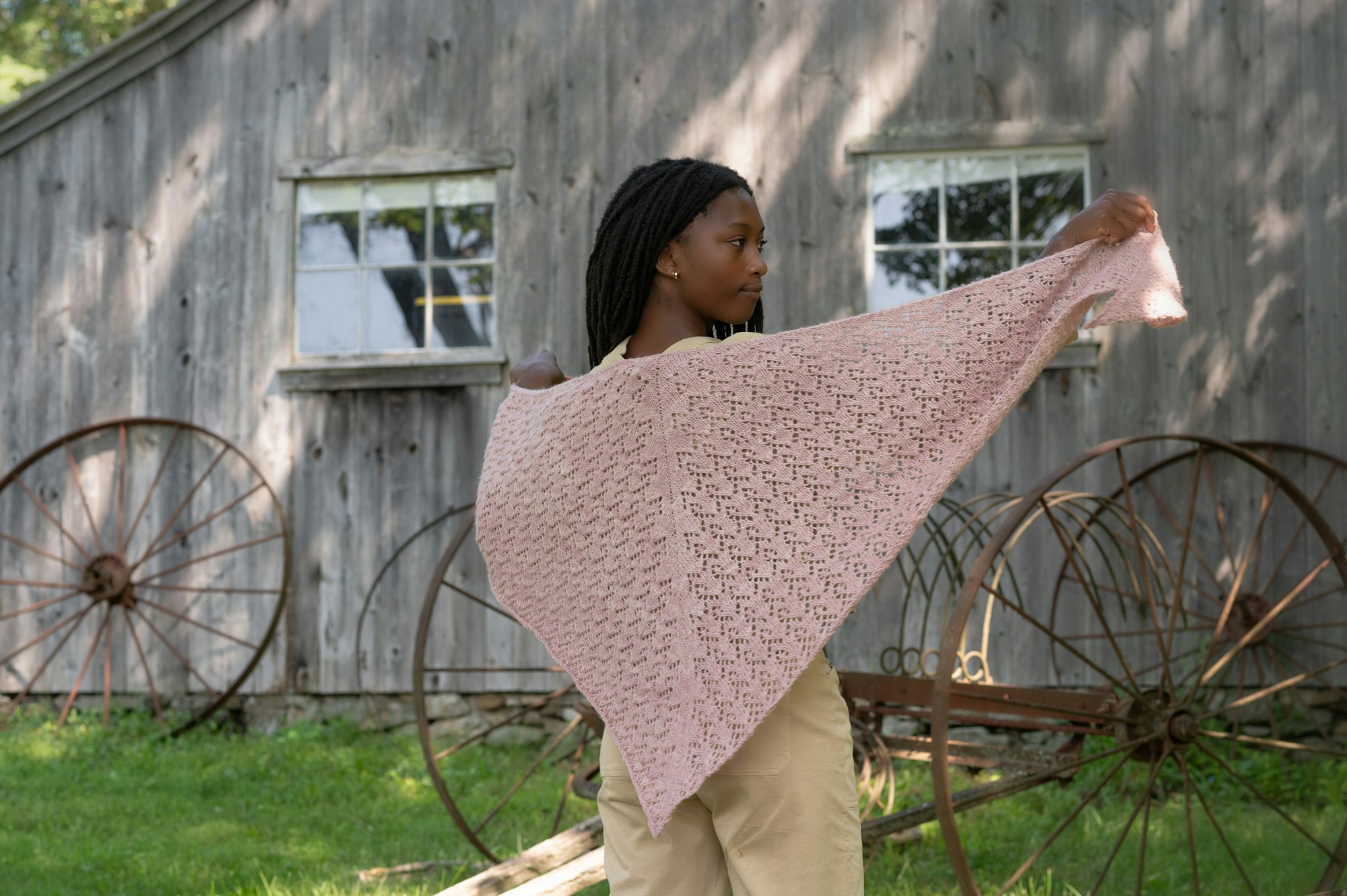
By starting at one corner and working a triangle sideways, you have a lot more control over the shape and depth-to-length ratio. Take these two elongated triangles, the Gelso Shawl and the Turnout Shawl.
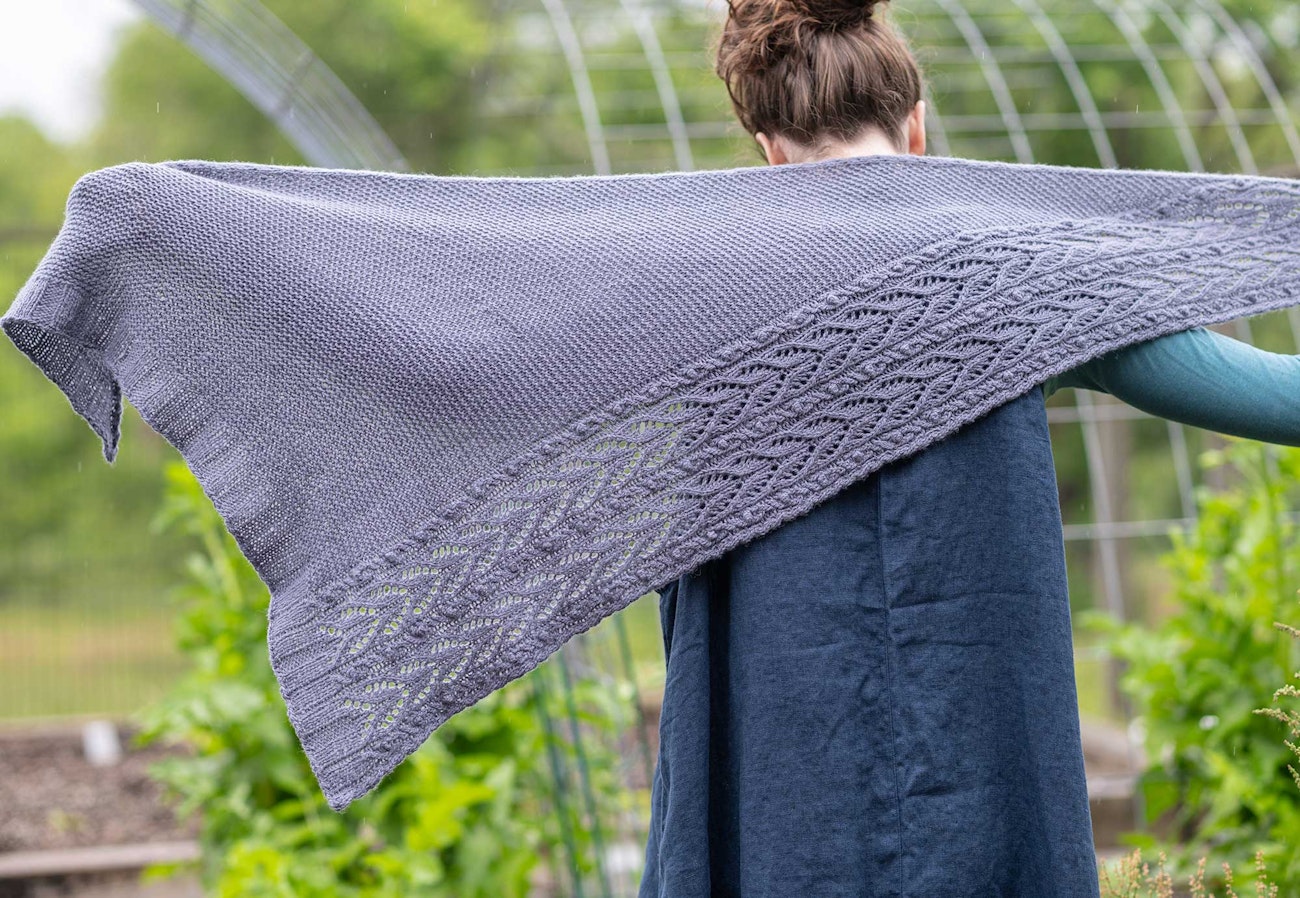 The Gelso Shawl is a triangular shawl, worked from the narrow tip to full width and knitted in Tibetan wool spun in Italy. First, the lace section is established, and then a garter-stitch section expands to form the body of the shawl.
The Gelso Shawl (above) starts at the pointy tip and is worked sideways to the wide end, creating an asymmetrical look when wrapped. This shaping requires steady increases throughout. Meanwhile, the Turnout Shawl starts with a tip, increases to the width of the triangle, then decreases back to the second tip. These are different shapes and methods that create highly wrappable triangles with intriguing stitch orientations.
Knitting a Crescent Shawl
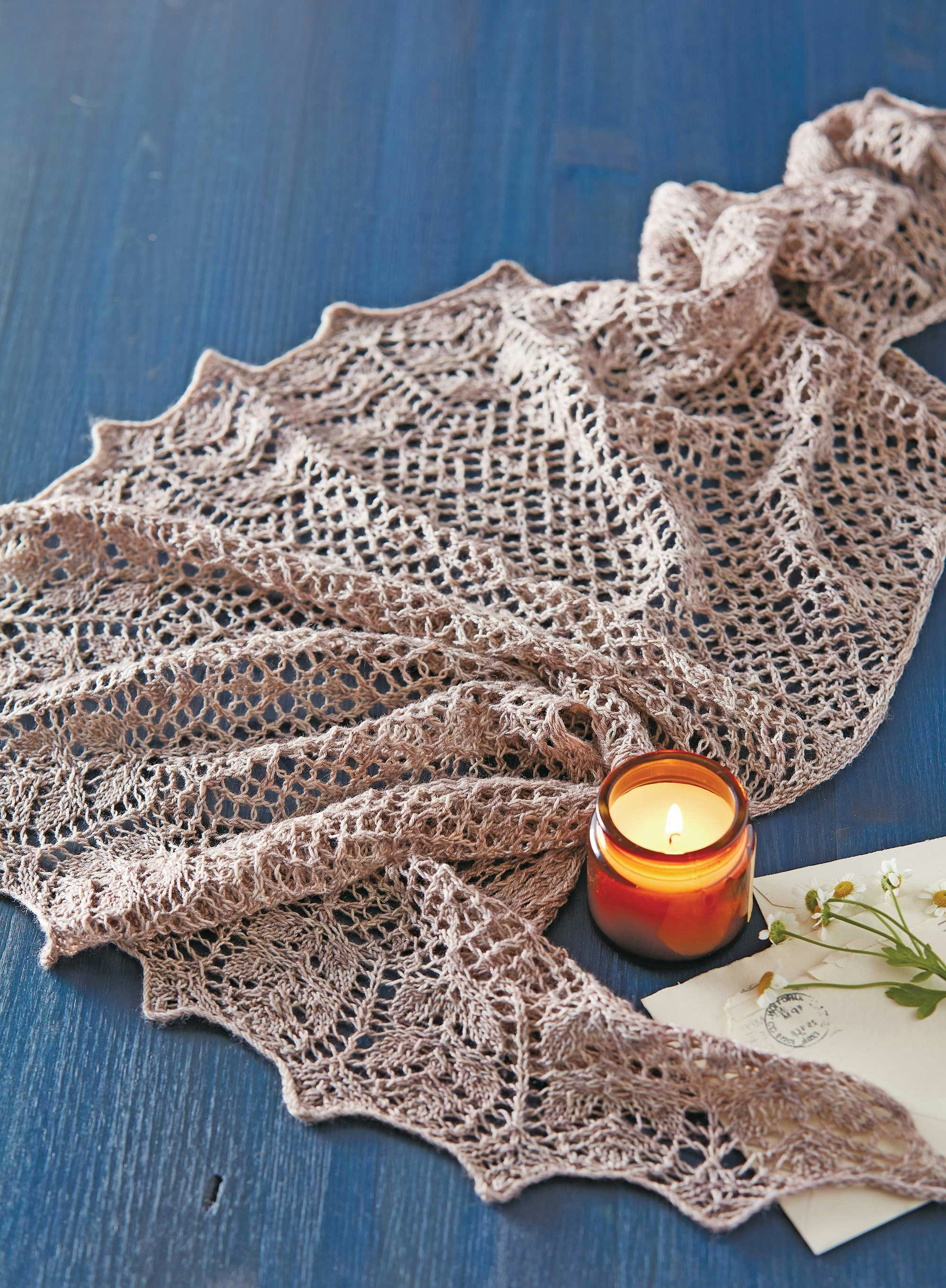
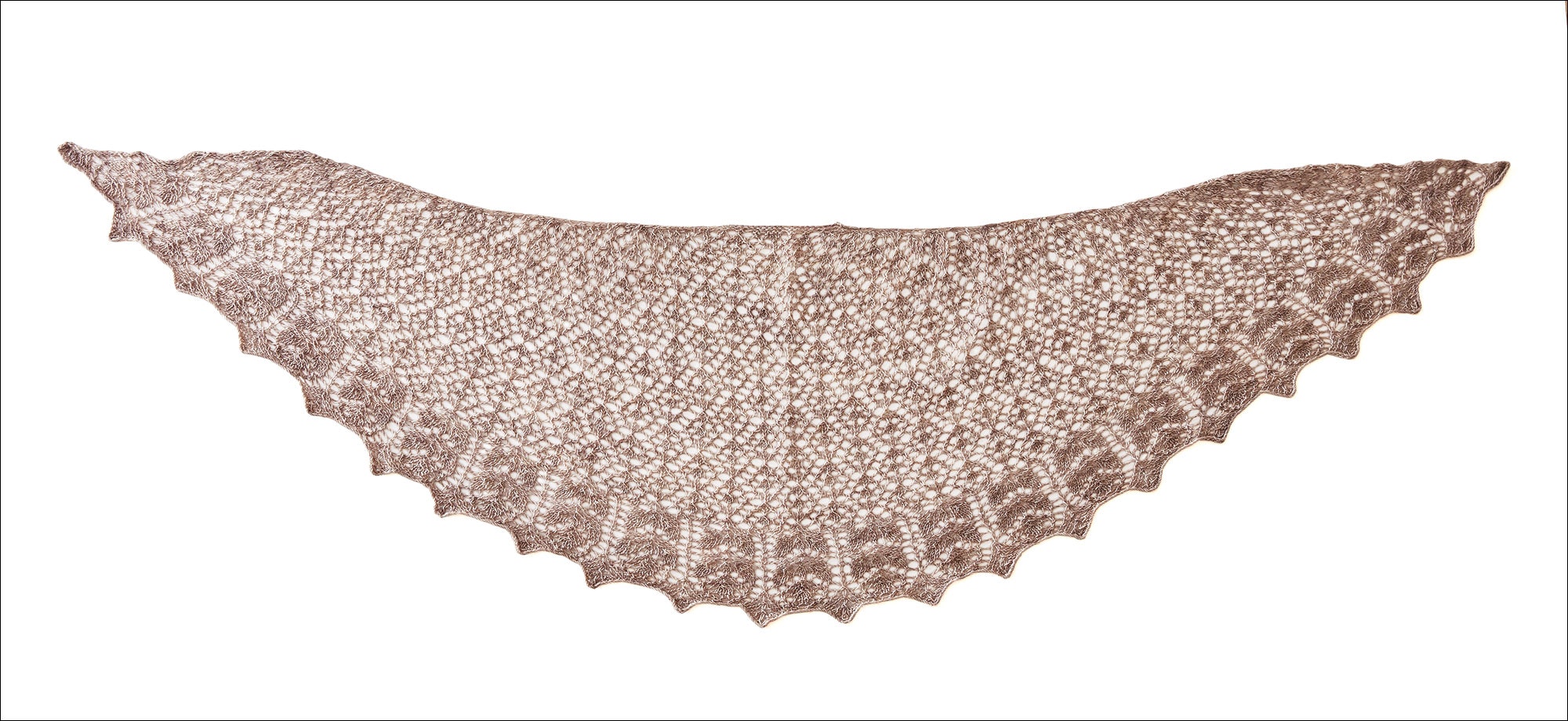
A crescent is a lovely, graceful option, and this shape does tend to be shallower in knitting patterns. Shallow = higher wrappability in my opinion! Here, A Shawl Based on a
Weldon’s Veil Pattern to Knit (below) is worked bottom-up, featuring decreases at the side edges.
The Colubrida Wrap is worked sideways, and is almost a triangle—but an even section in the middle, edged with the wide border, softens what would be a point into a rounded edge. Hence, the Colubrida is a crescent.
 The crescent-shaped Colubrida Wrap is worked from end to end and combines a serpentine lace border with a garter-stitch panel of graduated width. It is tapered at head and tail with increases and decreases worked into the lace pattern.
Knitting a Rectangular Shawl
The rectangle can also be called a stole—or a wide scarf, I suppose. This is the simplest shape and can be worked four basic ways: top-down, side A to B, side B to A, or bottom-up. A stole could also be composed of modular pieces, which is sort of how the Bluebell Flames Shawl is worked.
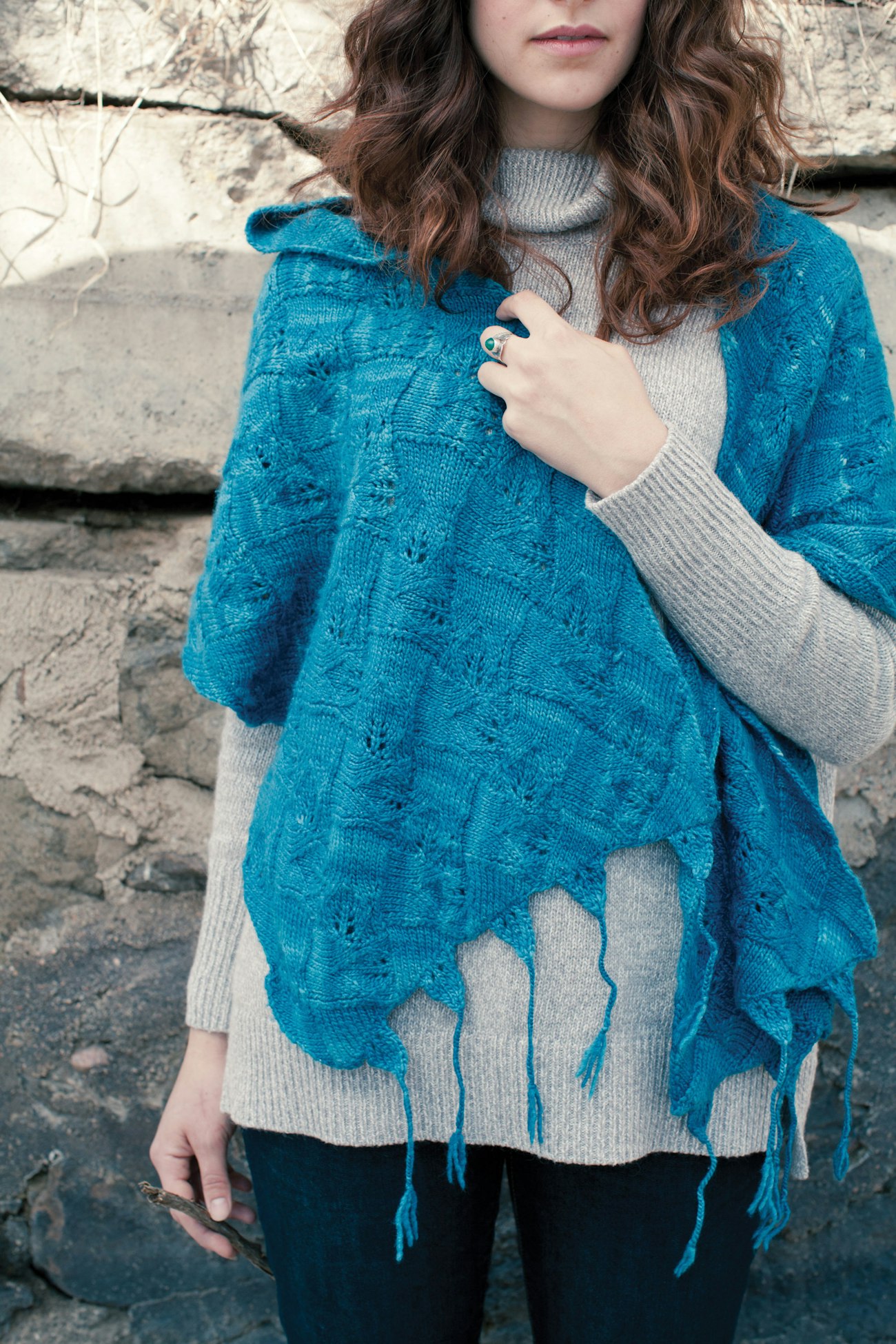 The patchwork effect of entrelac often provides a canvas for color-changing yarns, but designer Hannah Poon uses the technique’s back-and-forth rhythm to add a sweet and subtle lace motif to this generous Bluebell flames wrap. Photo by Nathan Rega
Worked in entrelac, this rectangle features knitting that moves in various directions due to the nature of the stitch pattern itself. Entrelac creates a series of blocks that build on each other, and is easiest worked in rectangular profiles like this shawl. The Bluebell Flames lets the pattern do all the work of creating interest here.
Knitting Your First Shawls
If you’re newer to knitting, I would recommend a basic rectangle for your first shawl, perhaps worked in garter stitch or a simple lace pattern. Cast on at one narrow end, knit the length of the shawl, then bind off. This eliminates the complexity of shaping in pattern.
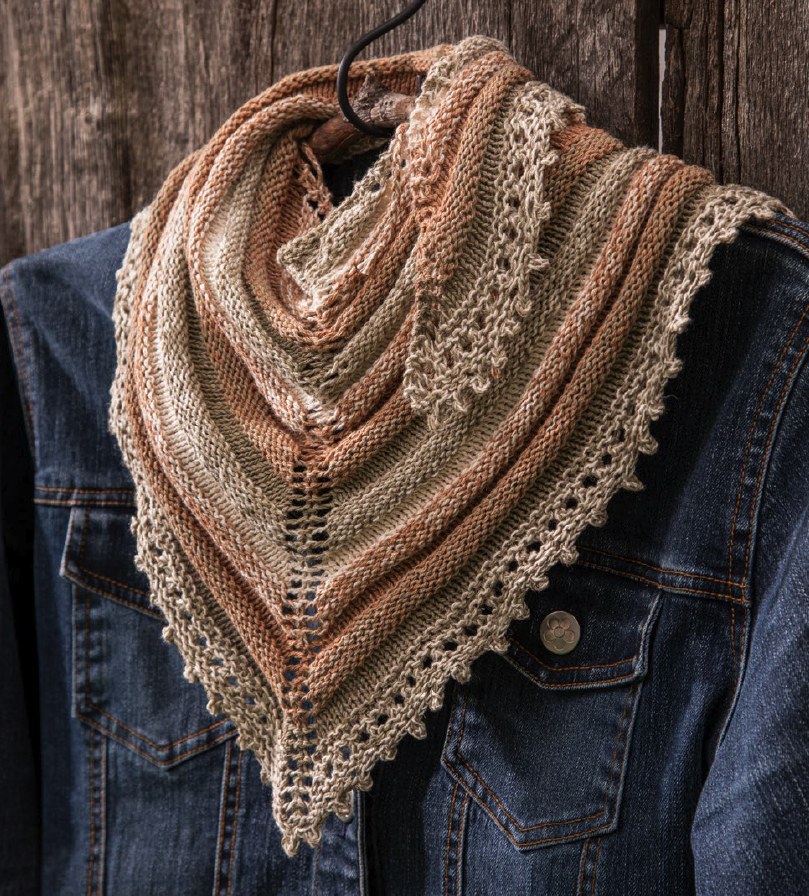
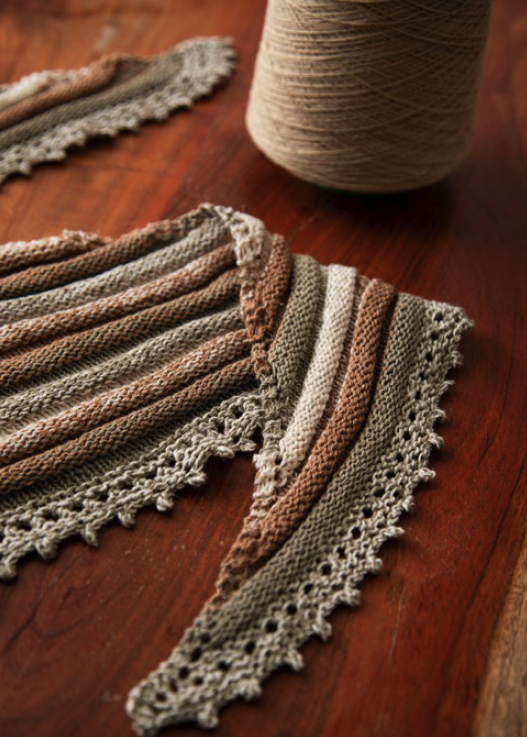
For something a little more advanced, Kate’s Simple Shawl is a great option. This elongated sideways triangle is worked mostly in garter stitch, with a lace edging for interest, and simple shaping.
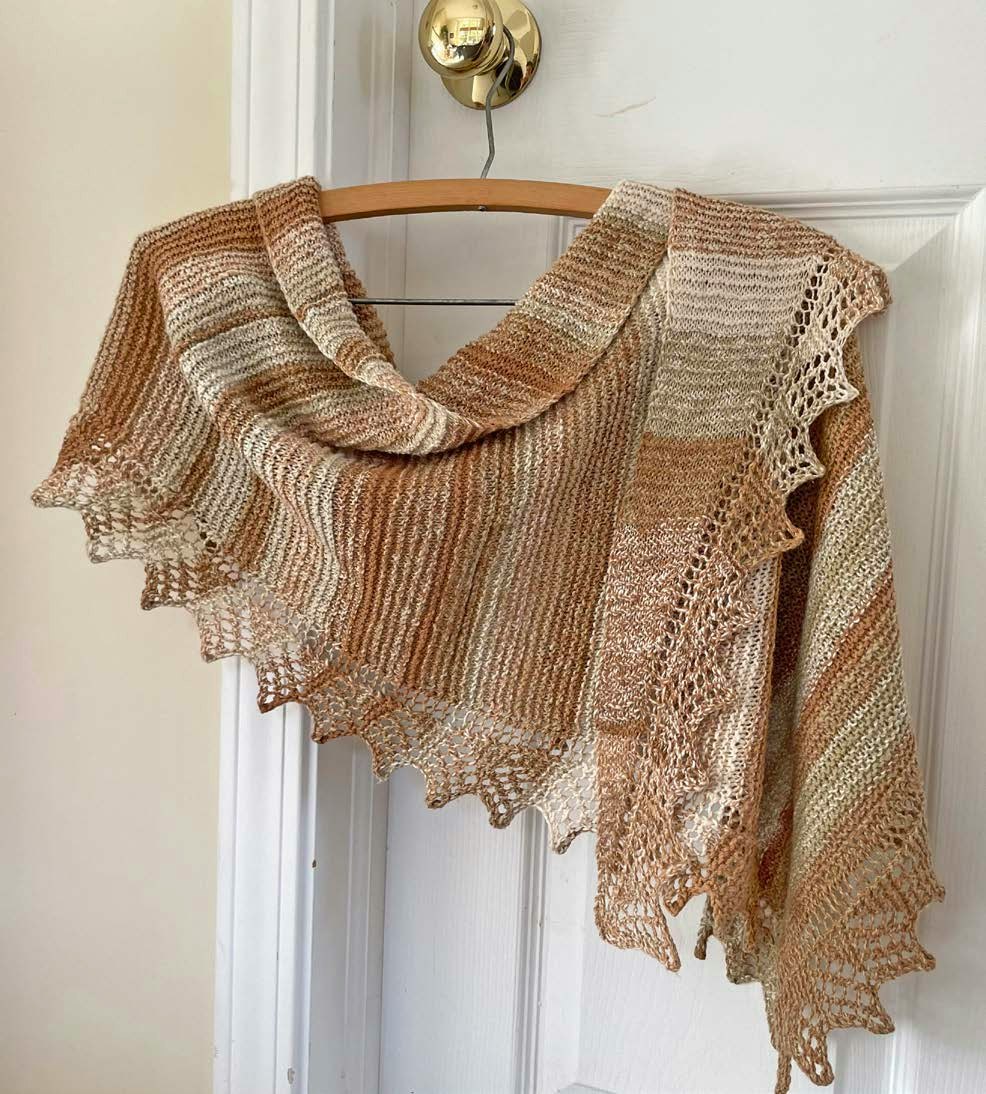 Kate's Simple Shawl pairs a basic asymmetrical garter triangle with an attached lace edge. Photo by Kate Larson
Other Shawl Options
There are other shapes out there in knitworld—circles, polygonal shapes, ponchos, and more. You can add borders and fringe to shawls. Fringe is one of those yarn techniques that looks super cool, but is not fun to make in my opinion. And it takes a lot of yarn!
What about yarn for shawls?
Since a shawl is meant to wrap, I recommend drapey yarns worked at a relaxed gauge. Wool such as Merino or its competitors and alpaca blends are all lovely options for knit shawls. Choose a needle size one to two times larger than you would usually choose for the yarn, especially if you’re knitting lace.
I look forward to seeing your shawly shoulders out there,
—Lisa
Resources
Patterns
Triangle, top down:
Triangle, sideways:
Crescents:
Rectangle:
Other: