
Subscriber
| Project Type | Shawls |
|---|---|
| Collections | Farm & Fiber Knits Fall 2026 Collection |
| Yardage | 660 |
| Fiber | Wool |
| Weight | Sport |
| Author | Kate Larson |
| Format | Project/Pattern |
| Additional Items | Download Flyer |
This requires a 'Farm & Fiber Knits Subscription' to view. Log in to access or subscribe today to unlock all of the premium content available.
LoginThroughout most of human history, cloth has been so valuable that it has been used up, worn out, repurposed, and worn through again. Linen rags were reborn as clean sheets of high-quality paper. Woolen cast-offs could be shredded into loose fiber, known as shoddy, and then blended and respun. Recycled yarns are not new, but it is exciting to see so many of them available today, allowing knitters to connect to resourceful roots.
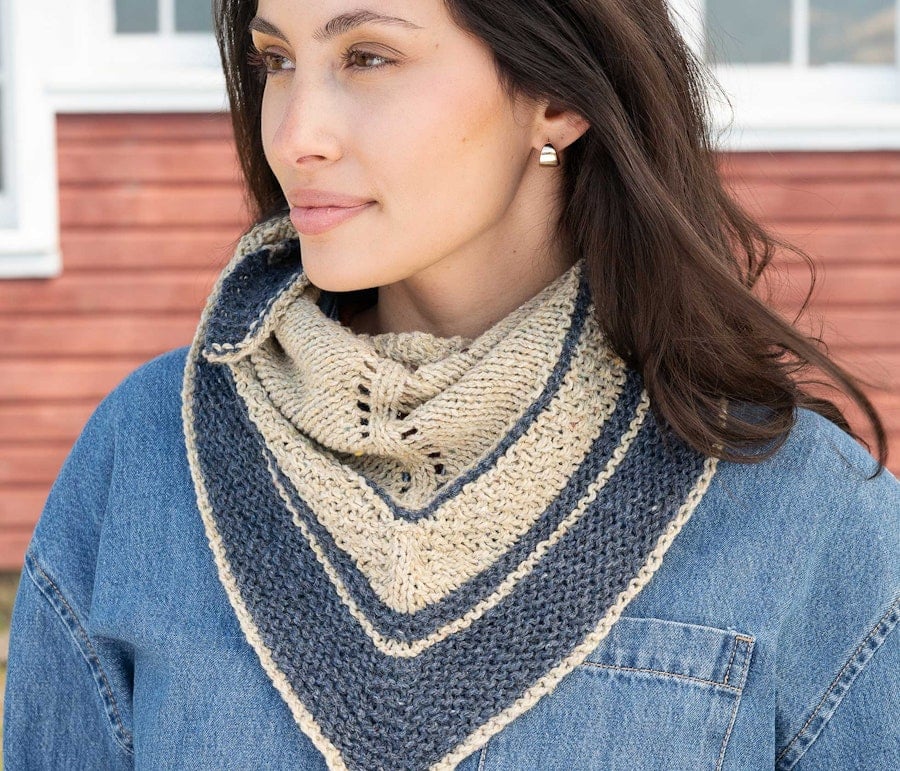
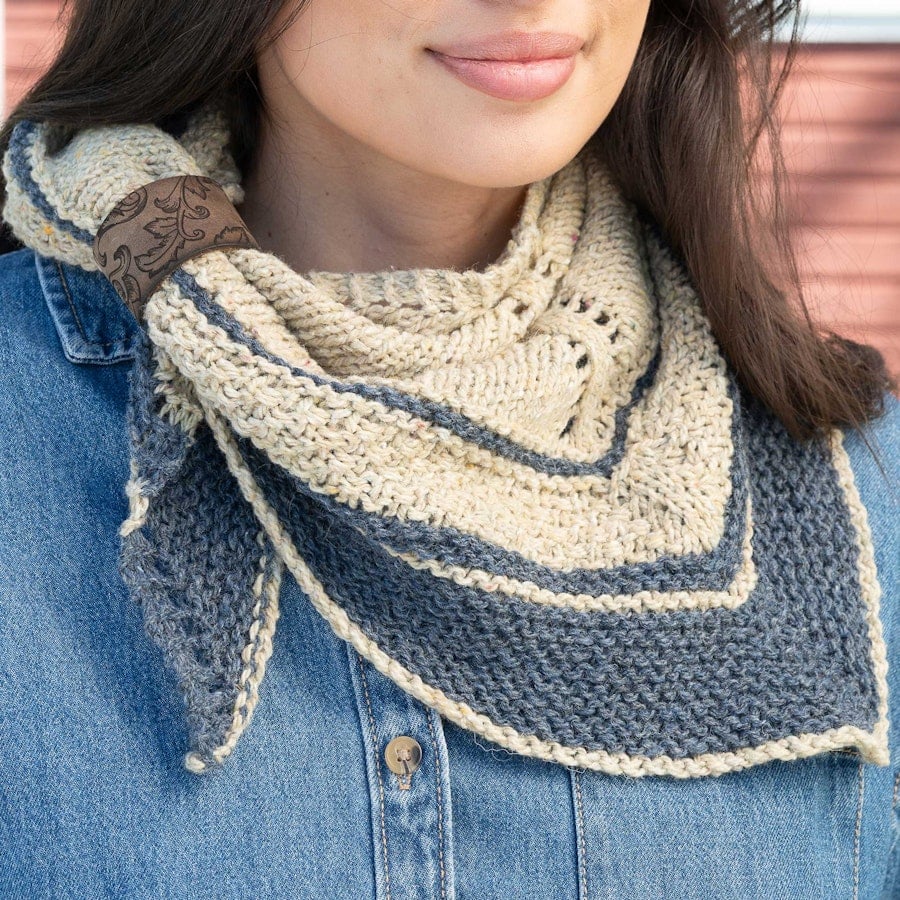
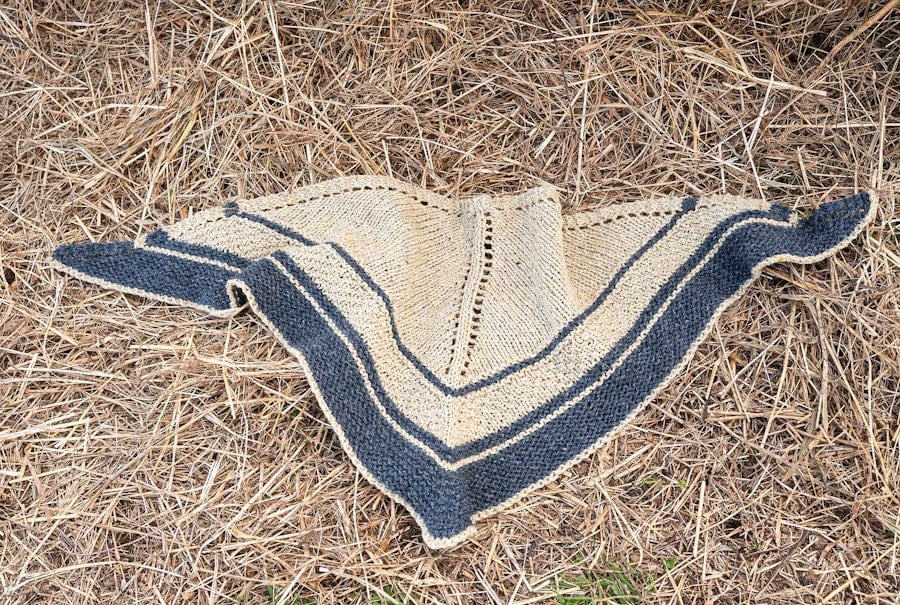
Echo Wool from Purl Soho is spun by a Turkish mill that “reclaims its own production waste to create this 100% recycled wool yarn.” I find this airy two-ply to be next-to-skin soft, but it also has some body and tooth, which set me musing about a small accessory with a series of classic stitches that show off what this yarn can do. You can make two small shawls with two balls of yarn by swapping the main color (MC) and contrast color (CC) for the second shawl, or you can make a larger shawl by working more pattern repeats (see Note).
YARN Purl Soho Echo Wool (100% recycled wool; 328 yd [300 m]/3½ oz [100 g]; sportweight): #7125 Early Spring (MC) and #7150 Fathom Blue (CC), 1 ball each.
NEEDLES Size 5 (3.75 mm): 16" (40 cm) circular (cir). Adjust needle size if necessary to obtain the correct gauge.
NOTIONS Markers (m); tapestry needle.
GAUGE 14 sts and 27 rows = 4" (10 cm) in St st.
FINISHED SIZE 36" (91.5 cm) wide and 15½" (39.5 cm) tall
Note: To make this very small shawl larger, work the moss-stitch section instructions as many times as desired before moving on to the garter border.
Visit farmfiberknits.com/abbreviations for terms you don’t know.
Kate used a stretchy bind-off technique she learned in Estonia. Feel free to explore other stretchy options, such as the Icelandic Bind-Off.
Learn more about recycled yarns in the Fall 2026 issue of Farm & Fiber Knits.
Our stylist and staff show you five ways to style a small shawl.
About: Kate Larson (she/her) is Senior Editor of Farm & Fiber Knits. For nearly as long as Kate has been handspinning and knitting, she has been helping others find their paths as makers and forge deeper connections with the landscapes that produce the wool and cotton, flax, and silk that they hold in their hands. While Kate has published a book, many articles and patterns, and several instructional videos, she especially loves celebrating the work of other fiber folks. The editor of Spin Off from 2018–2025, she directs spinning events in addition to editing Farm & Fiber Knits. If you can’t find Kate, she’s most likely in the barn having a chat with her beloved Border Leicester sheep.
All items in the library are intended for personal use. Please do not distribute without written approval.