Tutorial: Easy Icelandic Bind-Off for a Stretchy Edge
When a standard bind-off edge just isn’t stretchy or substantial enough, try this must-know technique!
When a standard bind-off edge just isn’t stretchy or substantial enough, try this must-know technique! <a href="https://farmfiberknits.com/tutorial-easy-icelandic-bind-off-for-a-stretchy-edge/">Continue reading.</a>
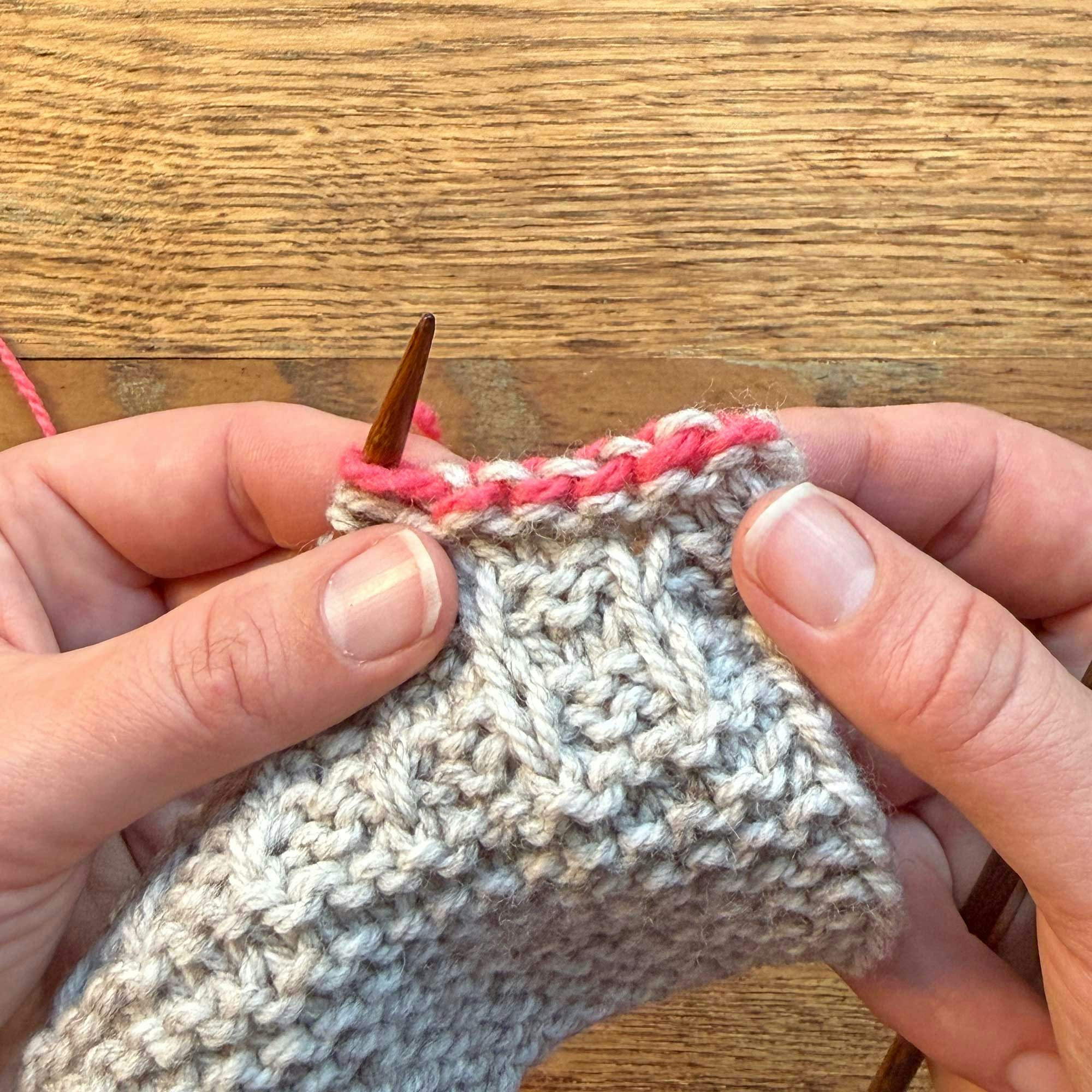
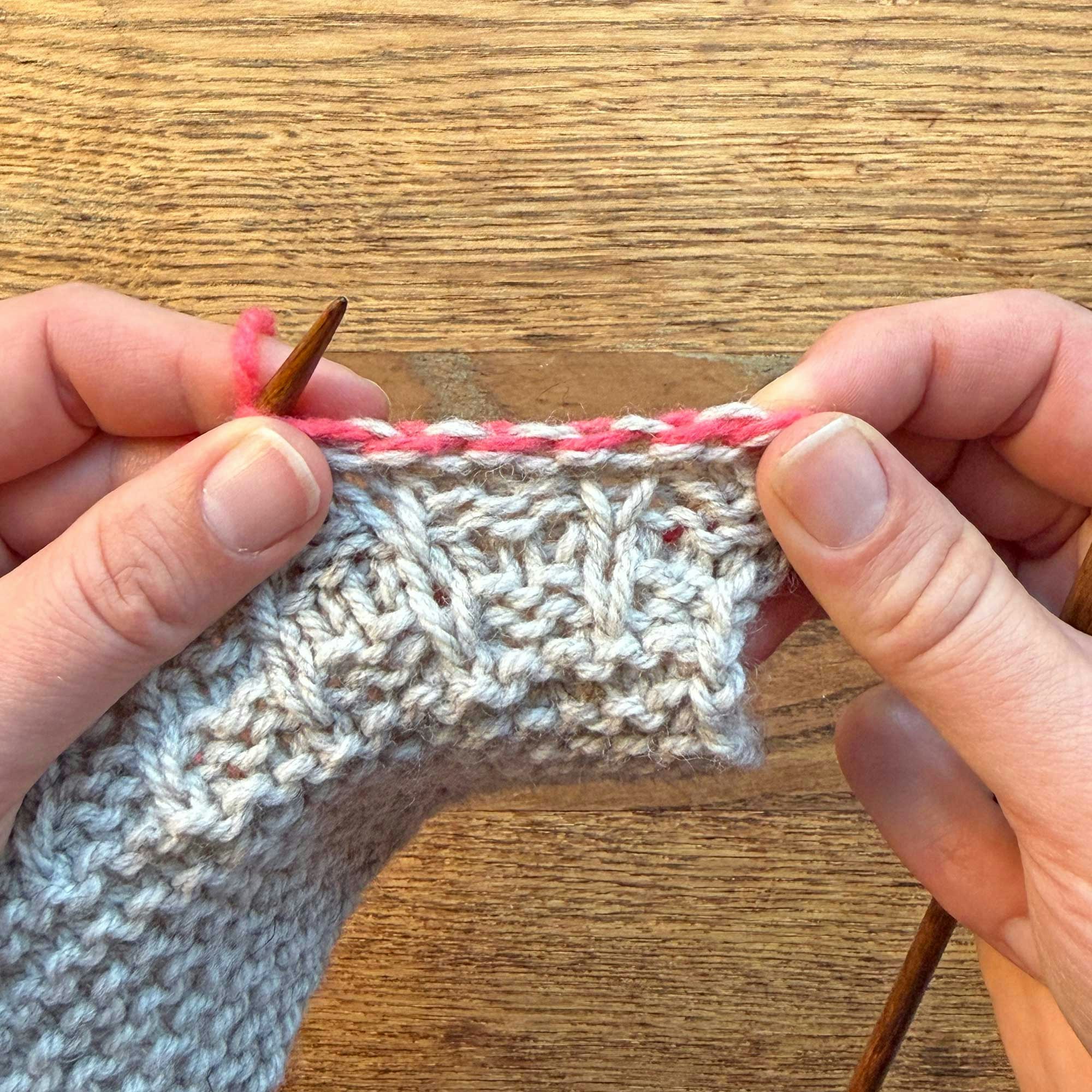
Used in Iceland since at least the nineteenth century, this stretchy bind-off pairs perfectly with garter knits or anywhere you want a ridged, stretchy edge that doesn’t flare much. Use two colors for contrast or the same color as the previous row.
Video: See it in action.
Once you get comfortable with the movements, this bind-off can be quick and comfortable to work. If you'd like to see a slower version of the instructions, find the step instructions below with images. If you are still having trouble with tension, a less-than-stretchy bind-off, or getting stuck when raveling this edge, head to the Troubleshooting section below!
— Kate
Step-by-Step Instructions
Set-up: K1.
SUBSCRIBER EXCLUSIVE
Unlock the Full Article with a Farm & Fiber Knits Subscription
Get instant access to this article and the entire Farm & Fiber Knits library of projects, inspiration, and expert instruction. With your subscription, you'll receive:
Connect more deeply with your yarn—learn the stories of farmers, shepherds, and dyers
Knit patterns that celebrate natural fibers and slow, intentional making
Support a community of small farms, women makers, and independent yarn companies
Includes print and digital issues of Farm & Fiber Knits, delivered directly to you
With must-knit projects and unforgettable stories, Farm & Fiber Knits invites you to see the craft world through fresh eyes.
Plans start at just $5.83/month (paid annually). Cancel anytime.
Used in Iceland since at least the nineteenth century, this stretchy bind-off pairs perfectly with garter knits or anywhere you want a ridged, stretchy edge that doesn’t flare much. Use two colors for contrast or the same color as the previous row.
Video: See it in action.
Once you get comfortable with the movements, this bind-off can be quick and comfortable to work. If you'd like to see a slower version of the instructions, find the step instructions below with images. If you are still having trouble with tension, a less-than-stretchy bind-off, or getting stuck when raveling this edge, head to the Troubleshooting section below!
— Kate
Step-by-Step Instructions
Set-up: K1.
[PAYWALL]
Step 1: Transfer st from right needle to left needle.
Click to enlarge.
Step 2: Insert right needle pwise into first st on left needle, then kwise into front loop of second st, pulling second st through first st but leaving both sts on left needle, forming a cross.
Step 3: Wrap yarn around right needle and knit second st, then drop both sts from left.
Repeat Steps 1–3 until all stitches have been worked. When one st remains, cut yarn and pull through st to secure.
So stretchy!
Troubleshooting
I’ve always found this technique to create a bind-off edge that is as stretchy as the body of the knitting, but I occasionally hear from knitters that struggle with stretchiness. To fix, loosen your tension on the working yarn (pink in this tutorial). After knitting a few inches, stretch the bind-off edge as you see me do at the end of this video. That will help settle the stitches into place so you can determine if the tension is a good fit for the project you are making.
If you are having trouble getting the left needle tip inserted into the left-hand needle stitches or when trying to pull the new loop through, unknit the last row before the bind off and rework more loosely. Then, see the tension tip above, and try again. Looser stitches are easier to work!
The biggest drawback to this cast-on method is that it isn’t as easy to unknit as a standard bind off if you need to go back and fix a mistake. If you are struggling, cast on a small swatch, try the Icelandic Bind-Off with a contrasting color as shown here. Begin to ravel the bind off, and you will quickly see how the loops wrap and how you need to lift the stitches worked during the bind-off row over the previous row to ravel.
Resources
To learn more about the history of this technique and the traditional sweaters and shawls so well suited to it, visit the icelandicknitter.com.
The natural fiber yarns used here are Scholar (gray) from Acorn and Oak, and BayBlend DK (Hot Shot) from North Bay Fibers.
Kate Larson (she/her) is Senior Editor of Farm & Fiber Knits. For nearly as long as Kate has been handspinning and knitting, she has been helping others find their paths as makers and forge deeper connections with the landscapes that produce the wool and cotton, flax, and silk that they hold in their hands. While Kate has published a book, many articles and patterns, and several instructional videos, she especially loves celebrating the work of other fiber folks. The editor of Spin Off from 2018–2025, she directs spinning events in addition to editing Farm & Fiber Knits. If you can’t find Kate, she’s most likely in the barn having a chat with her beloved Border Leicester sheep.

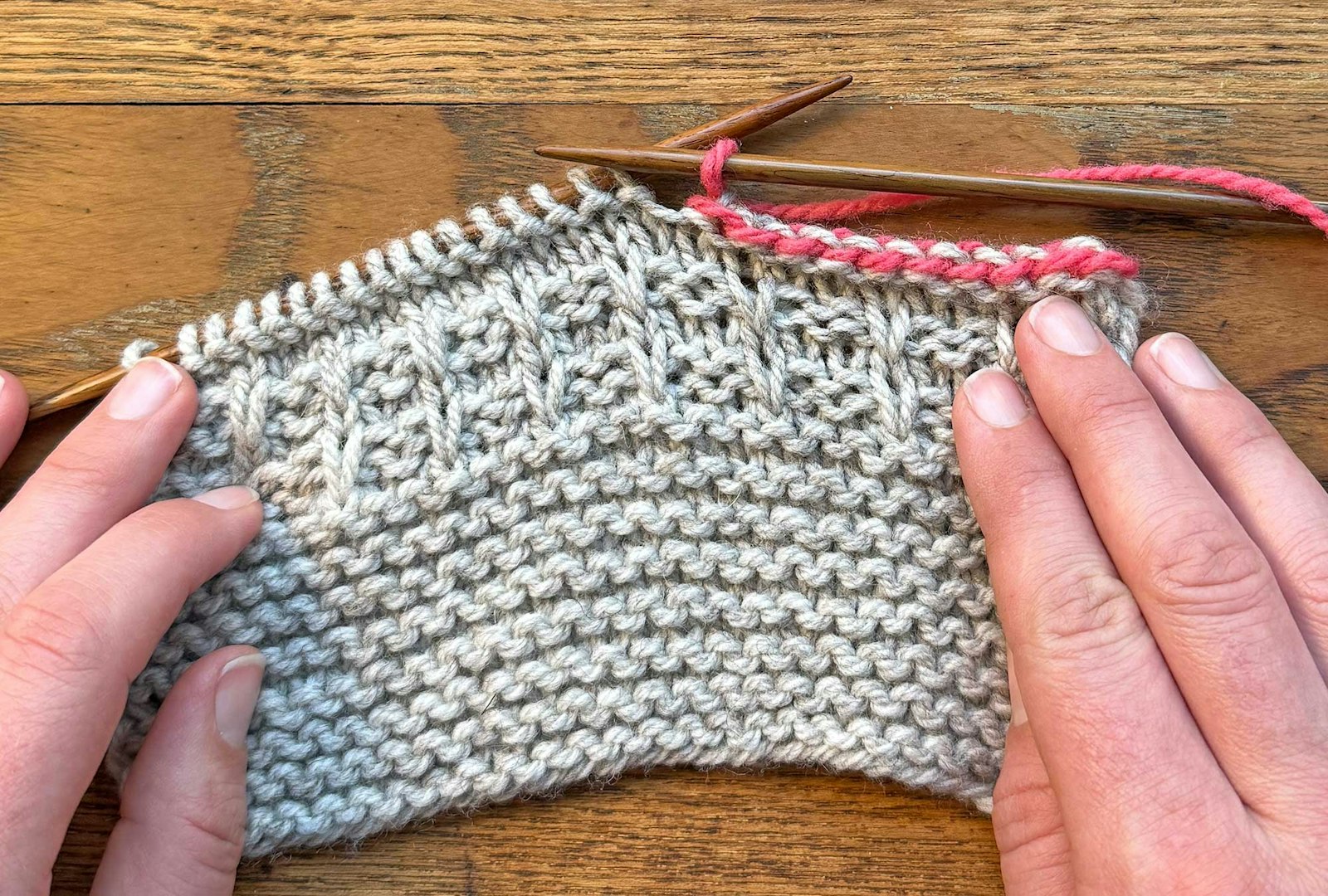
 Set-up: K1.
 Step 1: Transfer st from right needle to left needle.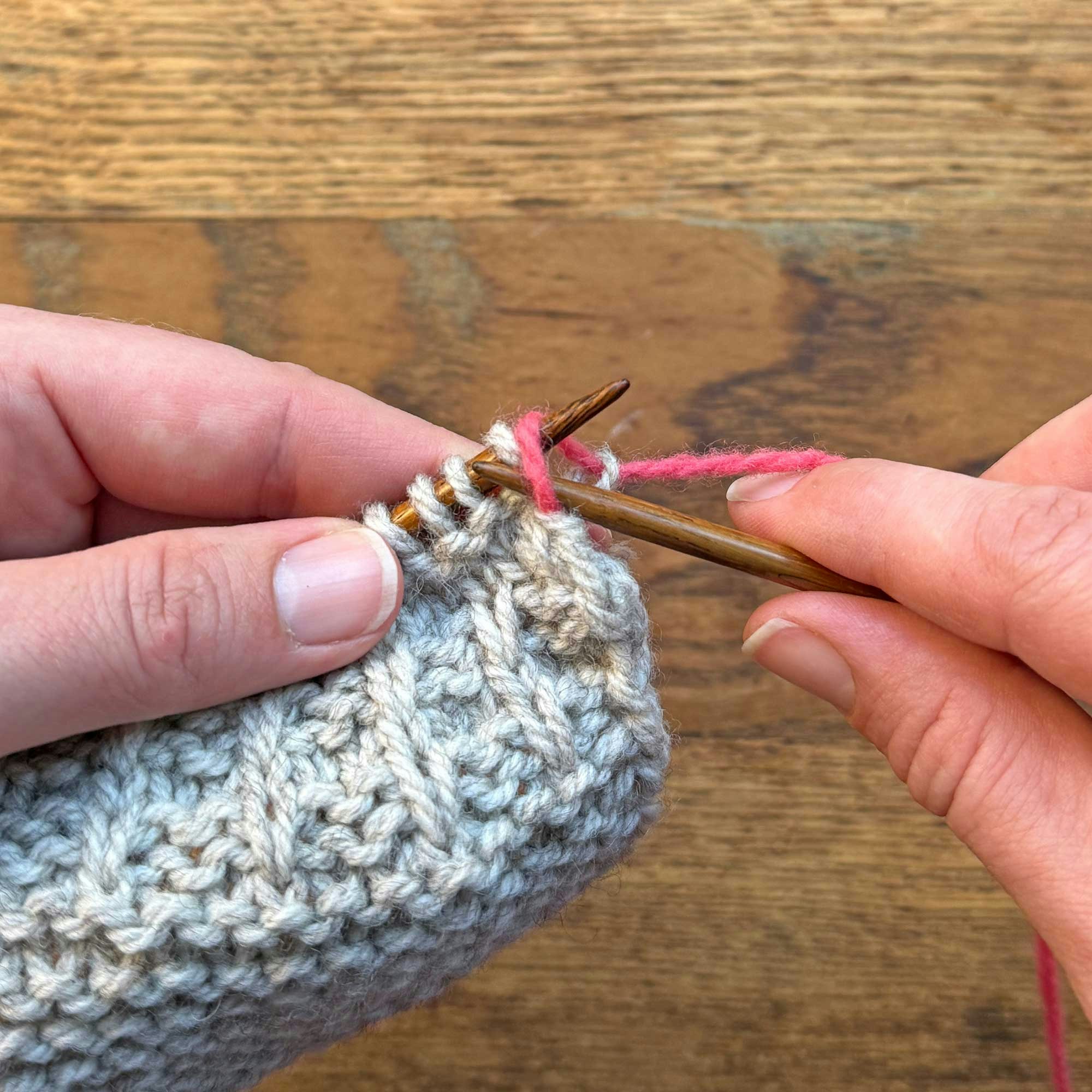
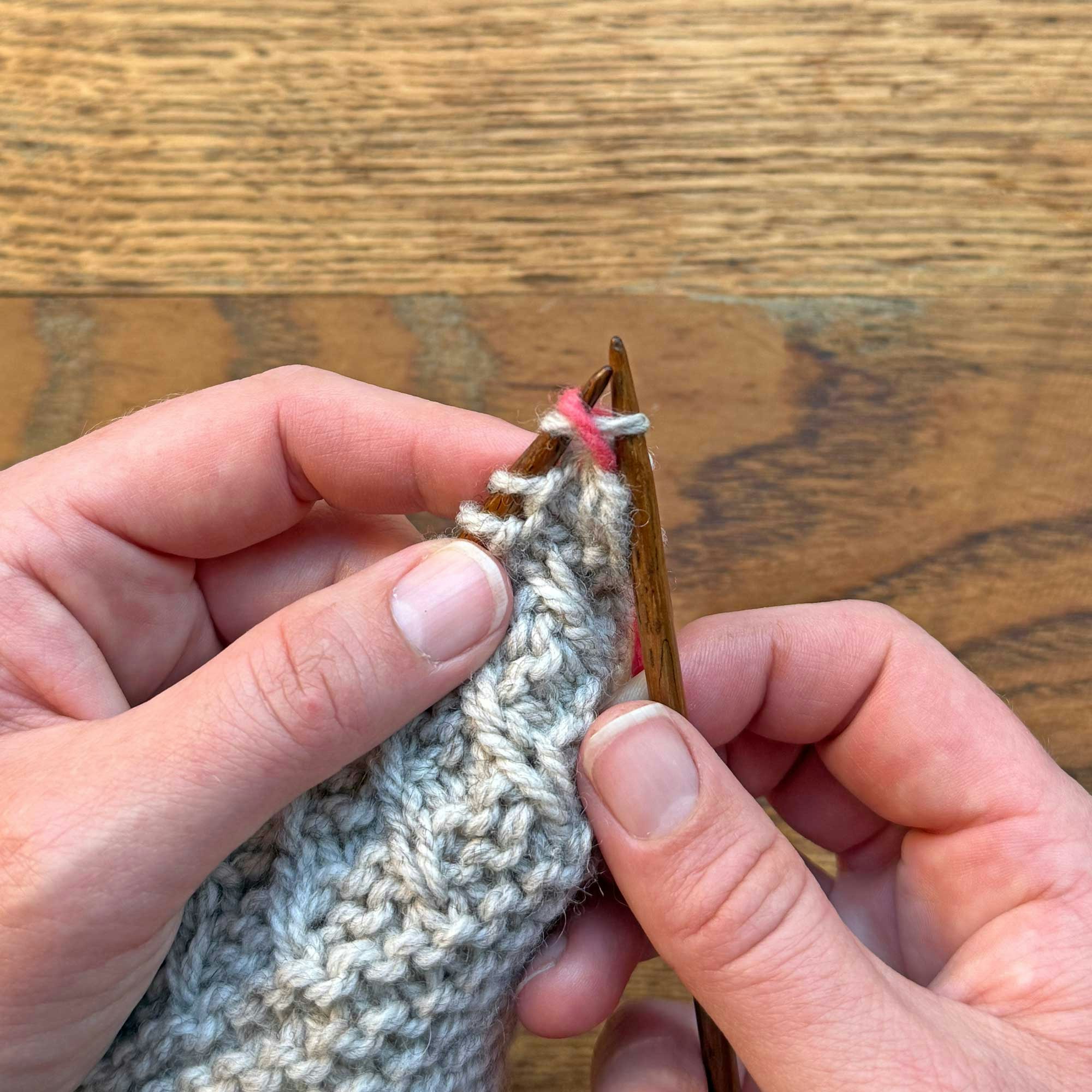
 Step 3: Wrap yarn around right needle and knit second st, then drop both sts from left.