
When I work with cables and texture, I’m usually looking for a yarn that is round and springy with some elasticity. I want the yarn to make each stitch pop so that it creates real definition in the fabric rather than something loose, flat, and drapey. The ideal yarn for me is one that sets up a nice contrast between the stitches that raise forward in the fabric and those that fall back, and I find the yarns that achieve this the best are those made from a springy wool fiber, are worsted spun, are made from multiple plies, and are typically a solid color.
But wait! The beauty of making your own pieces is that you get to change the ingredients to suit your own taste. I approach knitting a little bit like following a recipe from a cookbook—if you’re someone who likes some extra heat in your chili, you have permission to add a little more cayenne to the pot. Go ahead and “add salt and pepper to taste!” It’s the same when choosing yarn for a project: different fibers, spinning styles, and colors will change the final look, and you get to choose the outcome that you prefer.
I’m going to use my Turnout Shawl design to show a few examples of fingering weight yarns that create excellent texture while adding different characteristics to the final piece. Who knows—maybe you’ll find that alpaca fiber turns out to be your cayenne pepper when it comes to yarn.
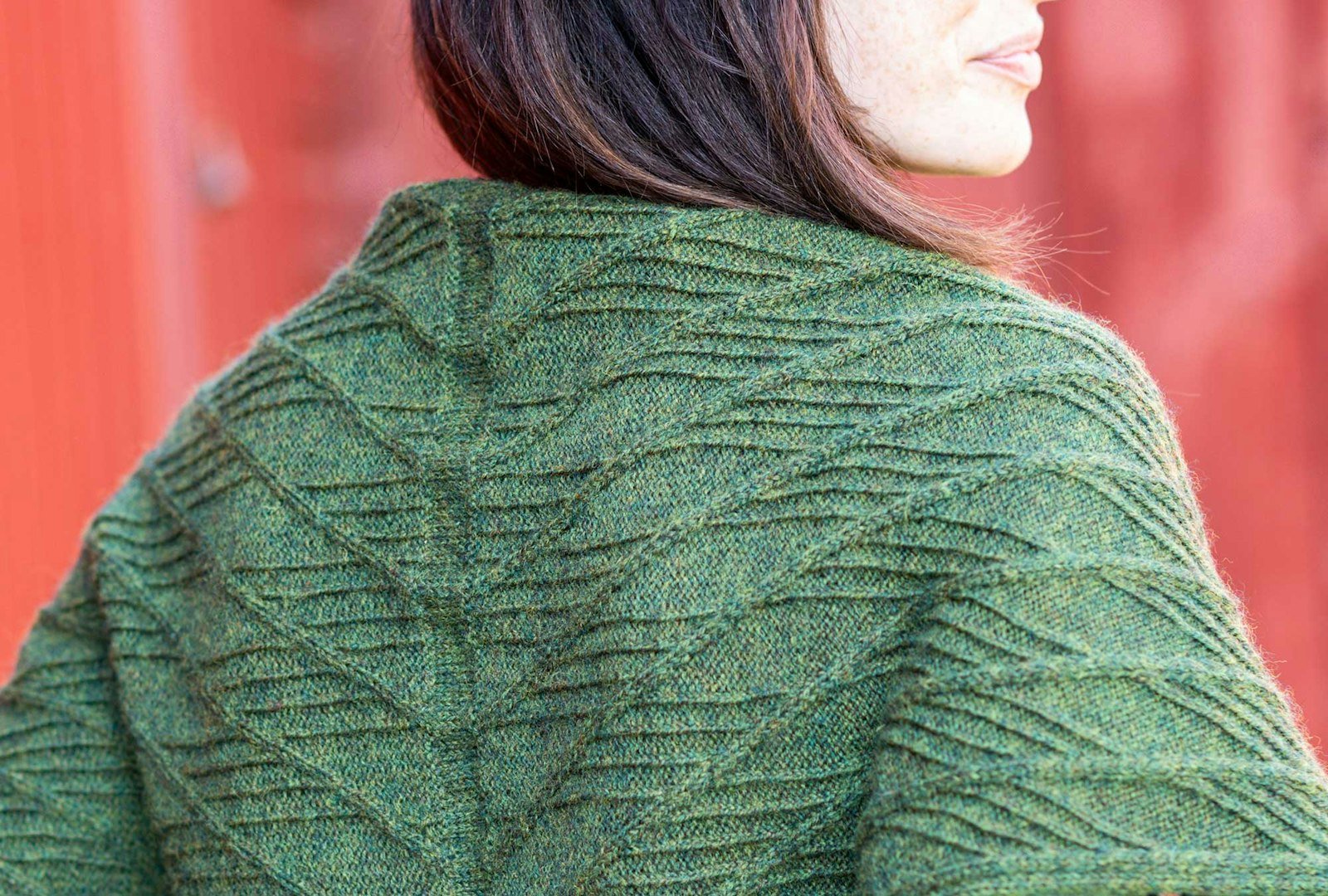
 The textures in Seth’s Turnout Shawl are set on a reverse-stockinette background so they have a chance to shine.
Let’s take a look at the original yarn that the pattern was designed with, Camper by Kelbourne Woolens, a two-ply wool fiber that comes in a beautiful range of heathered colorways (shown here in Moss Heather). The yarn does a lovely job of displaying the parallel cabled lines and twisted-stitch columns, but it also gives the overall fabric a rustic quality that I love. And while I usually prefer truly solid colors that don’t compete with the texture, I find that the heathered colorways of Camper add a bit of a soft, vintage feel that works well with this pattern.
Swatching with Alternative Yarns
Alternative #1:
Yarn: Wool & Palette Shaniko Fingering in Rose Quartz
Result: Springy, with crisp cables
Get a closer look! Click on any image in the galleries below to open them in full-screen mode. All swatch photos by Seth Richardson
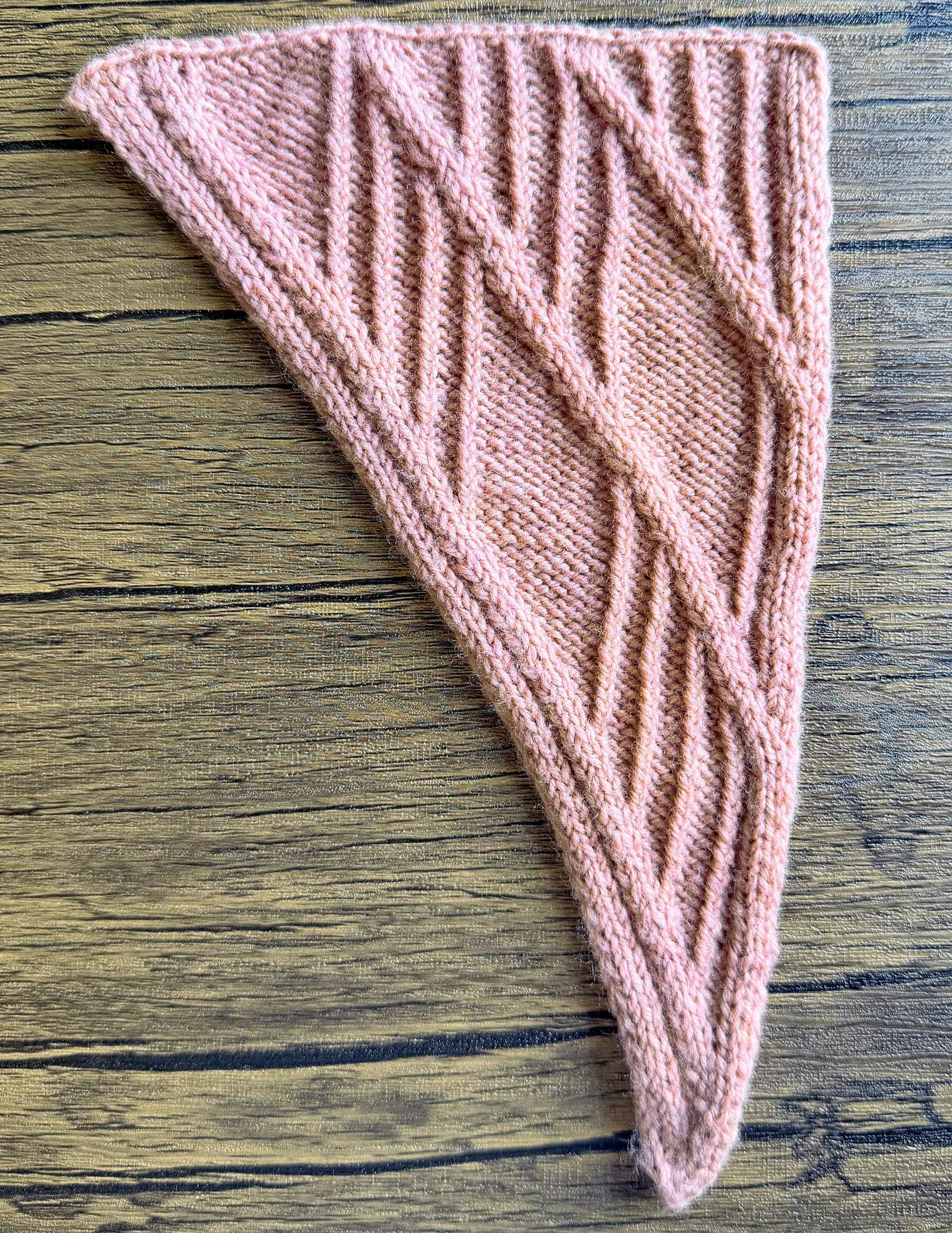
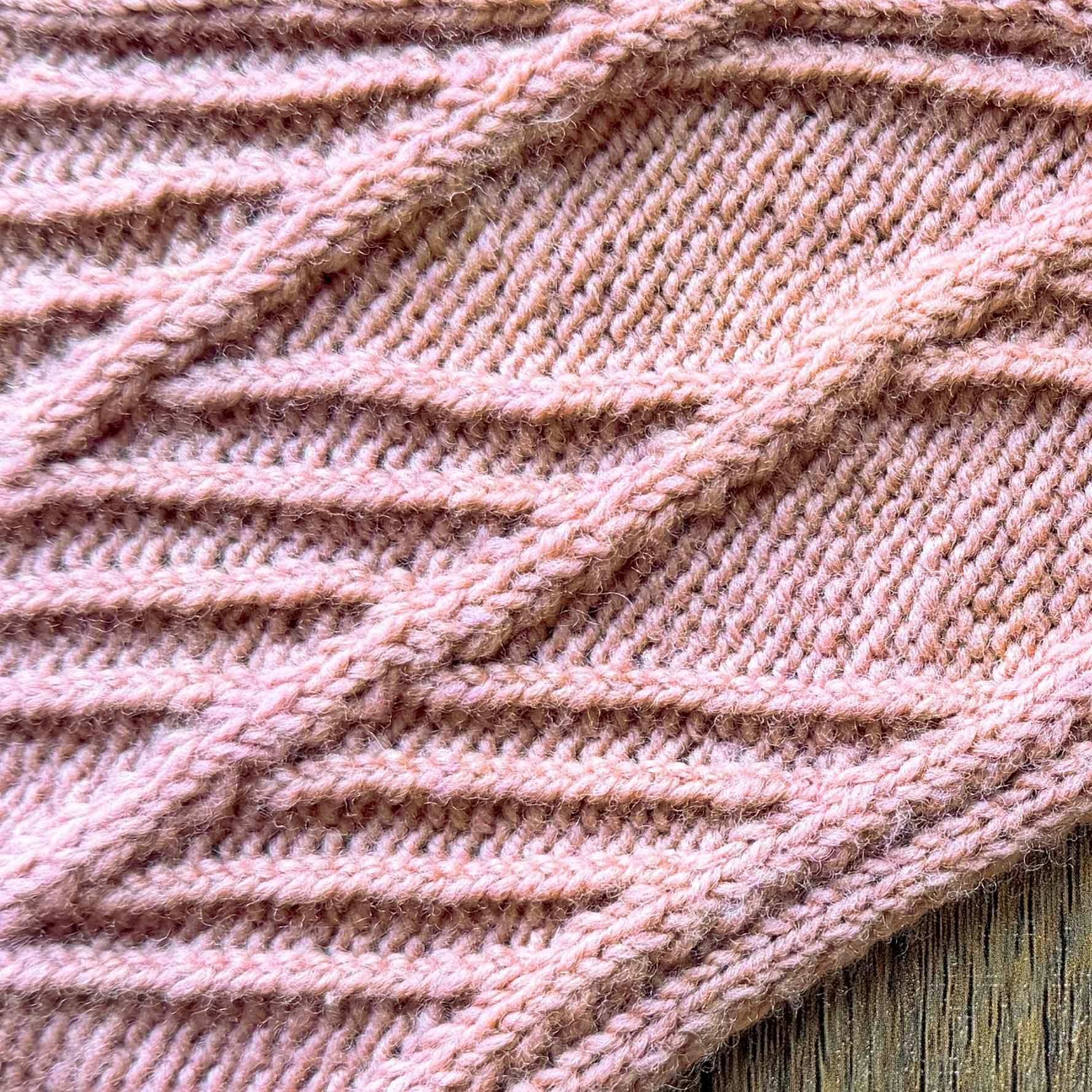
Wool & Palette’s Shaniko Fingering weight yarn is one of my favorites when it comes to textured fabric. Its three-ply, worsted-spun construction makes it a smooth, round yarn that’s amazingly consistent and results in really crisp cables. The fiber content is from Merino/Rambouillet sheep, which provides the springiness that I’m usually looking for. And not only is this a domestically produced yarn, Wool & Palette creates gorgeous solid colors using natural dyes.
Alternative #2:
Yarn: Upland Fiber Co. COR Fingering in Pewter
Result: Lofty and soft
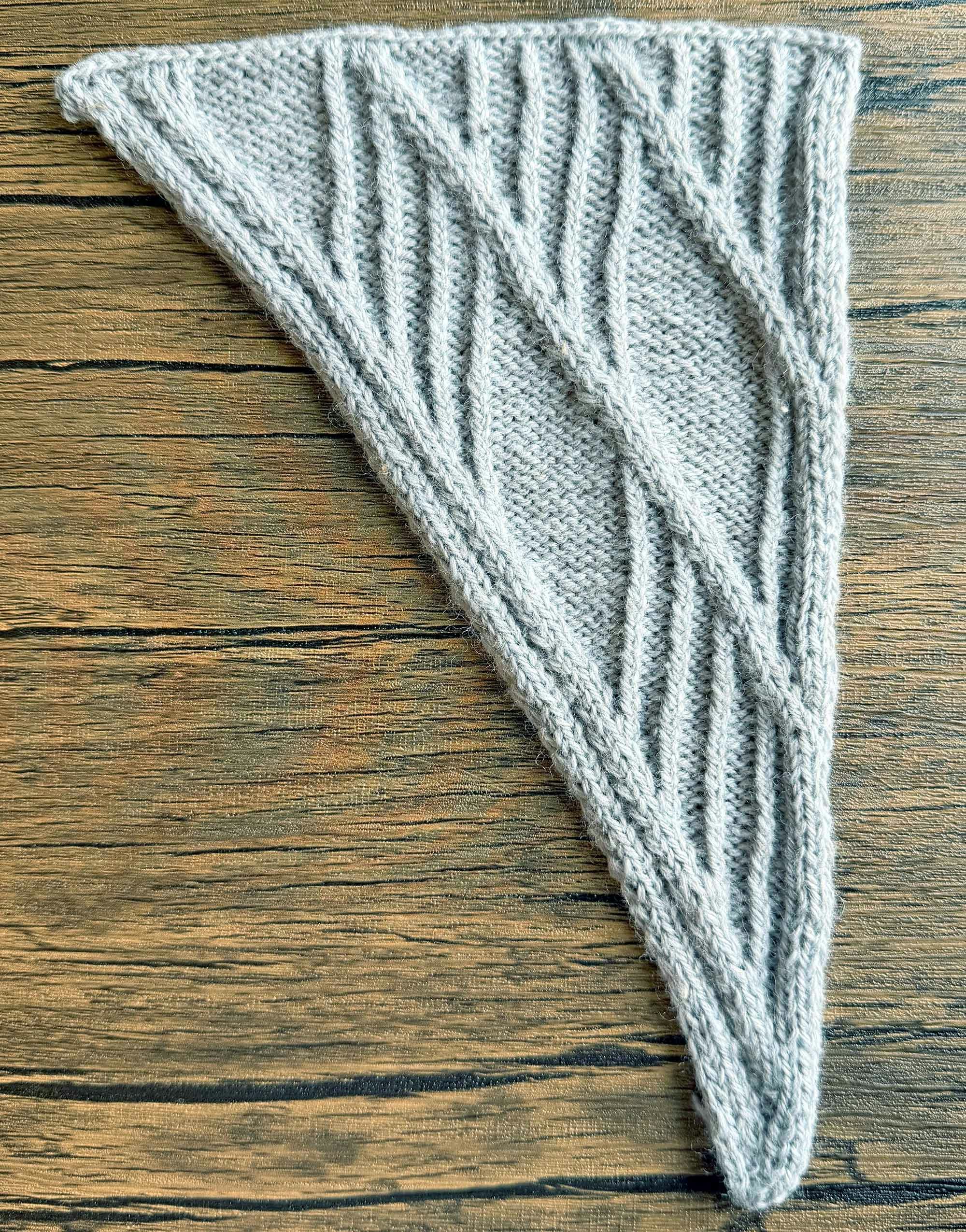
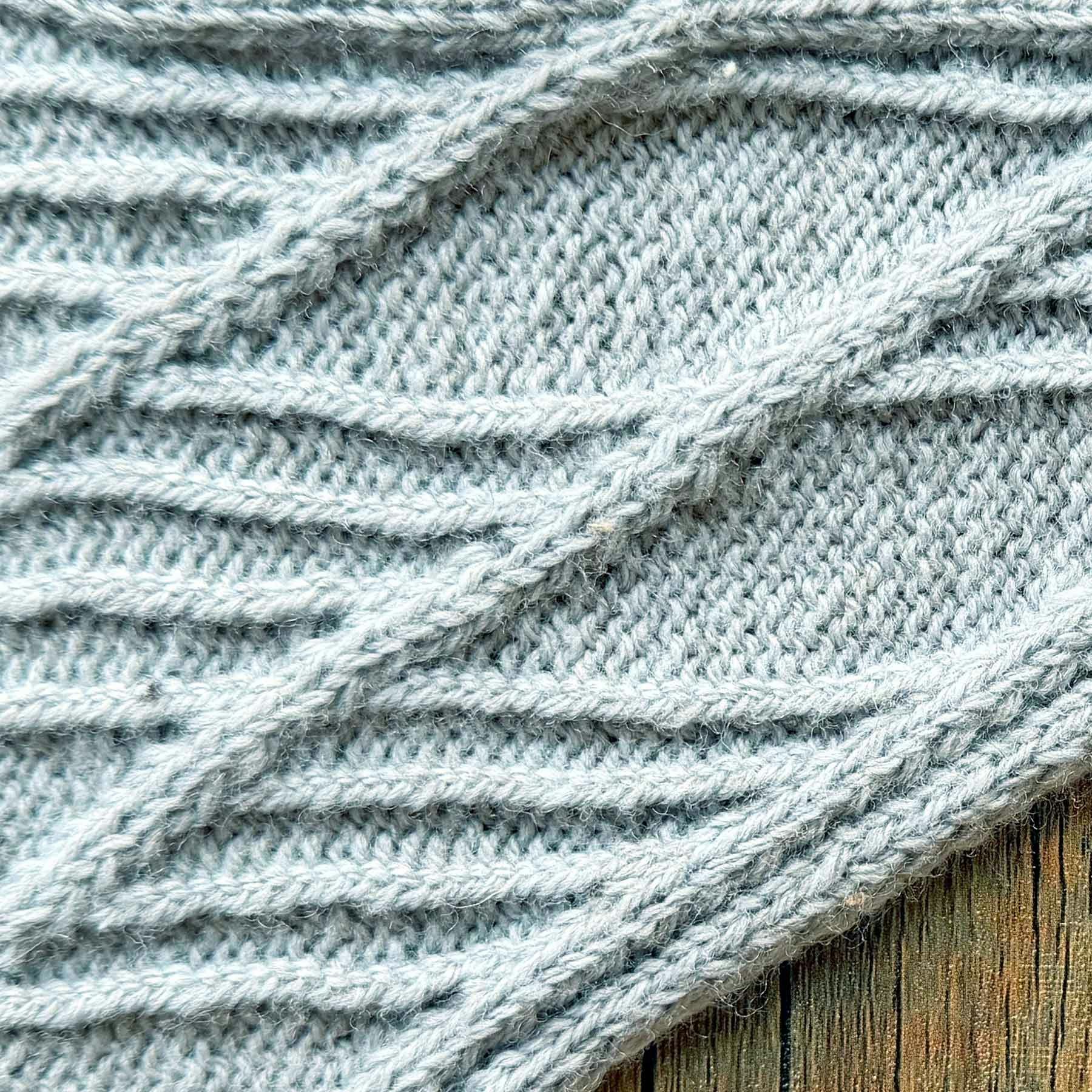
COR Fingering by Upland Fiber Co. is another great example of a domestically produced yarn that creates lovely, defined texture. The fiber comes from a mix of American Cormo and American Corriedale wool, so it has a nice amount of elasticity that’s great for cables that pop, and its three-ply construction gives some roundness to the yarn. The unique quality here is that the yarn is semi-worsted spun; while it’s not perfectly smooth, it has a softness that creates a fabric that’s lofty and soft. Plus, there’s a reliable, solid color for everyone in their palette.
Alternative #3:
Yarn: Lamana Lima in Muscat
Result: Luxurious, with relaxed drape
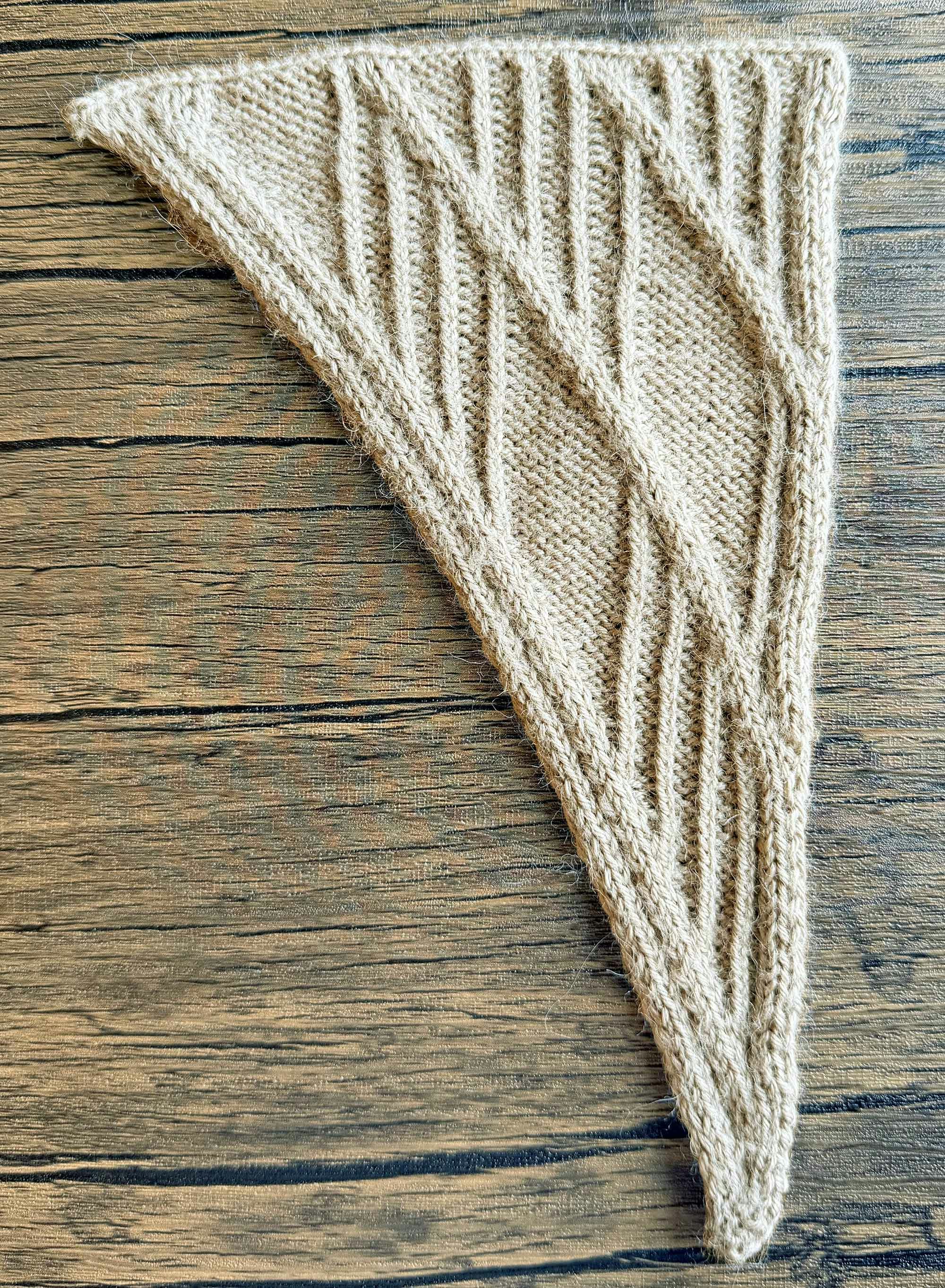
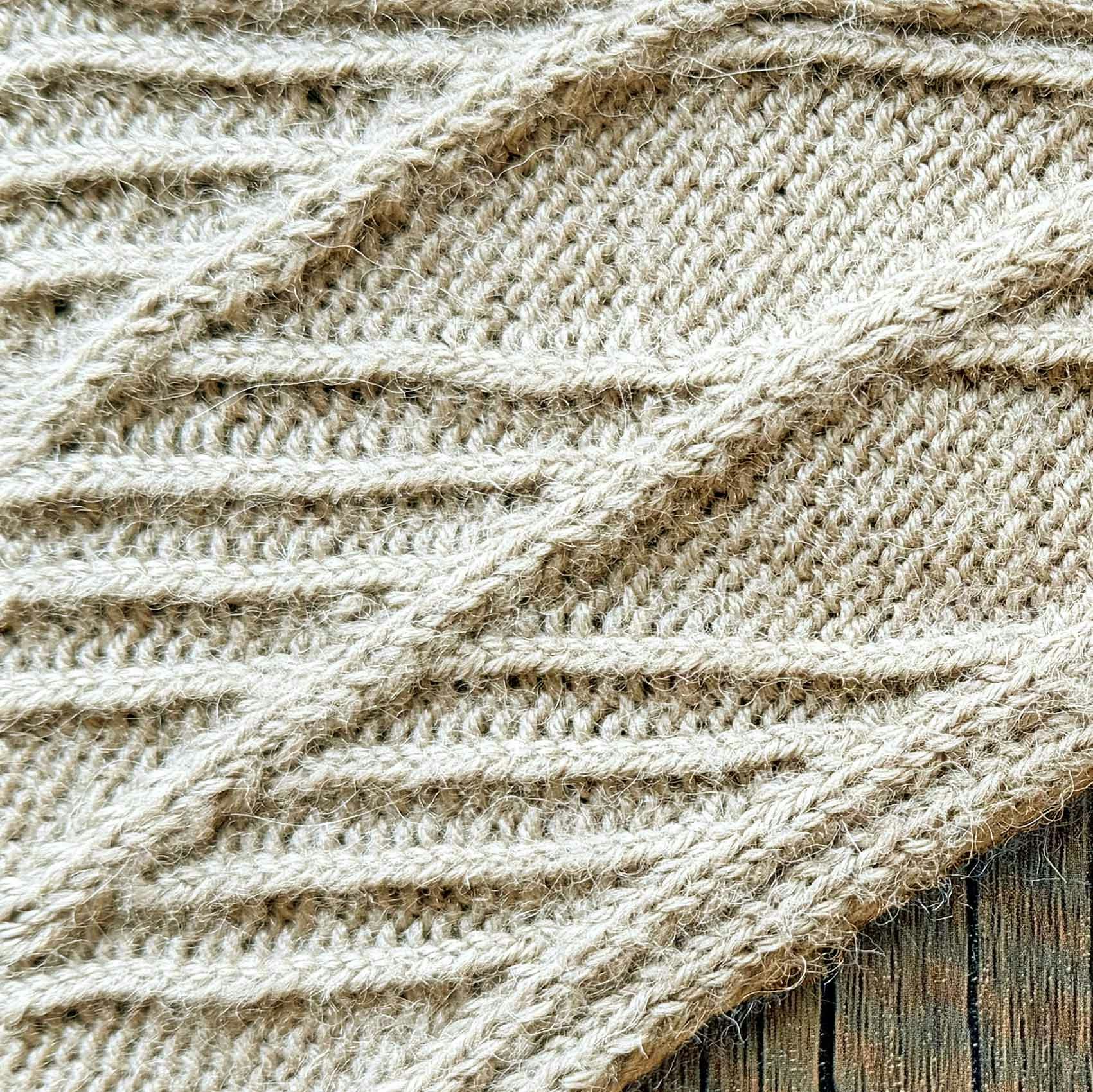
This third yarn is made in Peru and comes to us from Germany; Lima by Lamana is a fingering weight yarn that would add a touch of luxury to your Turnout Shawl. The difference is in the mix of fibers (50% Merino wool, 25% baby alpaca, and 25% silk), and this is where I break my rule about finding a yarn with a lot of elasticity. Yes, there’s some Merino content here that holds enough memory to allow the texture to stand out, but the silk and alpaca fibers give the fabric a lot of relaxed drape, a lovely lustrous shine, and even a bit of a halo resulting in a more luxurious piece. The texture is so relaxed yet maintains real polish and precision!
There’s more!
Learn more about Seth and the inspiration behind his striking, wearable knitwear.
Discover tricks for knitting cables without a cable needle.
How do cables change the fit of your knitting? One editor explains.
Find Seth’s Turnout Shawl and Pearls Kerchief in the Farm & Fiber Knits Library.