Subscriber Exclusive
Wrap & Turn vs German Short-Rows: What’s the Difference?
Learn how wrap & turn and German short-rows compare—and how to substitute one for the other in knitting patterns.
Learn how wrap & turn and German short-rows compare—and how to substitute one for the other in knitting patterns. <a href="https://farmfiberknits.com/wrap-and-turn-vs-german-short-rows-whats-the-difference/">Continue reading.</a>
https://farmfiberknits.com/cdn-cgi/image/format=auto/https://www.datocms-assets.com/101500/1785257615-250813_sowin26-932.jpg?auto=format&w=900
Contents
Once considered an advanced technique, the use of short-rows has become commonplace in modern knitting patterns to create smooth shaping. A short-row involves turning your knitting before your reach the end of the row or round and working back in the other direction. To prevent a hole at the turning point, many techniques have been devised to unite the short-rows with the full-width rows. The most common of these techniques are wrap & turn (w&t) and German short-rows (GSR).
Let’s look at the difference between these two techniques and talk about why you might choose to use one instead of the other.
Common Uses of Short-Rows
These may include:
- Creating a sloped shoulder line on a sweater
- Shaping the neckline of a top-down circular-yoke pullover by making the back longer than the front
- Creating a curved hemline
- Adding length to the front of a pullover to prevent riding up and to accommodate a full bust
- Shaping the heel of a sock
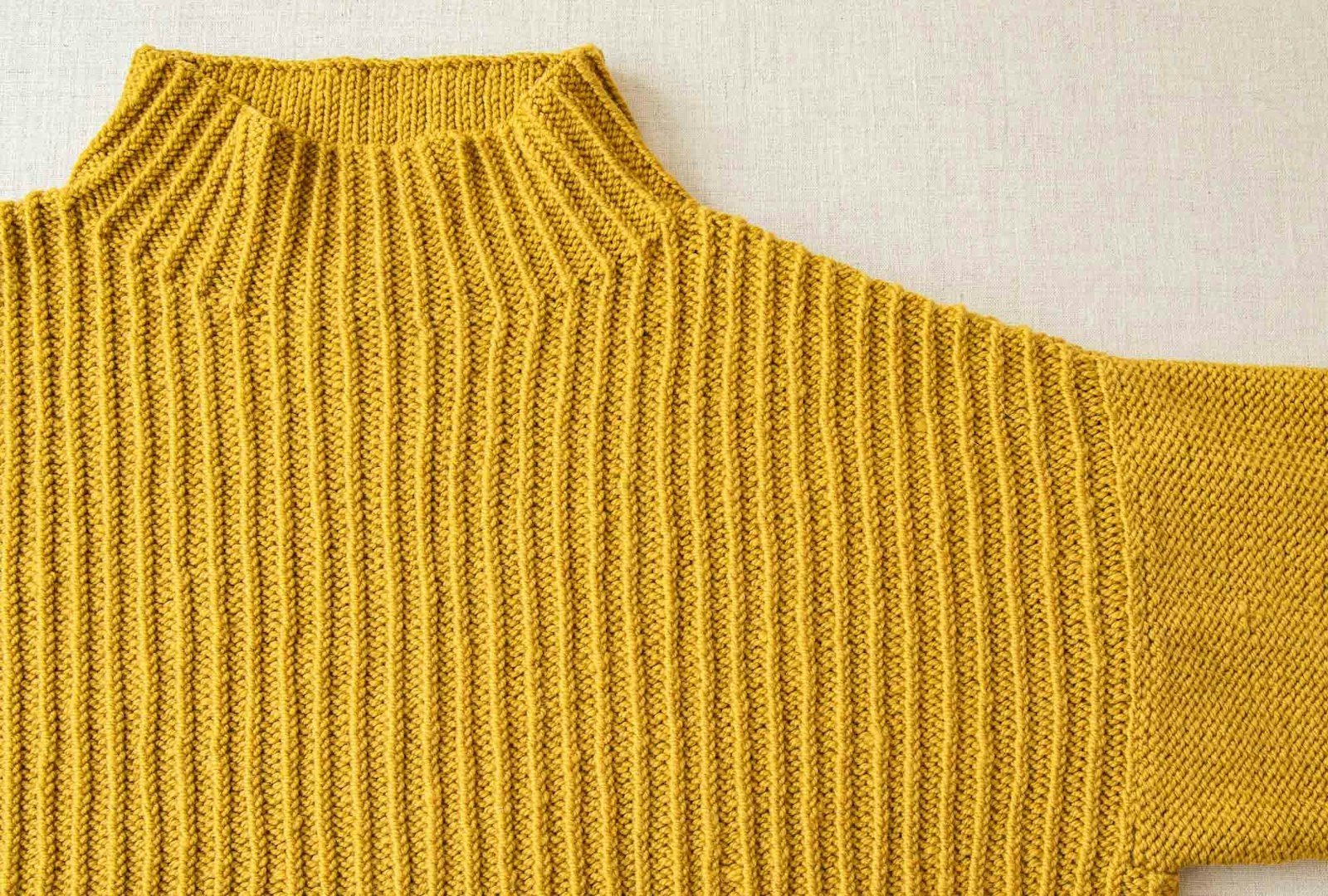
 Designer Mari Tobita used wrap & turn short-rows to shape the funnel neck and shoulder slope at the same time in her Pocket Pullover (pattern link below). Photo by Gale Zucker
Wrap & Turn (w&t)
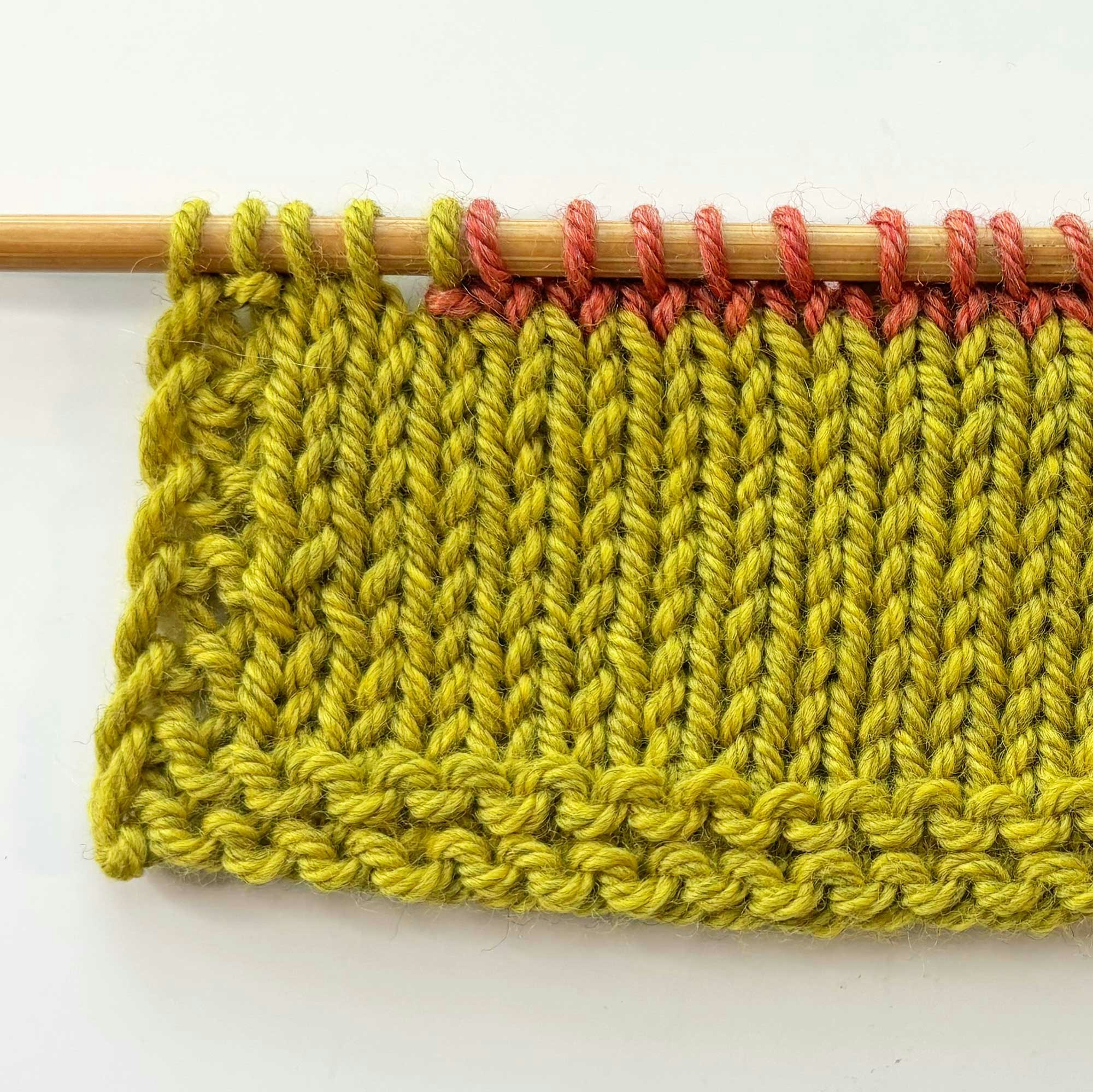
 The full-width rows are worked in green, and the short rows are worked in orange. The instructions for this example are: Short-row 1 (RS): Knit to last 5 sts, w&t. Short-row 2 (WS) Purl to last 2 sts, k2.
SUBSCRIBER EXCLUSIVE
Once considered an advanced technique, the use of short-rows has become commonplace in modern knitting patterns to create smooth shaping. A short-row involves turning your knitting before your reach the end of the row or round and working back in the other direction. To prevent a hole at the turning point, many techniques have been devised to unite the short-rows with the full-width rows. The most common of these techniques are wrap & turn (w&t) and German short-rows (GSR).
Let’s look at the difference between these two techniques and talk about why you might choose to use one instead of the other.
Common Uses of Short-Rows
These may include:
- Creating a sloped shoulder line on a sweater
- Shaping the neckline of a top-down circular-yoke pullover by making the back longer than the front
- Creating a curved hemline
- Adding length to the front of a pullover to prevent riding up and to accommodate a full bust
- Shaping the heel of a sock
Designer Mari Tobita used wrap & turn short-rows to shape the funnel neck and shoulder slope at the same time in her Pocket Pullover (pattern link below). Photo by Gale Zucker
Wrap & Turn (w&t)
The full-width rows are worked in green, and the short rows are worked in orange. The instructions for this example are: Short-row 1 (RS): Knit to last 5 sts, w&t. Short-row 2 (WS) Purl to last 2 sts, k2.
[PAYWALL]
To work a wrap & turn short-row:
- Knit to the designated turning point; slip the next stitch purlwise.
- Move the yarn to the front for a knit row or to the back for a purl row.
- Slip that stitch back to the left-hand needle, turn the work, and work the next row.
- You have wrapped the working yarn around a stitch that was not knit, joining the row just completed to the stitches not worked in that row.
- When you are ready to knit that wrapped stitch on a subsequent row, you will lift the wrap onto the tip of the left-hand needle and knit it together with the stitch.
German Short-Rows (GSR)
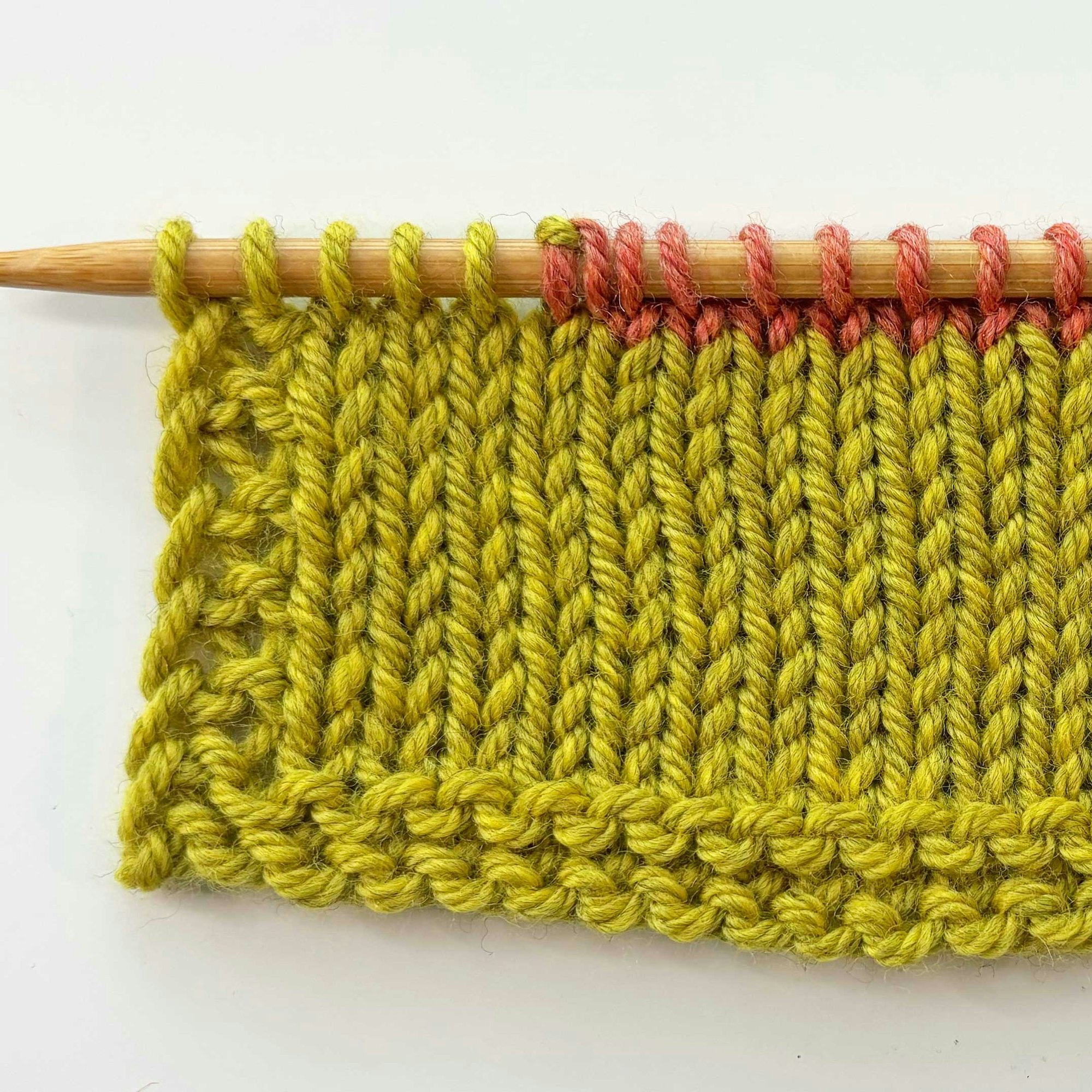
 The instructions for this example are: Short-row 1 (RS): Knit to last 5 sts, turn. Short-row 2 (WS) GSR, purl to last 2 sts, k2.
To work a German short-row:
See full illustrated instructions at farmfiberknits.com/what-are-german-short-rows
- Knit to the turning point; turn.
- Your yarn is now coming from the stitch on the left needle and the yarn is in front; slip this stitch to the right needle.
- Pull the yarn up and over the right needle to the back of the work (the stitch now has two legs instead of one and is called a double stitch).
- If you are working in garter stitch, the yarn is in the back, ready to continue with the stitches on the left needle. To work in stockinette, bring the yarn to the front between the needles, keeping the rolled stitch intact.
- When you come back to a double stitch, work both legs together, the same as you would for a k2tog or a p2tog, depending on your fabric.
For a purl row:
- Work to the turning point, keeping your yarn in front. Turn.
- Bring the yarn forward between the needles. Slip the stitch from the left to the right needle, and pull your yarn up and over the right needle to the back of the work, creating the double stitch. Continue with the row.
 German short-rows were used to shape the shoulder slope on the Northern Exposure Pullover (pattern link below). Photo by Gale Zucker
Why Choose One Over the Other?
Both w&t and GSR do the same thing: Prevent holes from forming where the work is turned for short-rows. Which one you choose is a matter of personal preference.
A Few Things to Consider
- You may find one method is easier to execute, or simply easier to remember.
- You may find that one is more attractive than the other in the yarn or stitch pattern you are using. (Try both methods on your swatch to see!)
- Wrap & turn short-rows are often the preferred method when knitting garter stitch. The wraps blend right in with the garter ridges, so there is no need to pick those wraps up; you can simply knit the wrapped stitch as you usually would.
Designers often have strong preferences, so you might find that a designer you follow uses the same method in all their patterns.
Can I Substitute W&T for GSR, or Vice Versa?
Of course you can! But if your project requires precise positioning of short-row turning points, you’ll need to account for the difference where the turn occurs. Let me show you.
Click on images to view in full-screen mode.
Swatch on the left shows wrap & turn short-rows; the one on the right, German short-rows.
For the swatch on the left (w&t), the instructions are as follows: Knit to last 5 sts, w&t. The wrapped stitch is the 5th stitch from the end.
For the swatch on the right (GSR), the instructions are: Knit to last 5 sts, turn. The next row is: GSR, knit to end. The double stitch is the 6th stitch from the end.
The wrapped stitch and the double stitch serve the same purpose: They anchor the short-rows to the rest of the knitting and prevent the formation of a hole. But they don’t fall in the same place. That single stitch might not make a difference for the project you are knitting. But it might throw off your stitch count or distort your stitch pattern.
If you want to swap the short-row technique, here is how to make sure your short-row ends in the right spot:
To Use GSR Instead of W&T
Knit one stitch more than directed for the w&t, then turn the work and make the double stitch.
To Use W&T Instead of GSR
Knit one stitch fewer than directed for the GSR, then wrap & turn.
Whether you choose wrap & turn or German short-rows, both techniques create smooth, professional shaping. Try each on a swatch to see which you prefer, and you’ll be ready to tackle everything from socks to sweaters with confidence.
Try It!
Pocket Pullover by Mari Tobita: The shoulders and front neckline of this pullover are shaped with German short-rows.
Northern Exposure Pullover by Sandi Rosner: German short-rows are used to shape the shoulder slope, creating a smooth, slanted shoulder.
Chore Jacket by Mary Lou Egan: Use German short-rows to shape both the shoulders and the pockets.
Field Lines Shawl by Shaina Scott: The overall shape of this asymmetrical crescent shawl is created with German short-rows, texture, and color changes.
Chill Chaser Poncho by Deborah Newton: The neckline ribbing of the Chill Chaser Poncho starts with German short-rows to slightly lengthen the back of the garment.
“What Are German Short-Rows?” by Katrina King provides an illustrated tutorial on how to work German short-rows and explains why they’re useful.