
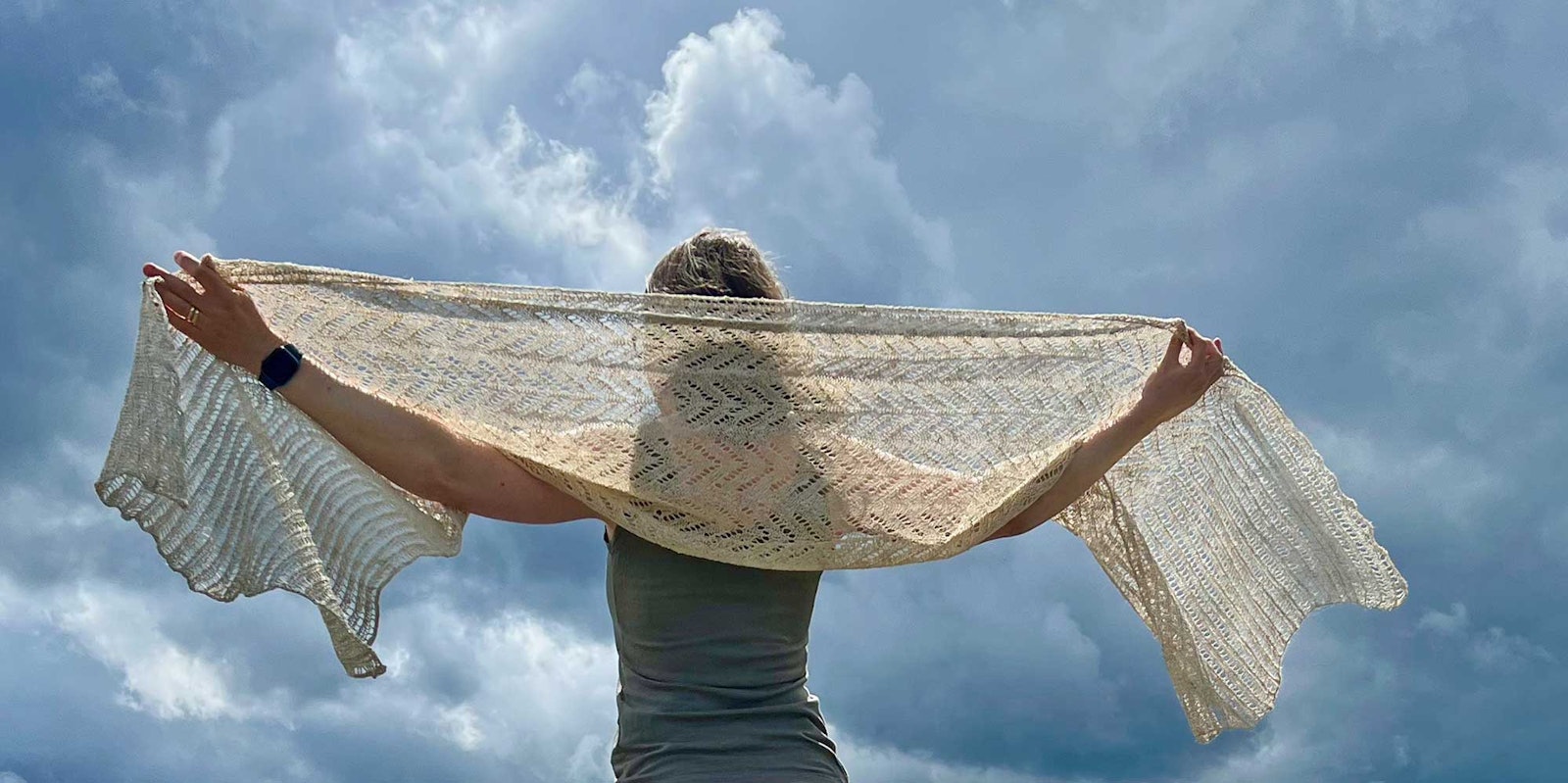
Editor’s note: Knitter, spinner, and author Josefin Waltin’s journey began with an antique strick of flax—a twisted bundle ready for spinning—and ended with a lace shawl knitted during a train ride from Sweden to Austria as she traced her family roots. Here, she shares what she discovered about knitting with linen along the way.
Inspired to knit with linen but need a few tips to smooth your path? Check out 14 Tips for Knitting with Linen Yarn.
Many knitters and spinners have heard of the Berta’s Flax project, started by Austrian spinner Christiane Seufferlein. After receiving a dowry chest filled with flax grown and prepared in the 1940s, Christiane began sharing the flax with spinners around the world. Other families soon contributed their own flax dowries, creating a chain of women’s textile histories passed from hand to hand. I was fortunate to receive one of those stricks.
 Some of Josefin’s flax from the Berta’s Flax project.
The Austrian flax was exquisite—the result of generations of skilled cultivation and processing. I spun my flax over the course of several summers on a wheel I named Henrietta after my Austrian great-grandmother. Her daughter, my grandmother Elly, came to Sweden from Vienna after World War I, and for decades our family traveled by train between Austria and Sweden to stay connected.
A Knitterly Journey
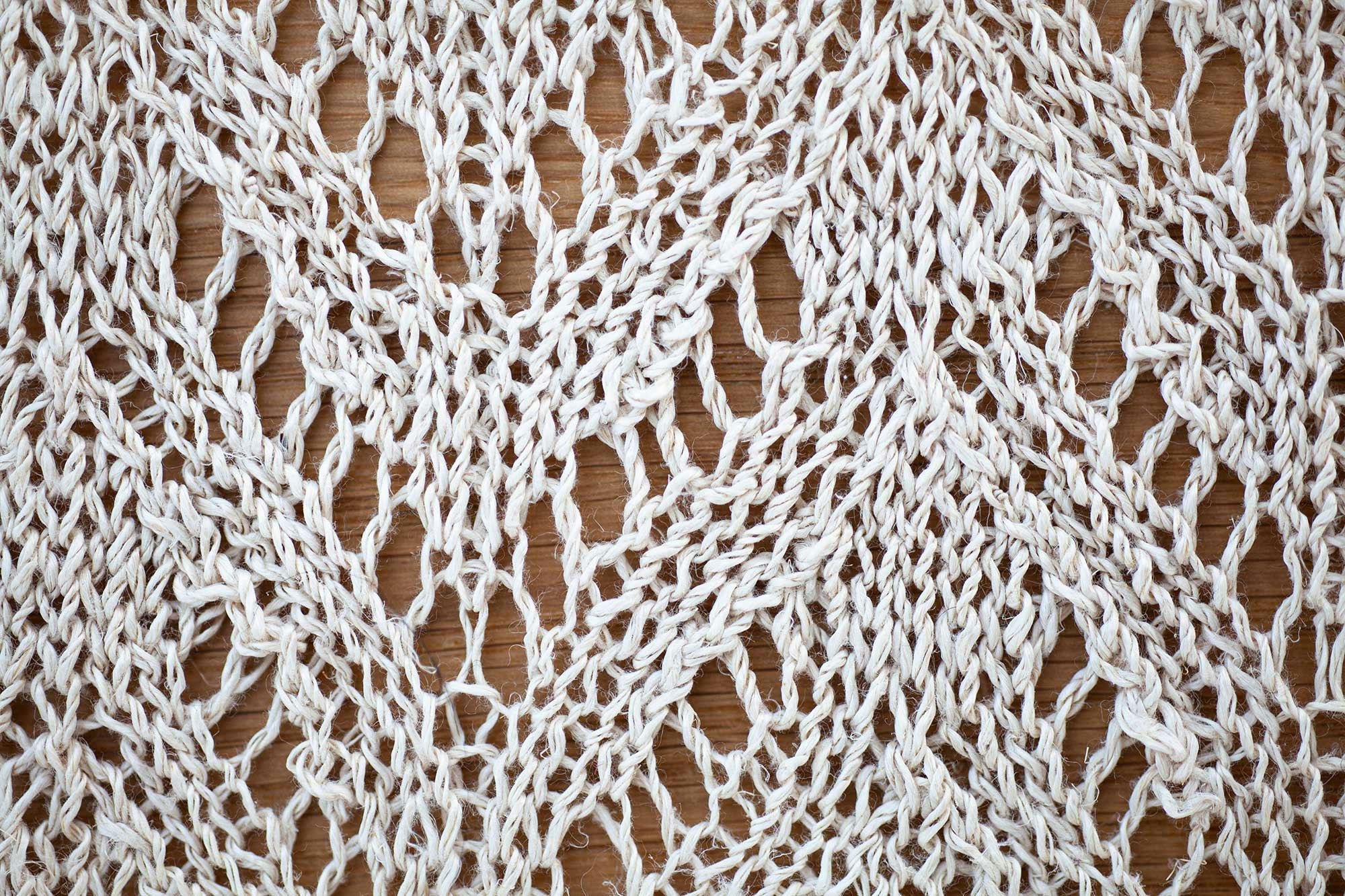
In a photo accompanying an article about the Berta’s Flax project, Christiane wore a beautiful shawl that I later learned was knitted from Nepalese nettles. Though I initially planned to weave with the yarn, I decided to use it to knit a shawl inspired by the one I saw in the photo. I chose a shawl pattern that featured a chevron lace center and a lace edge that resembled knitted fringe and I began knitting during a 24-hour train ride from Sweden to Austria with my family.
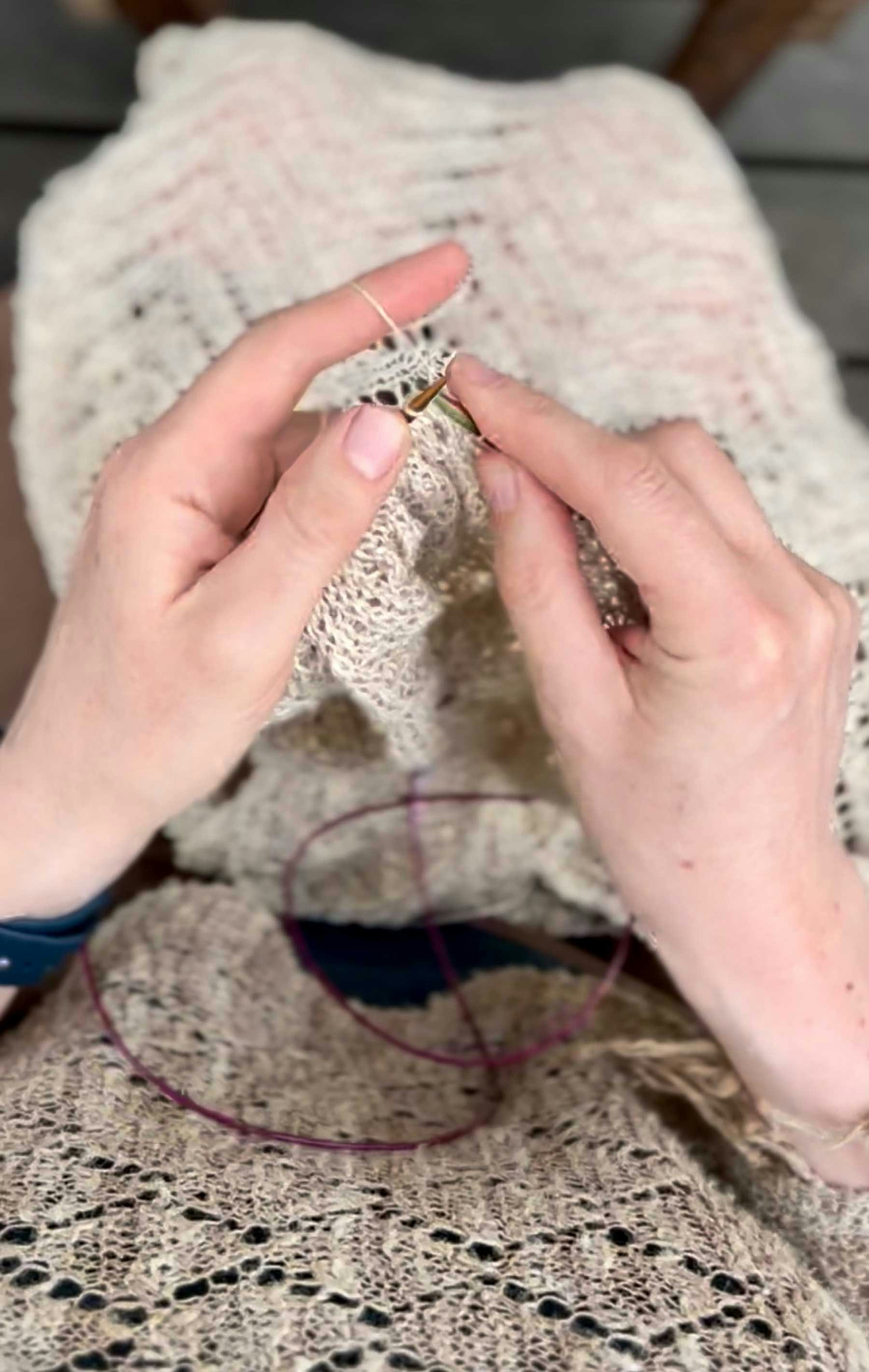
 Knitting on the train through Denmark. Photo by Josefin Waltin
As the linen yarn moved through my hands, I thought about my great-grandmother, my grandmother, and the generations of family members who had made this same journey across borders to be together. Knitting through Sweden, Denmark, Germany, and the beginning of the Alps in southern Bavaria, our train finally arrived in Salzkammergut, not far from the soil that nurtured the flax and my grandmothers and my father.
Knitting with linen is very different from knitting with wool. Linen has almost no elasticity, so it can feel demanding on the hands, but it’s that lack of elasticity that creates a beautiful drape that wool cannot match.
Click on any image to view in full-screen mode.
Connection to the Past
That summer in Austria, I spent a day in Salzkammergut with Christiane. She was wearing the beautiful lace shawl I had admired, and I showed her the lace knitting it had inspired. She took off her shawl and gave it to me—a gift I still treasure. More recently, Christiane visited me in Sweden; she wore a new Nepalese nettle shawl, and I finally wore my finished Austrian linen lace shawl.
 Christiane Seufferlein and Josefin met in Stockholm on a summer day. Christiane is wearing another Nepalese nettle shawl and Josefin is wearing her finally finished linen shawl. Photo by Josefin Waltin
At times, I sneak into my wardrobe and cuddle with the finished shawl. As I run my hands across the lace, I recall the feeling of the rocking train as I knitted, and I think of the train rides across the generations that brought my ancestors together.
Learn more about Josefin and follow her journeys:
On the web: waltin.se/josefinwaltinspinner
Instagram: @josefinwaltin
Facebook: Josefin Waltin spinner
And find out about her new book, Listen to the Wool: A Why-to Guide for Joyful Spinning.
More Resources
Berta’s Flax, facebook.com/groups/279258827044398.
Bertas Flax: International Flax Guild, bertas-flachs.at.
This article was adapted from an article in Spin Off Summer 2024.