
Editor‘s Note: In Part One of our series on ergonomics for knitters, Andrea Lui, a board certified orthopedic physical therapist and fiber artist, provided tips for avoiding many common knitting aches by making small changes in posture, grip, and regular stretching. Read her advice in Ergonomic Stretches Every Knitter Needs.
Here in Part Two, Andrea discusses how having smart positioning and proper posture while you knit can reduce headaches, ease shoulder tension, and protect your hands from fatigue.
Posture is a hot topic among knitters, since we often sit still for long periods of time while we knit. Those inevitably long knitting sessions can take a toll on the body, so setting yourself up for success can help stave off aches and pains. If you’re experiencing discomfort while knitting, or afterward, these postural guidelines may shed light on habits that could be a contributing factor. Please keep in mind that these are guidelines, not hard-and-fast rules—every body is different, and how our bodies respond will vary. At the end of the day, listening to what your body is telling you is key.
Head and Neck
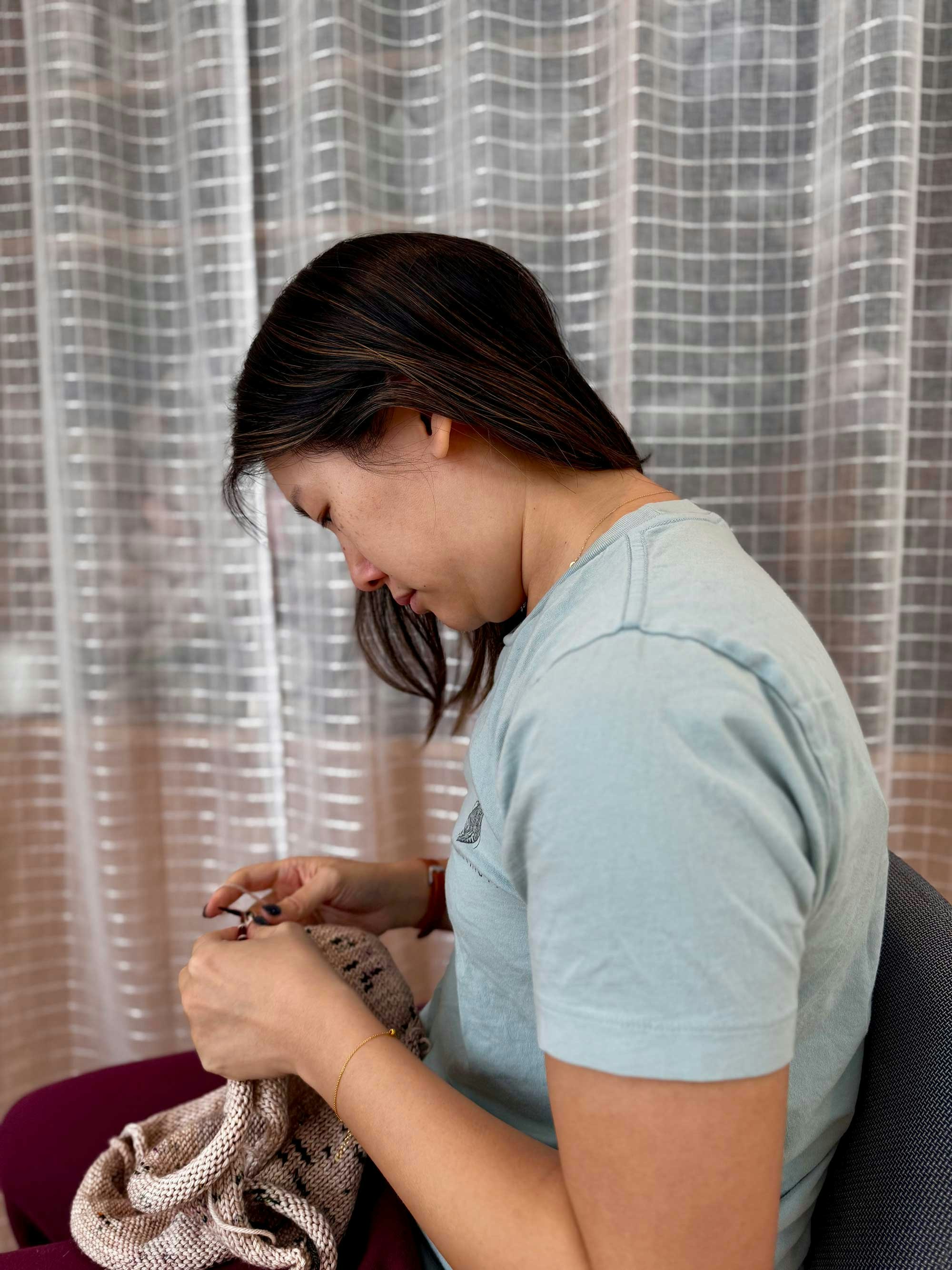
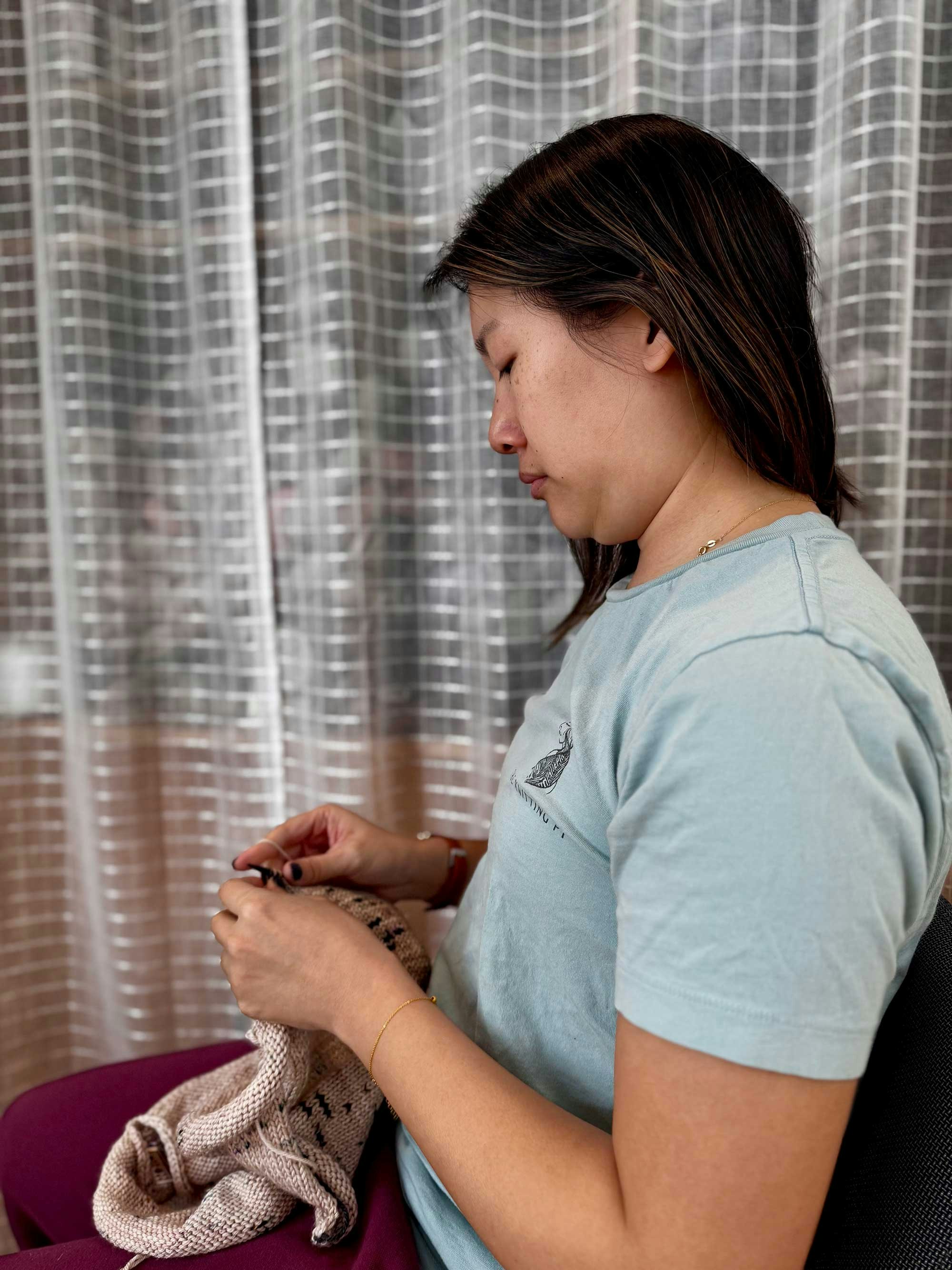
Let’s begin with the head and neck. One of the most common postural issues I see in knitters is a forward head position, where the chin juts out or the head bends down for extended periods of time. The head weighs about 12 pounds, and for every inch the head shifts forward off the neck, an additional 10 pounds of force is placed at the base of the neck. It’s no wonder neck soreness and headaches are so common. To ease strain, try gently tucking your chin back and then looking down slightly. This allows the head to pivot on top of the neck while maintaining better head and neck alignment.
Click on any image below to get a closer look.
Shoulders, Arms & Hands
Next, consider the shoulders, arms, and hands. The shoulders should feel relaxed—not hiked up toward the ears or curled forward. Keep the elbows relatively close to your sides and avoid excessive bending at the elbows, as prolonged or deep elbow flexion can contribute to compression or irritation of the ulnar nerve near the “funny bone” area.
Just as important, the wrists and hands should remain as relaxed as possible. Avoid gripping your needles or project tightly, as constant tension can lead to muscle fatigue, aches, and the development of painful “knots” over time. Using pillows or arm supports can be extremely helpful for supporting the arms and hands and reducing unnecessary tension. Experiment with different placements to find what feels best for your body. If you struggle to see your project, elevating it on a pillow in your lap can help bring the work closer to eye level without sacrificing head positioning or increasing arm fatigue.
 Keep your elbows close to your sides as you knit, and avoid gripping your needles too tightly. Being conscientious of your posture can help prevent muscle fatigue in the long run.
Lower Body Positioning
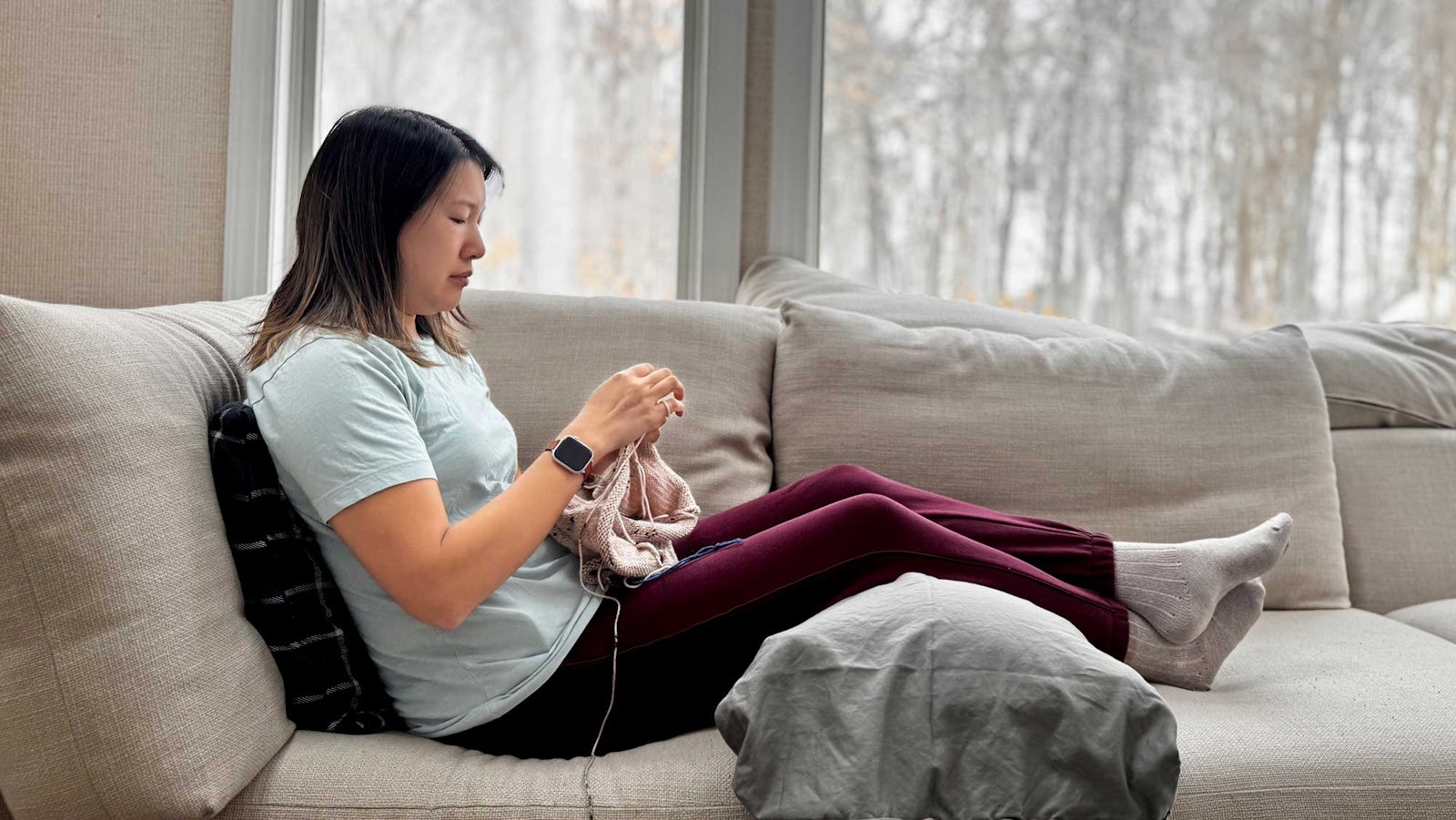
For the lower body, aim to keep your back supported. Adding a cushion or rolled towel behind the small of your back can provide extra support if needed. Ideally, the hips should be level with weight evenly distributed between both sides, and the knees positioned slightly lower than the hips, though many knitters prefer to sit cross-legged without issue. A slight bend in the knees is often the most comfortable and ergonomic position, with the feet supported on the floor. Recliners can also work well, as they provide support to both the back and legs. If you have a history of low back pain or sciatica, avoid sitting with your legs fully extended in front of you for long periods of time. Introducing a gentle bend at the knees—such as by placing a pillow underneath them—can help reduce tension on the sciatic nerve and may lessen discomfort.
 To reduce lower-body tension, keep your back supported, with the hips level and knees slightly lower than the hips.
The Importance of Movements and Breaks
Self-awareness plays an important role in troubleshooting postural issues. Try scanning your body about once an hour and notice which areas feel uncomfortable and what position your body is in at that moment. Another way to uncover postural habits is to set up a camera to record yourself knitting. I recommend recording for at least 10 minutes, as this allows your body time to settle into its usual patterns.
At the end of the day, one of the most important things you can do for your posture and overall comfort is to take breaks—especially breaks that involve changing positions. Even brief movement breaks give your muscles and joints a chance to recover. This can be as simple as standing up to get a glass of water, rolling your shoulders, or gently moving your wrists before settling back in with your knitting. You can even incorporate the stretches from Part One of this series.
Visit Andrea at ptandrea.com or on Instagram, TikTok, and YouTube as TheKnittingPT.