
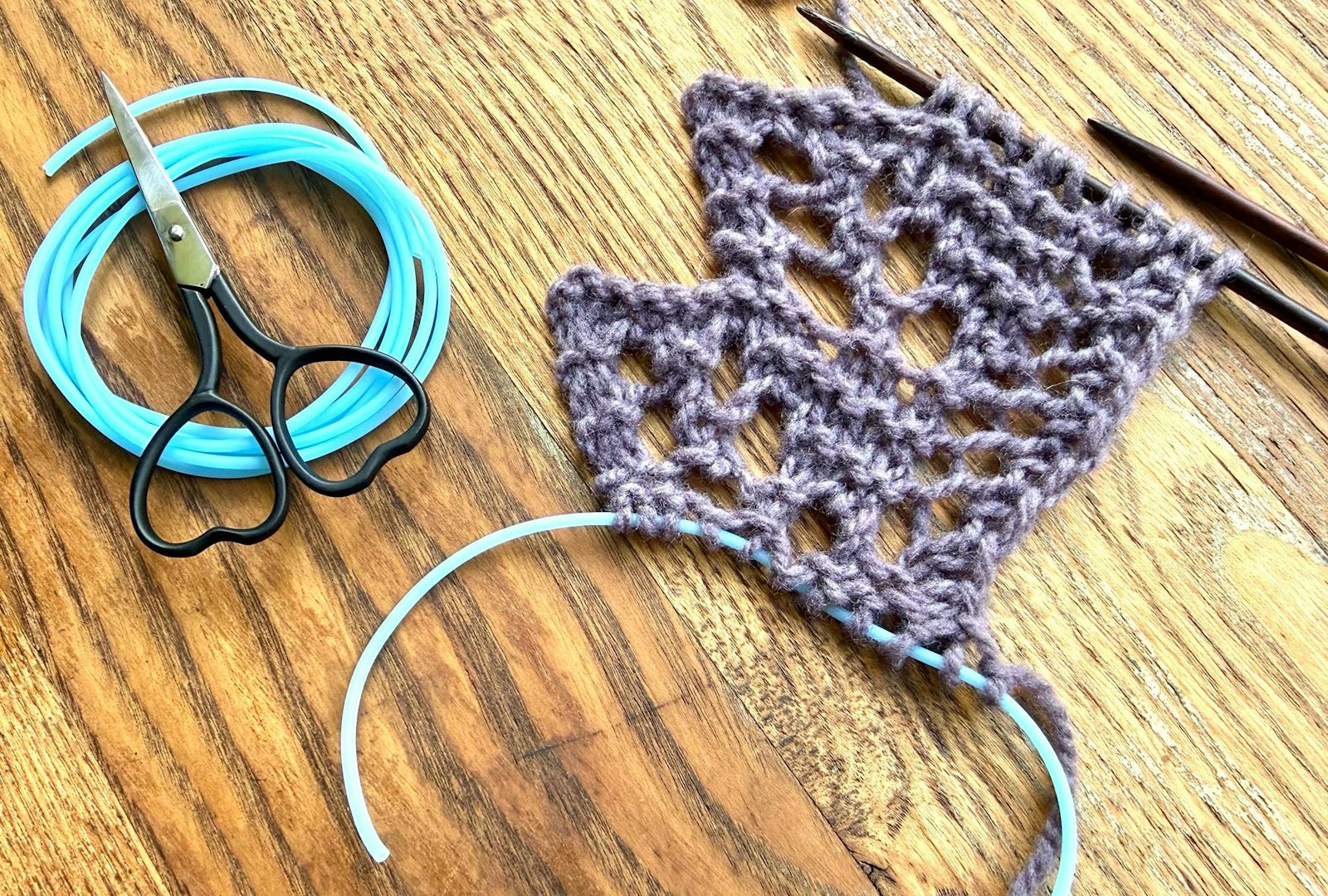
Love it or hate it, the provisional cast-on is an essential knitting technique. Whether you’re making a folded hem (as in the Evergreen Hat by Amanda Buckley in the upcoming Fall 2026 issue of Farm & Fiber Knits), adding a lace edge (as in Meg Swansen's Lace-Edged Blanket or Shawl), or adding a border, a provisional cast-on gives you easy access to live stitches along a cast-on edge.
 Sneak peek! The folded hem on Amanda Buckley’s Evergreen Hat in the upcoming Fall 2026 issue of Farm & Fiber Knits gives this classic topper a tailored look. Photo by Gale Zucker
Many patterns call for using a crocheted provisional cast-on, and you can find our video tutorial for that technique here. But maybe you don’t have a crochet hook handy. Or perhaps you’ve never really been comfortable with crochet. The open provisional cast-on is a great technique to add to your knitting repertoire.
What is the Open Provisional Cast-On?
The open provisional cast-on is a method for casting on the first row or round of your piece while leaving the “bottoms” of those stitches available to work later.
In addition to your working yarn and a knitting needle, you need something to hold the live stitches at the cast-on edge. The open provisional cast-on can be worked over waste yarn or the cord of a circular knitting needle, but for this demonstration we’re going to use 2mm silicone cord. You can purchase this cord precut to convenient lengths at yarn stores under the trade names Barber Cord or Knitcord, you can also buy a large spool and cut off the length you need. I use this flexible cord as a stitch holder, and always have some tucked into my notions pouch.
How to Work the Open Provisional Cast-On
Begin by making a slipknot in your yarn, inserting the cord through the loop, and pulling it snug. This slipknot does not count as a stitch; it will be removed later.
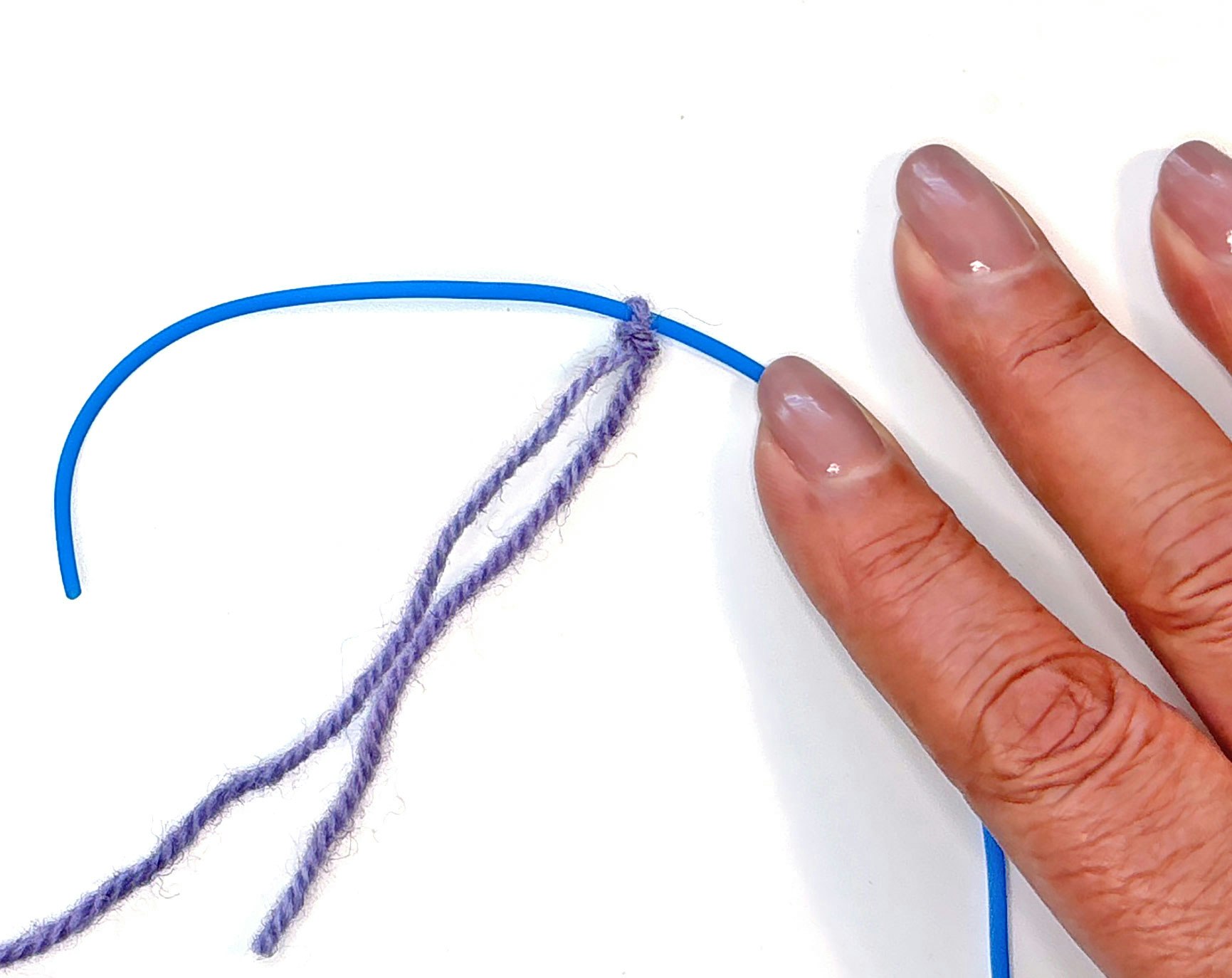
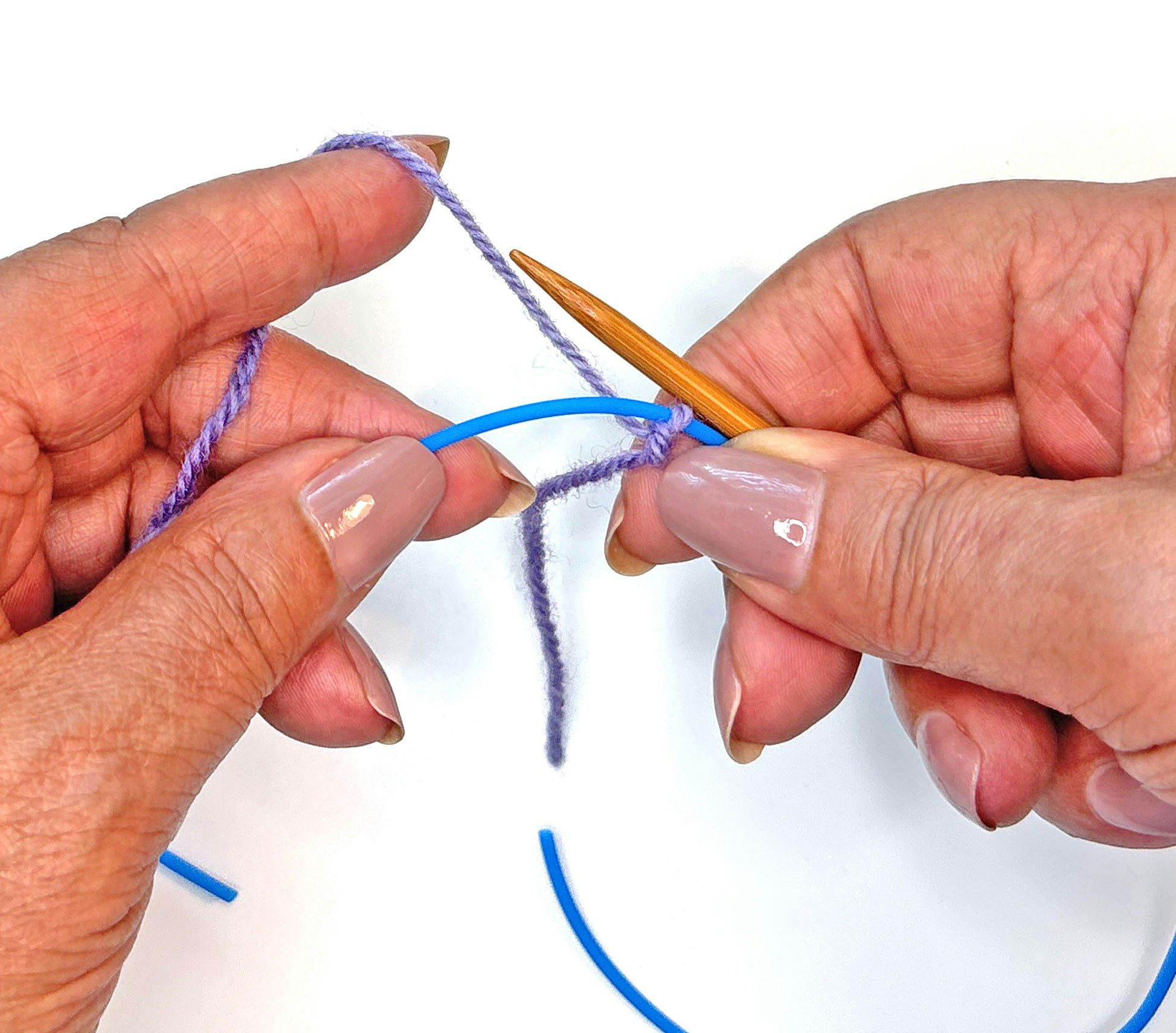
At left: Use a slipknot to attach the working yarn to the cord or other stitch holder. Right: Hold the needle and cord together in your right hand and hold the working yarn in your left hand.
Step 1
Make a yarn over; that’s your first stitch:
 Step 1: Yarn over the needle.
Step 2
Bring the needle underneath the cord, catch the yarn, and pull a loop forward and up. You now have 2 stitches on the needle and 2 stitches on the cord:
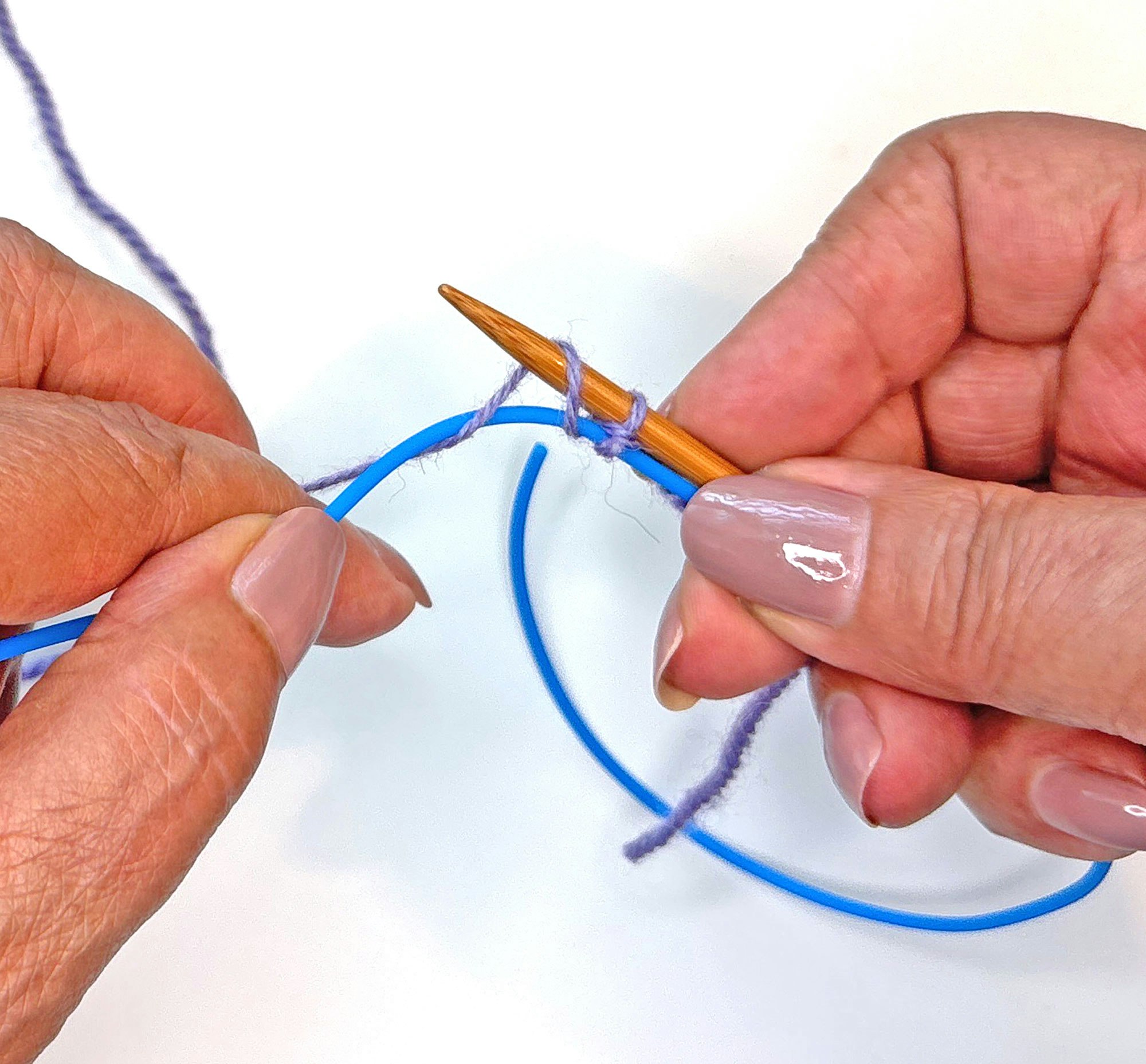
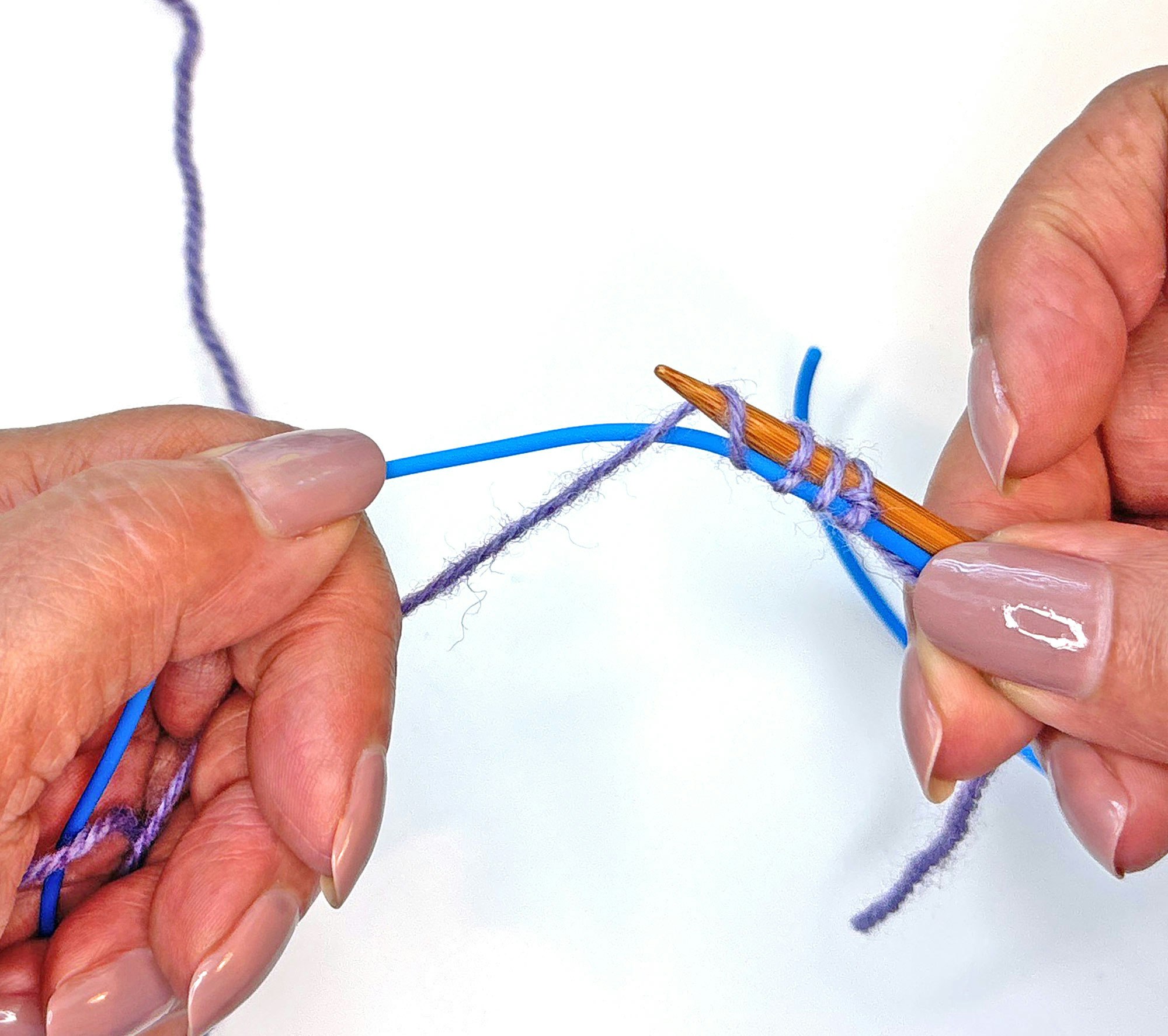
Repeat Steps 1 and 2 until your needle holds the number of stitches you need.
Work with a consistent snug tension. I cast on 20 stitches.
Don’t worry if it looks like the wraps around the cord look crossed or jumbled—they will straighten themselves out as you knit the first row.
 Twenty stitches cast on.
Turn the work.
Make sure the yarn flows in front of the cord (that’s the 20th stitch on hold). You are ready to work your first row:
 As you begin to knit the first row, be sure the yarn travels in front of the cord, then into position to knit.
If you’re working the open provisional cast-on for a pattern that calls for a crochet provisional cast-on, watch out for the set-up row. When a provisional cast-on is worked with waste yarn, the pattern usually includes a wrong-side set-up row in the working yarn. With the open provisional cast-on, that first row of working yarn is already on your needle. You can skip the set-up row.
When that first row is complete, you’ll notice that the stitches on the cord are neatly lined up. You can tie the ends of the cord together for extra security, but I find the cord stays in place until you’re ready to pull it out.
 As you knit the first row, the stitches on the cord line themselves up neatly.
When it’s time to work those stitches at the cast-on edge, your approach will vary depending on the stitch holder you used. If you cast on over waste yarn, transfer the stitches to your knitting needle. If you used silicone cord, insert the tip of your knitting needle firmly into the hollow end of the cord. Then simply slide the stitches from the cord onto your needle.
 Push the tip of your knitting needle firmly into the end of the hollow cord.
When you get to the slipknot, drop it.
Remember, it doesn’t count as a stitch.
 Drop the slipknot when you come to it.
You’re all set to join your yarn and work in the other direction!
 I changed color for the first row in the other direction.
Give the open cast-on a try the next time your pattern calls for a provisional cast-on. It’s always good to know more than one way to accomplish a task, and you may find this becomes your preferred provisional cast-on method.
Try It!
Use the open provisional cast-on on these brand-new projects in the Fall 2026 issue of Farm & Fiber Knits, coming September 10, 2026:
- Evergreen Hat, by Amanda Buckley
- Grainline Scarf, by Anna Husemann
- Persinette Shawl, by Juliette Pécaut