Subscriber Exclusive
Change Your Needles, Change Your Ribbing
The secret to better ribbing might be sitting right in your needle case. Try a different size needle and see what a small change can do.
The secret to better ribbing might be sitting right in your needle case. Try a different size needle and see what a small change can do. <a href="https://farmfiberknits.com/change-your-needles-change-your-ribbing/">Continue reading.</a>
https://farmfiberknits.com/cdn-cgi/image/format=auto/https://www.datocms-assets.com/101500/1788393896-traverse-toque-ribbing-header.jpg?auto=format&w=900
Knitting comes with plenty of questions: Why isn’t my ribbing behaving? Which needle should I use? Can I fix this without ripping back? We love getting these kinds of questions because they give us a chance to dig into the details.
Here’s a question we recently received, specifically about ribbing, and one of our techy knitters, Laura, dove right in.
Dear Laura: Why do patterns always call for using smaller needles for ribbing? It’s annoying to have to bring two pairs of needles to knit night whenever I start a new project!
Laura: Ah, yes, the old needle switcheroo when you’re starting a new project! Start your project with one size, then change to another shortly after. I can understand your frustration, but let me assure you that the smaller needles for ribbing are indeed necessary. They will make your ribbing much tidier and your project will look better overall. Let me explain why.
Why add ribbing to begin with?
SUBSCRIBER EXCLUSIVE
Knitting comes with plenty of questions: Why isn’t my ribbing behaving? Which needle should I use? Can I fix this without ripping back? We love getting these kinds of questions because they give us a chance to dig into the details.
Here’s a question we recently received, specifically about ribbing, and one of our techy knitters, Laura, dove right in.
Dear Laura: Why do patterns always call for using smaller needles for ribbing? It’s annoying to have to bring two pairs of needles to knit night whenever I start a new project!
Laura: Ah, yes, the old needle switcheroo when you’re starting a new project! Start your project with one size, then change to another shortly after. I can understand your frustration, but let me assure you that the smaller needles for ribbing are indeed necessary. They will make your ribbing much tidier and your project will look better overall. Let me explain why.
Why add ribbing to begin with?
[PAYWALL]
First, as I’m sure you know, ribbing is one of the most common edgings for hats and sweaters. It’s used for a few different reasons. First, it prevents stockinette stitch from curling. If you want a flat, straight hem on your project, you need a balanced stitch pattern that uses an equal number of knit and purl stitches. Second, it’s stretchier and pulls in more than stockinette stitch. Sweaters need a firm but stretchy edge to keep the hem from stretching out. For hats, you want a snug hem that hugs your head, not a loose sack that flops breezily around your ears. Ribbing is one of the simplest stitch patterns to achieve this.
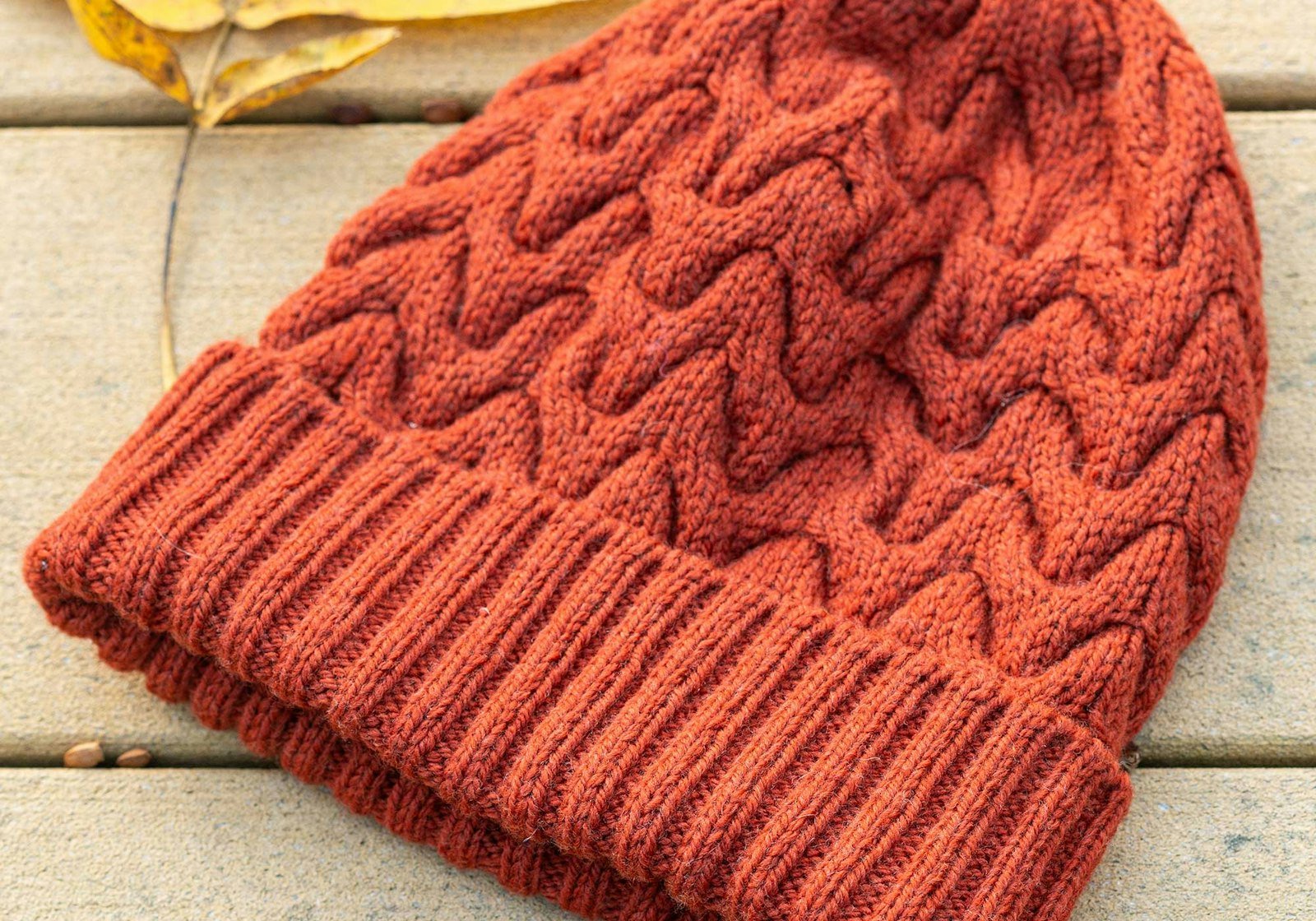
 Hats like the Montadale Beanie by Benjamin Krudwig use ribbing to hold the hat on your head and keep your ears warm.
However, ribbing does have its own little quirk—knit stitches in a rib pattern are larger than knit stitches in stockinette stitch. If you use the same size needles for the ribbing as for the stockinette stitch section of your sweater, I think it appears a bit odd and disproportionate. (No judgement if you like how it looks—you knit however you want to!) The ribbed knit stitches look larger and more open and won’t flow cleanly into your stockinette knit stitches. It also doesn’t pull in as much, which may be a drawback or a benefit depending on the look you’re going for.
Here, I used the same needle for both the ribbing and the stockinette section on the swatch. Note how the rib stitches appear larger and a bit stretched out compared to the stockinette stitch section.
 Laura used the same size needles for the ribbing and stockinette sections.
To counteract this quirk, most patterns will call for smaller needles to work the ribbed section. By using smaller needles, you’re making smaller stitches. This includes those pesky knit stitches in the rib pattern. By making smaller stitches, you’re creating ribbed knit stitches that are closer in size to the knit stitches in your stockinette stitch. This creates a tidier, more cohesive transition between the two stitch patterns. Try swatching with a few different combinations of needle sizes and choose whatever you like best.
In this swatch, the needle I used to work the ribbing was two sizes smaller than the needle used for the stockinette stitch. The knit stitches in the two stitch patterns are closer in size.
 Laura used a needle that’s two sizes smaller for the ribbed section.
But why are the stitches different sizes between rib and stockinette? I’m using the same size needles; shouldn’t the stitches be the same size?
In theory, yes, but in reality, no. The secret isn’t in the stitches themselves, but in how the stitches are formed and how the yarn moves between the stitches. It’s not you.
When you’re working in stockinette stitch, the working yarn remains on the same side of the work throughout the row. It stays to the back for knitting or to the front for purling. However, when you’re working in ribbing, you have to move the yarn from front to back and vice versa each time you change between knitting and purling. This uses a tiny bit more yarn with every stitch. It’s like you’re working a miniscule yarnover each time you move the yarn. The extra yarn gets pulled into the knit stitch, making it slightly bigger. This is most obvious on k1, p1 rib, since you’re moving the yarn between every stitch. On k2, p2 rib, you’re moving the yarn half as often, so the stitches are more similar to stockinette stitch.
How we as individual knitters tension our yarn varies, and this can impact how loose or snug that little transition from purl to knit or knit to purl will be. If a pattern asks you to work the ribbing in needles one size smaller than the body, knit a swatch to see if that fits your knitting style. You might decide to go down two sizes, as I did in the swatches above.
This swatch used the exact same needles as the previous swatch—smaller needles for the rib section, larger needles for the stockinette stitch section. The knit stitches are even closer in size between the two sections.

So yes, you should use a smaller size needle for ribbing if you want snug, tidy ribbing. It’s worth the (very small) bother of tucking an extra pair of needles in your knitting bag when you’re starting a new project.
—Laura
Try it!
Find instructions for the Montadale Beanie and Traverse Toque in the Farm & Fiber Knits Library.
Have a technical question? Curious about yarn selection or substitutions? Wondering about a certain tool?
Send your questions to us via our email address. Your question just might be answered in this very space!