
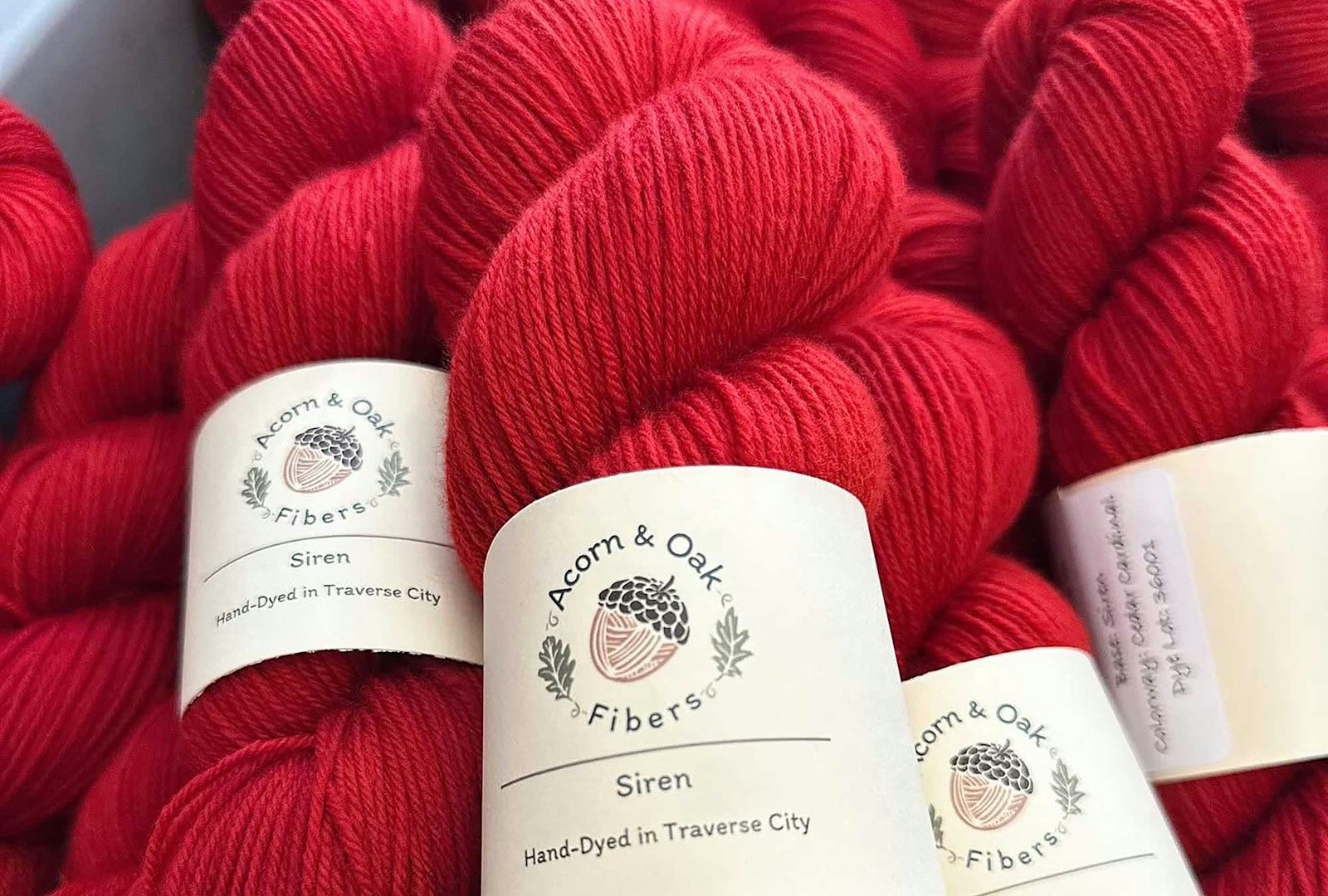
Several important US woolen mills have closed in recent years, but there are also new mills just getting started. In some cases, the legacy equipment is packed up and carefully moved to a new home.
In 2025, Kat Eldred heard that the owners of Stonehedge Fiber Mill in Michigan would be closing. Kat had been hand-dyeing yarn for about 15 years and working with midwest mills and wool producers to create custom yarns as well as commercial yarn bases to dye, formerly as Why Knot Fibers.
She and her husband, Steve, decided to take the plunge and purchase the Stonehedge equipment with a goal of milling yarn for themselves and others. The new venture needed a new name, Acorn and Oak Fibers, and Kat has been sharing updates on social media as she learns the mini-mill ropes. We checked in to learn more.
—Kate.
 Kat explains, “We purchased the milling equipment from Stonehedge Fiber Mill and moved it to Leelanau County, where we produce yarns and spin fibers for ourselves and, eventually, others as well.”
Kate: First of all, congratulations, Kat! I was delighted to hear that the Stonehedge equipment found a new home in Michigan. What was it like to move such cumbersome machinery?
Kat: Thank you so much! It was an adventure for sure. We did the moving with the help of an amazing team that really came together by happenstance. We had a plan, and a backup plan, and then a backup to the backup plan. Moving such large machines is exciting, nerve racking, and a little scary, too, when one of them weighs upwards of six thousand pounds. This involved loaders, large trailers, a giant rented commercial truck, and a sky track that my husband learned to drive to get everything settled in its new home.
Get a closer look! Click any image in the gallery below to open it in full-screen mode.
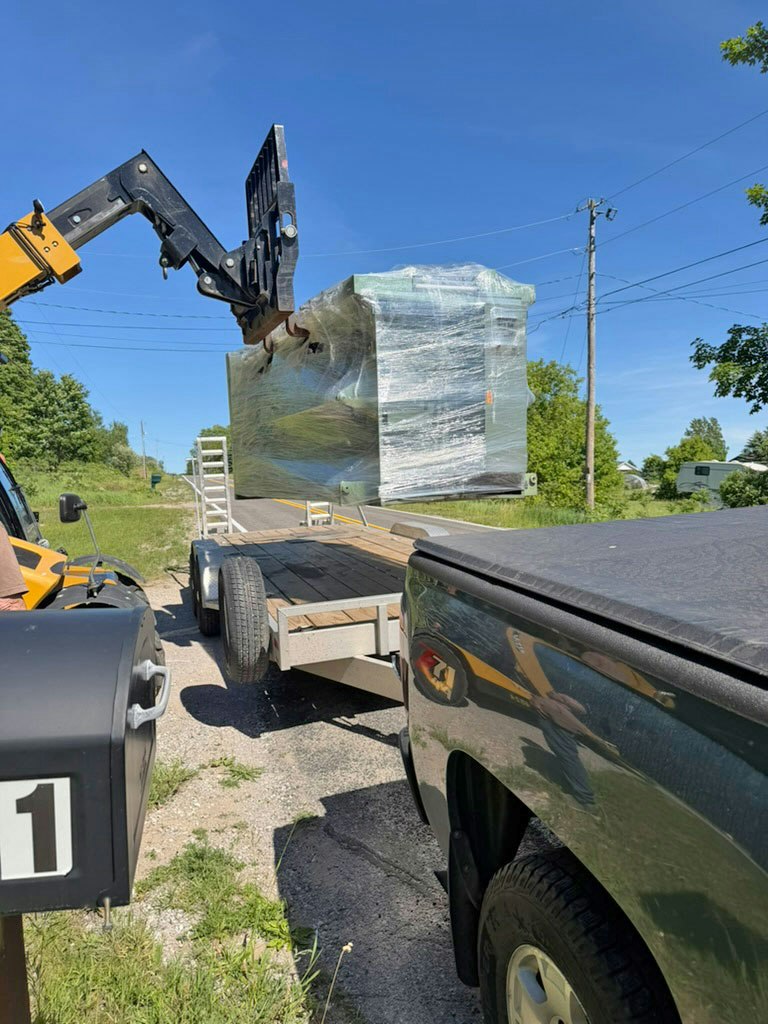
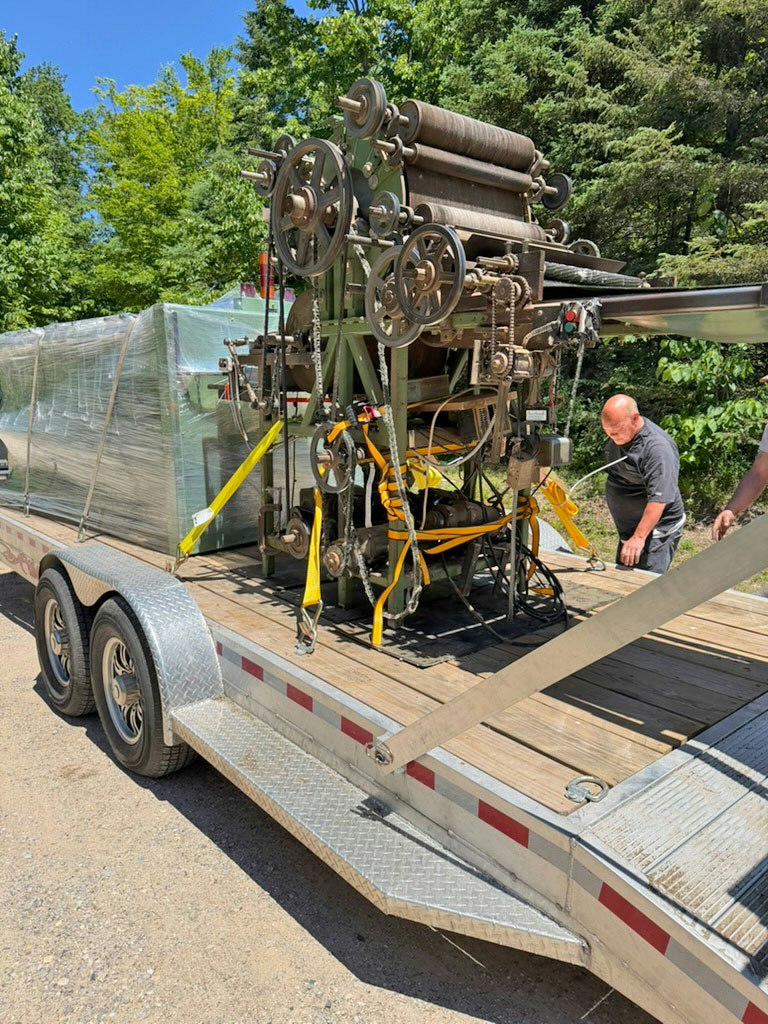
As anticipated, moving such large equipment turned out to be quite the endeavor! Success came about as a result of all of the planning.
Kate: Once you got the equipment set up, how did you go about testing and practicing?
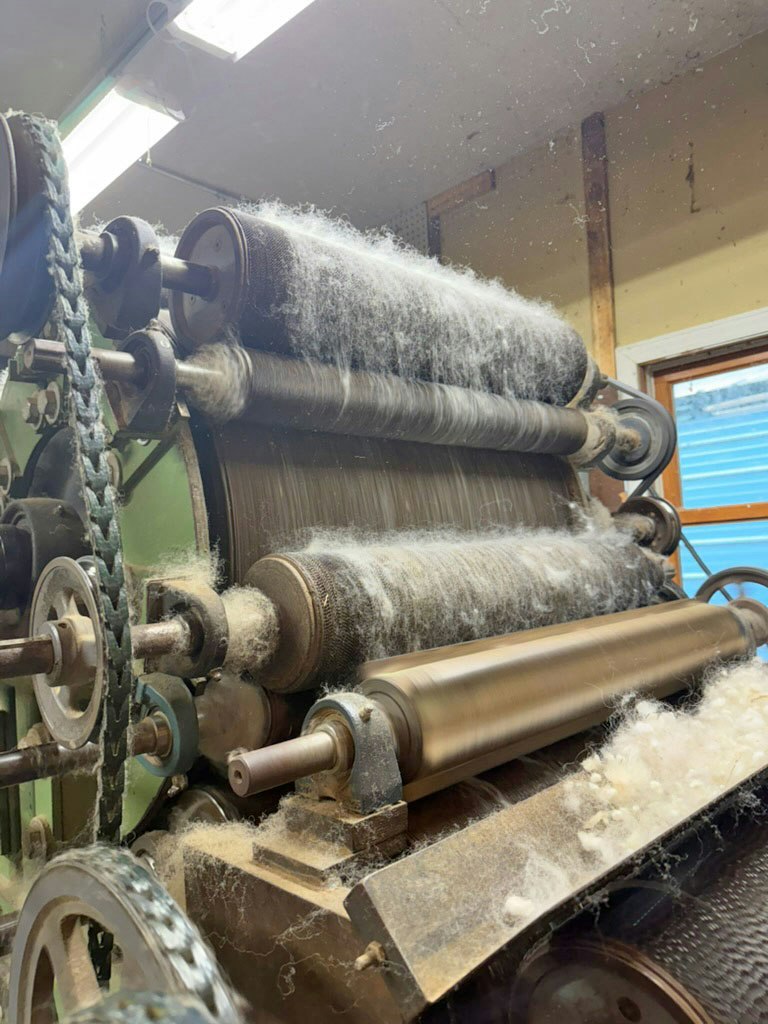
Kat: The simple answer is that we turned it on to check it. Really, it was going over it to make sure there were no damaged parts. As it turns out, one on/off switch did get damaged in the move, but that was an easy swap out thanks to our awesome electrician.
As far as practice, it is literally just time on the machines. Steve and I have been training on the equipment since last November alongside Debbie (the former owner of Stonehedge) and her daughter, Jamie, and granddaughter, Annabelle. They are wonderful teachers.
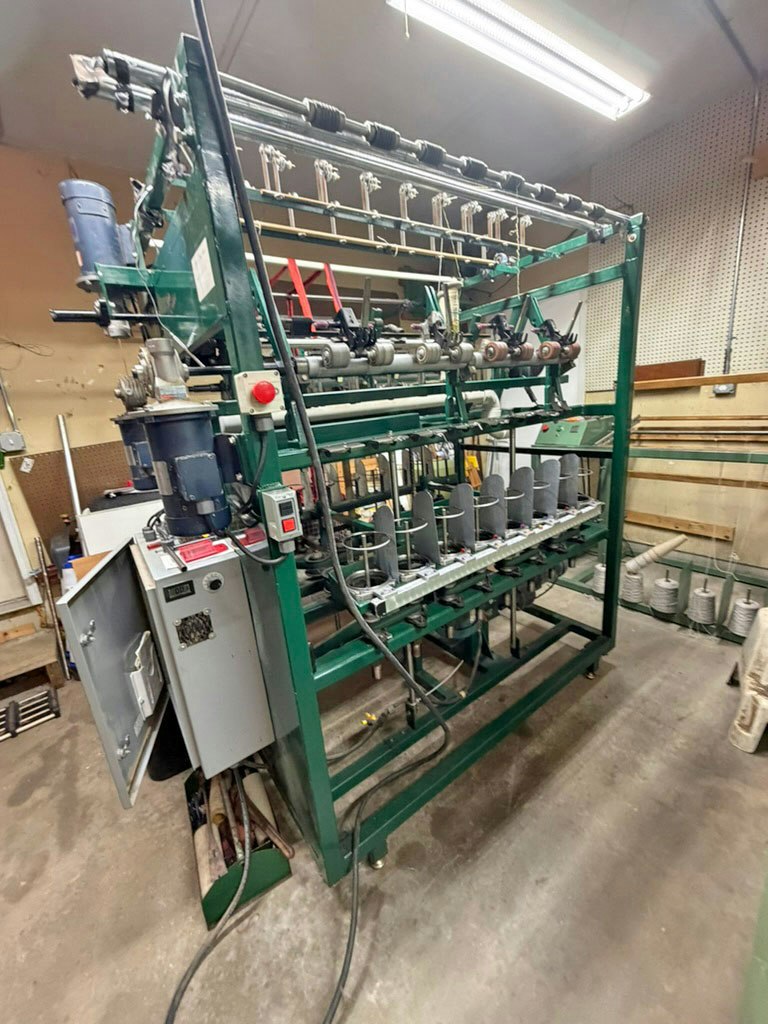
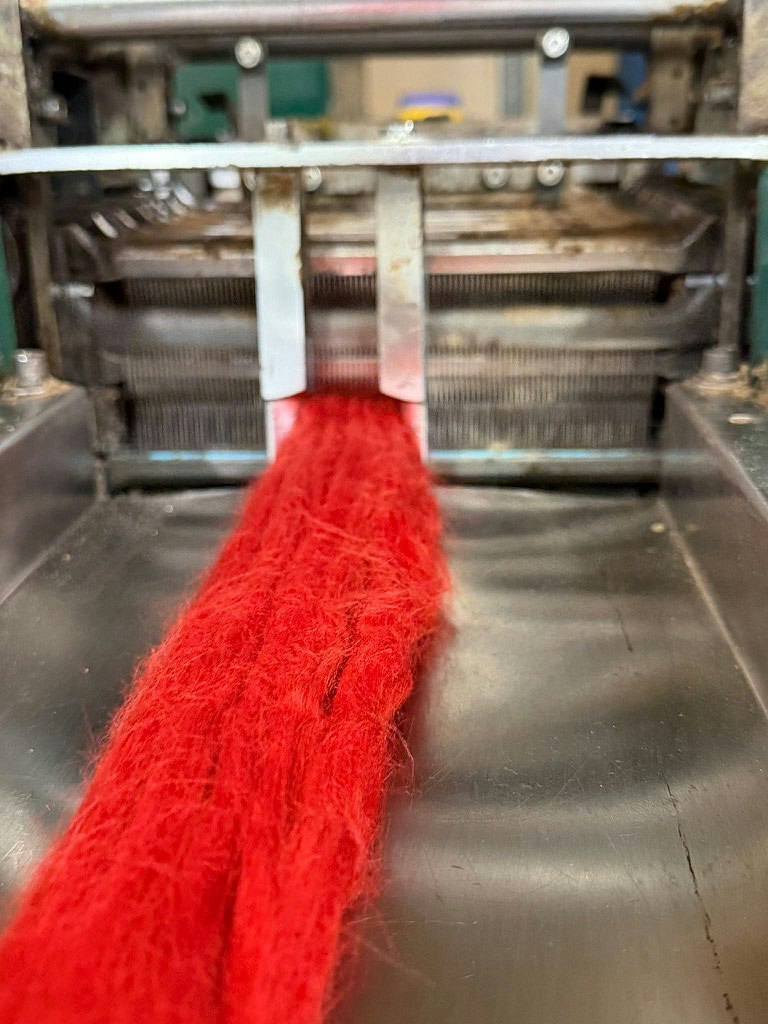
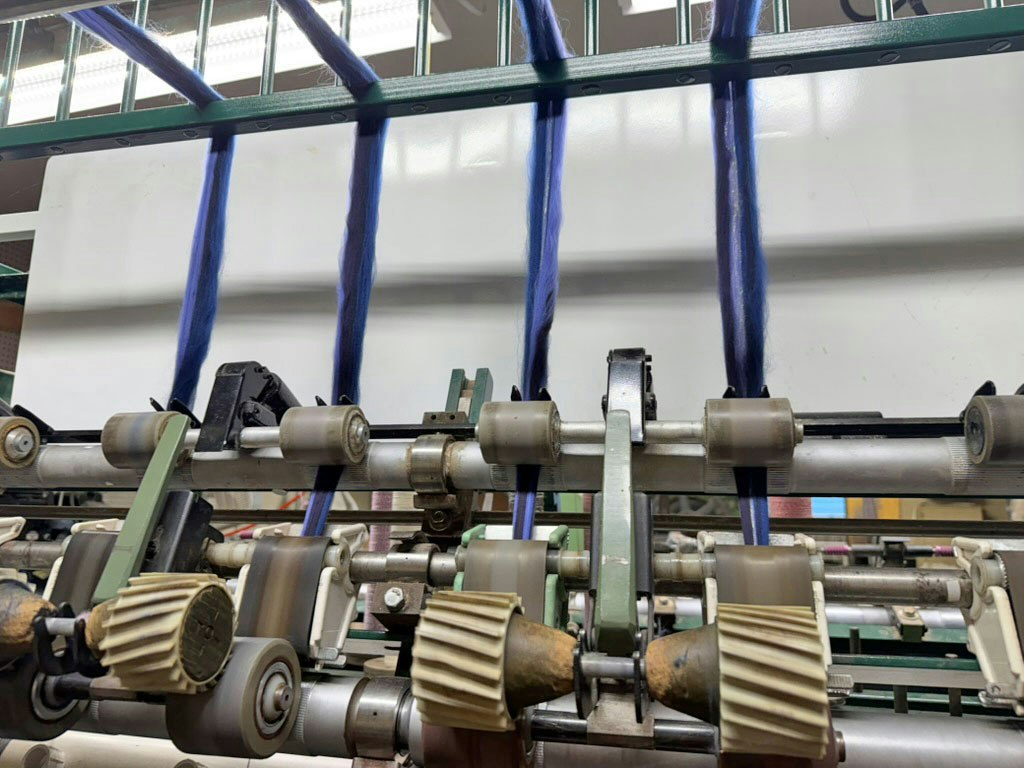
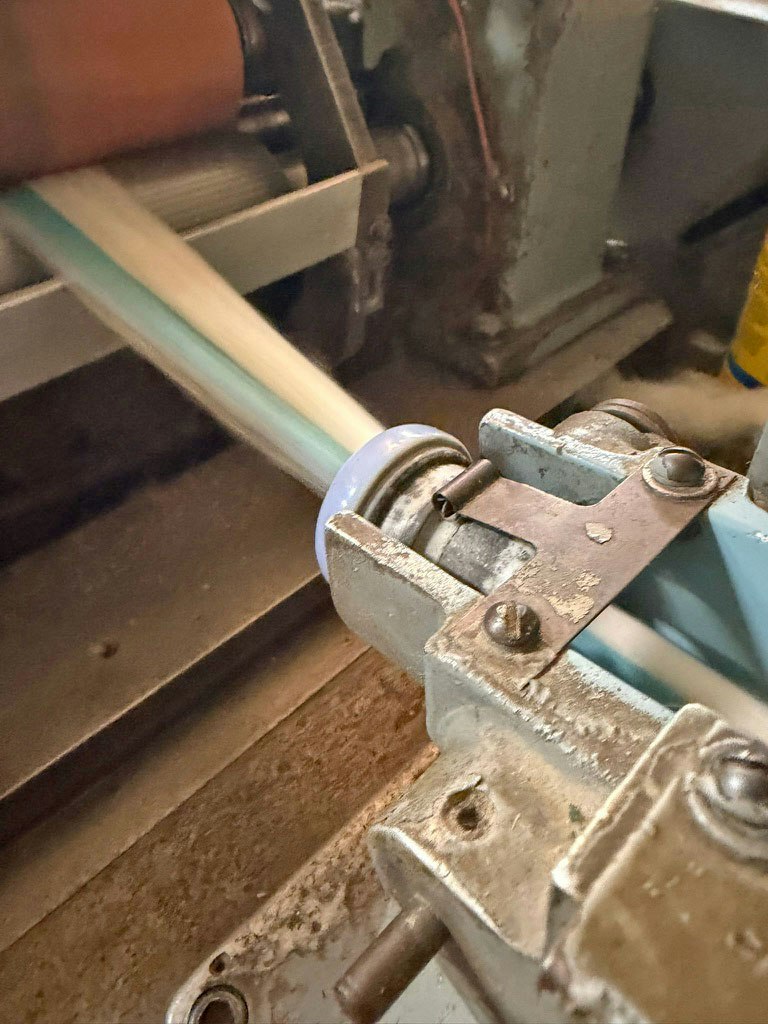
Kate: Will you continue to sell the yarns you have custom-spun at other mills? Selfishly, I’ve been looking forward to ordering more Scholar. I purchased a skein in Natural from you a while back (and our readers love it in the Icelandic bind-off tutorial) and can’t wait to get more.
Kat: Currently, yes, but this is going to be a slow transition. For example, Scholar is spun at Coyote Run Fiberworks by Nicole and Andy Foster (speaking of fabulous mentors). I’m not going to just cut off lines of yarn that I’ve carried. That would be rude to my shops and customers. My dyeing will continue largely the same in the short to medium term; both things can exist together—mini mill-spun yarn and hand-dyed commercial yarn. They’re both lovely.
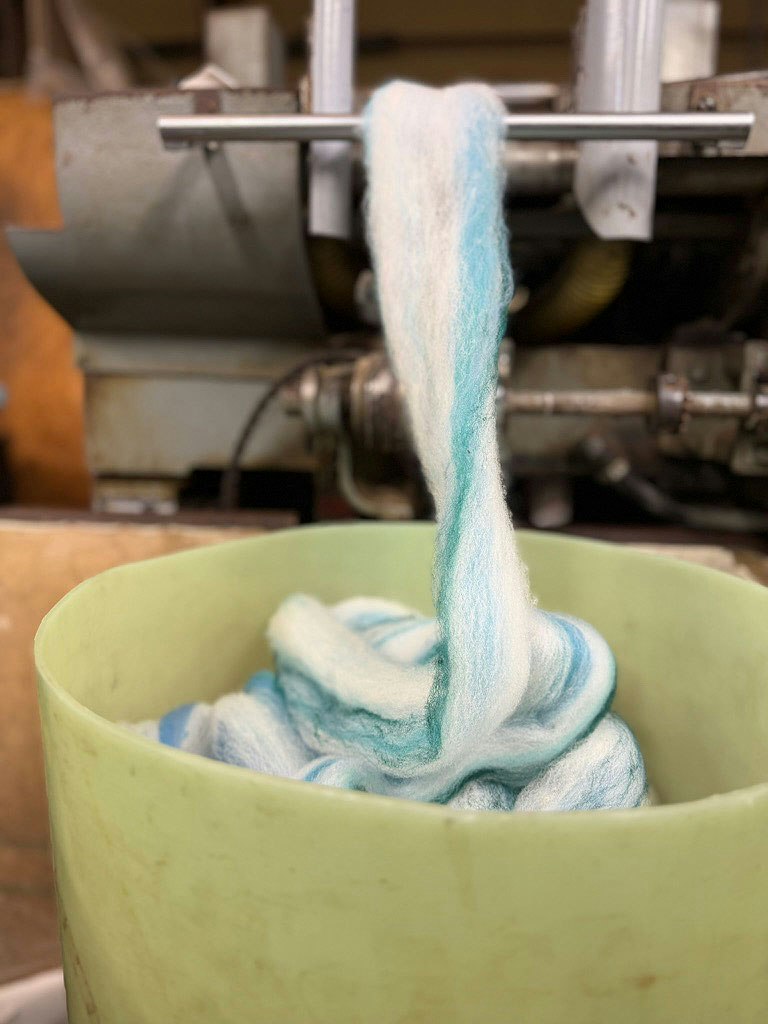
 Kat shares, “While processing the fiber is super fun, seeing the outcome of it all is one of our biggest joys. As we learn these new machines and process our own fiber, with our own dyes, we will be creating new and exciting creations along the way. Some will be things we will recreate, others we will learn from and change. We hope you’re enjoying our learning process and are as excited as we are!”
Follow the Acorn and Oak crew at @acornandoakfibers on Instagram, and learn more about the yarns at acornandoakfibers.com.