
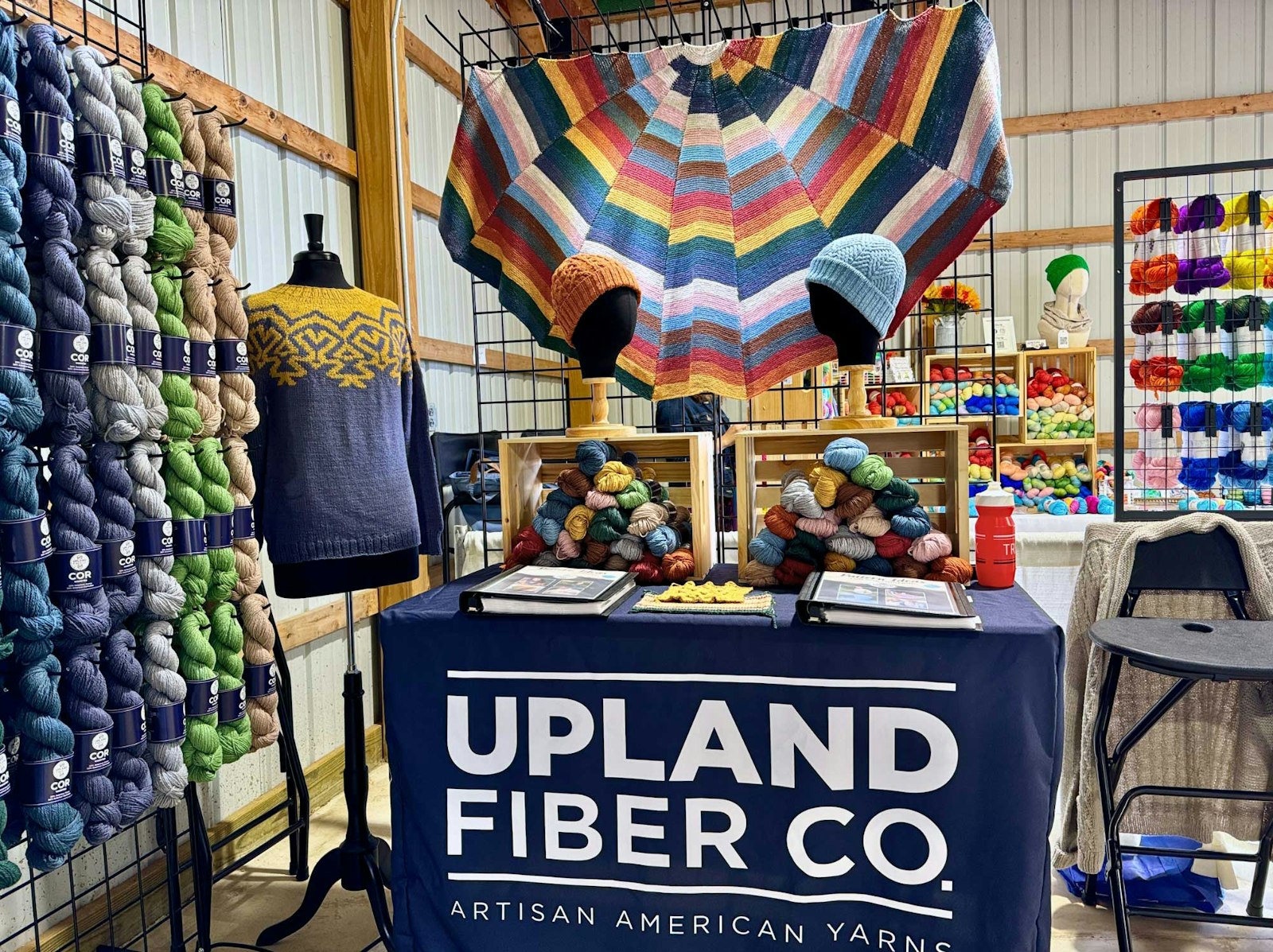
Many knitters fantasize about creating their dream yarn. Few actually do so, much less build a company around it. Yet that is exactly how Upland Fiber Co. came to be.
Before the COVID pandemic, Michael Seelbach was an actor, singer, dancer, and stage manager. He was part of the original Broadway cast of Wicked, toured the US with a variety of musicals, and appeared in films. In July 2024, he launched Upland Fiber Co. with COR, a blend of 50% Cormo and 50% Corriedale wool, in fingering and worsted weight.
 COR fingering, Upland Fiber Co.’s flagship yarn.
From Broadway performer to wool merchant seems like a huge leap. I sat down with Michael to learn about the path that took him from footlights to fiber festivals.
Michael’s Aunt Lynn taught him to knit when he was a small child. While working on touring productions, he filled the time on tour buses and airplanes with all manner of fiber crafts. But 2019 brought work in the theater to a screeching halt. Stuck at home in Connecticut during the pandemic, he found comfort in knitting.
What About the Wool?
As Michael’s knitting skills expanded, so did his curiosity about wool. He began to explore breed specific, American-made yarns from companies like Brooklyn Tweed and Hudson + West (sadly, both are now closed). He attended the New York State Sheep & Wool Festival (aka Rhinebeck) and began to experience the diversity of wool from different breeds of sheep. And he began to dream of his ideal yarn.
 Upland Fiber Co. owner Michael Seelbach with Corriedale lambs. Michael is wearing the Circuitry cowl knit in COR fingering.
That yarn would, of course, be wool. It would blend the bouncy softness of Cormo with the resilient durability of Corriedale. It would be a smooth, elastic yarn that would make long-lasting garments that were next-to skin soft. And it would tell the story of the people, land, and animals that contributed to its making.
Michael began to wonder what it would take to make this yarn a reality. He was surprised at how little information was available about the process and costs of developing and manufacturing yarn. Undaunted, he began to cold call wool mills throughout New England and the northeast. Instead of the details he was looking for, Michael found mill owners who did their best to discourage him, suggesting that he become an indie dyer of stock yarns.
It Started with a Mill Tour
On the label of a skein of yarn from Hudson + West, Michael found a reference to Battenkill Fibers Carding and Spinning Mill. He went to Battenkill’s website and saw that they offered mill tours. He scheduled a tour and made the three-hour drive north to the Upper Hudson River Valley.
Mary Jeanne Packer, the founder of Battenkill Fibers, was leading the tour that day. She was friendly, engaging, and willing to answer all of Michael’s questions. When he floated the idea of creating a Cormo/Corridale blend from scratch, she suggested they try a ten-pound sample.
Get a closer look! Click any image in the gallery below to open it in full-screen mode.
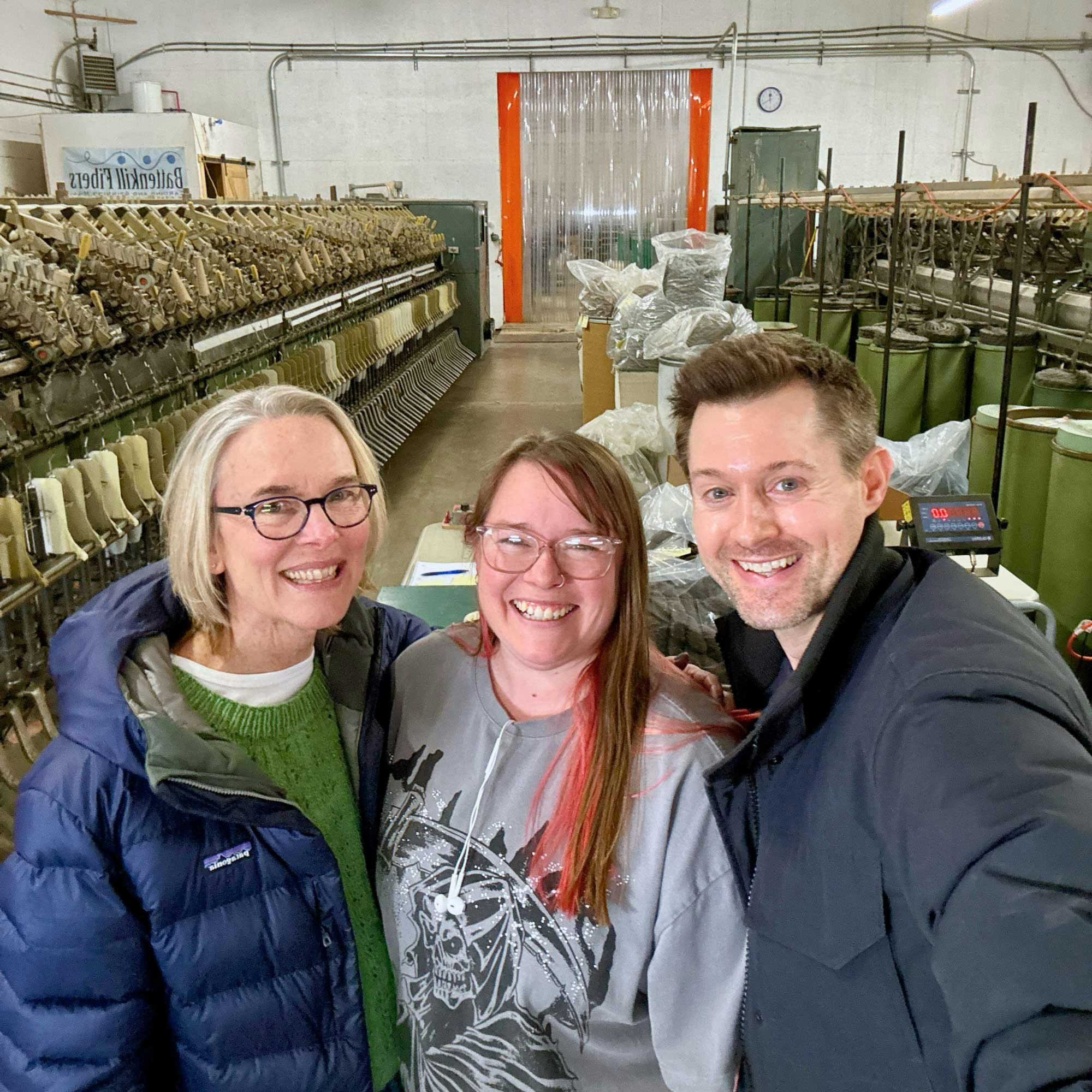
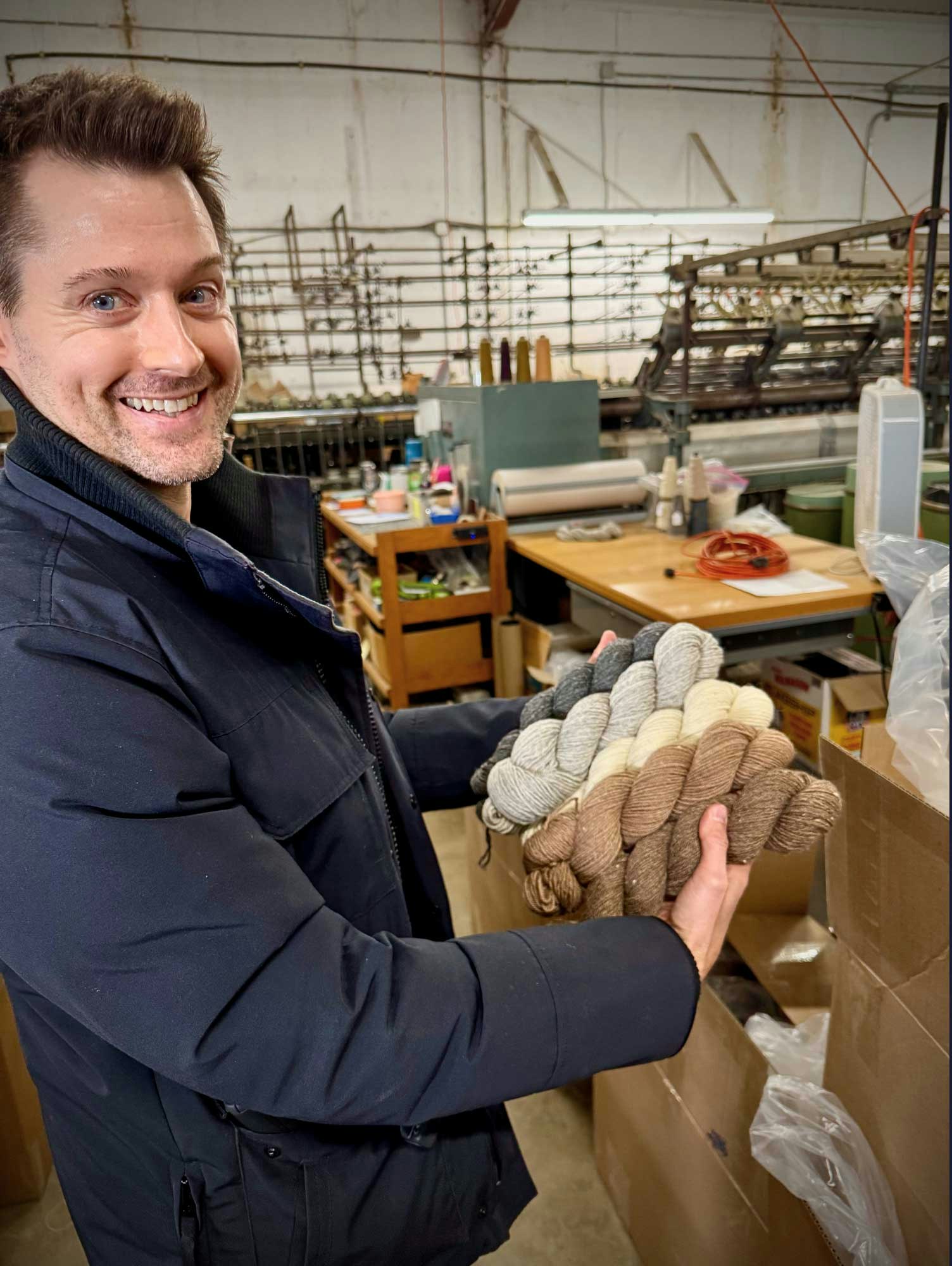
“A few months later, we had a sample, and I fell in love with it.” said Michael. “It was just a beautiful yarn, and it was what I was hoping it might be. But I still was on the fence. I didn’t know if I was ready to do this crazy thing.”
Then he got a call from Mary Jeanne. Rhinebeck was approaching. She had about 300 pounds each of Corriedale and Cormo from the same farms as the small sample batch. Did Michael want it? If not, the farmers would sell it at Rhinebeck. If he wanted to move forward, now was the time.
Michael’s father was diagnosed with a debilitating and ultimately fatal disease, and watching his decline shifted Michael‘s perspective. “I was very much in a space of ‘What’s the worst that could happen?’ You get one shot at this, and who cares? That’s life. Try it. If it fails, it fails. So, I decided to go for it,” Michael recalls. “I bought that 600 pounds, we put the order in, and I started preparing to open a company that I knew nothing about how to even create. But I knew I had about eight months to wrap my head around it and figure it out.”
 With Corriedale breeder Geof Ruppert and an award winning fleece still on the hoof at Rhineback in 2024.
Mary Jeanne from Battenkill introduced him to the farmers who grow his yarn. He was delighted to be able to join Geof Ruppert of Ruppert’s Corriedales for shearing last year. Michael says, “One of the reasons I wanted to do this was to have crazy new experiences. To do things that I wouldn’t otherwise get a chance to do and peek through doors that I wouldn’t normally get a chance to peek through.”
Local Wool, Local Dyers
Michael is passionate about his connection with the yarn he sells and dedicated to keeping every step in the process local. His fibers come from farms in New York and Pennsylvania. They are scoured at Clean Fleece and spun at Battenkill Fibers, both in New York. They are dyed at Caledonian Dye Works in Philadelphia. He is proud to be part of rebuilding the American textile industry.
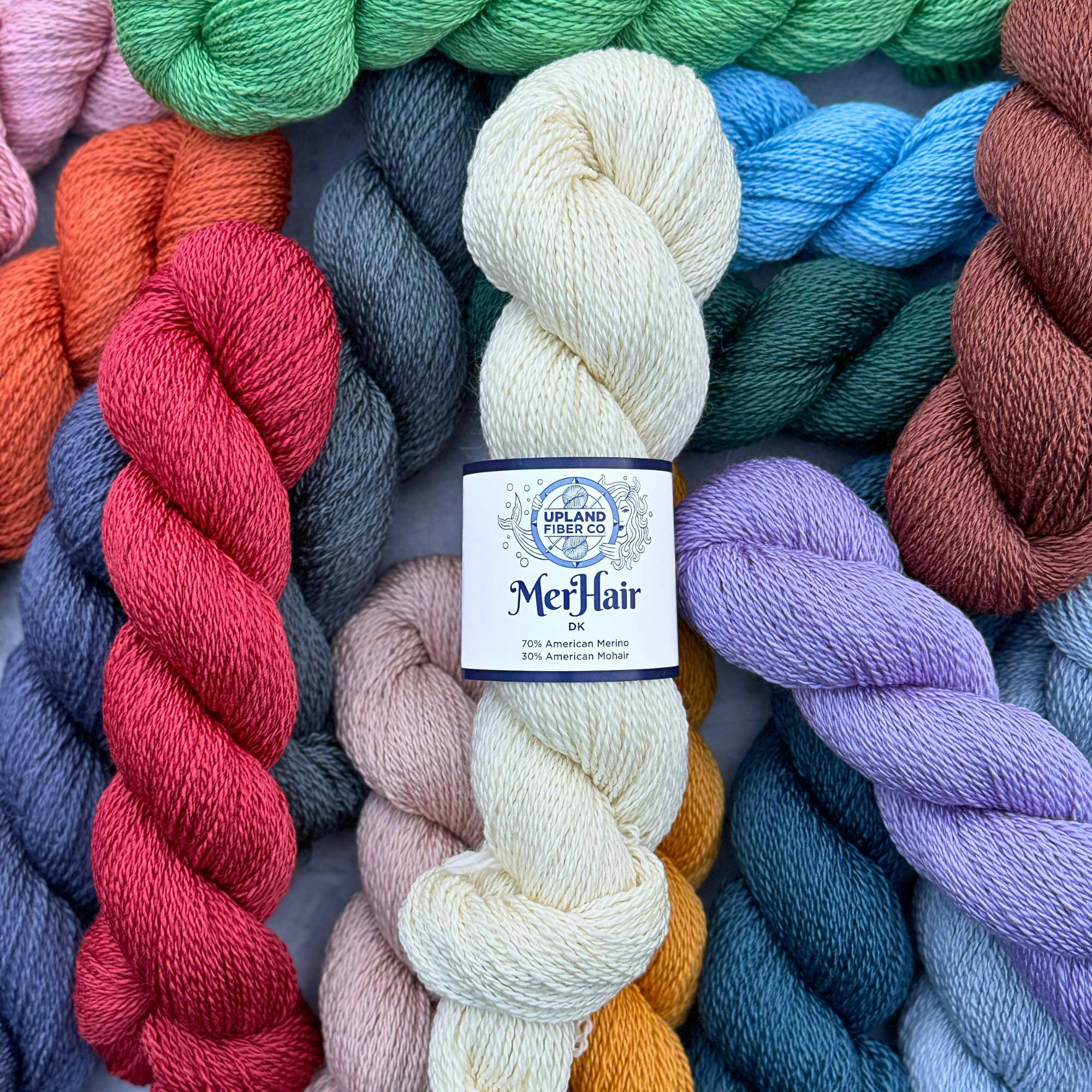
Since launching Upland Fiber Co. with COR, the flagship yarn, Michael has introduced two new blends. MerHair DK is a blend of 70% Merino wool (sourced from the same farm that provides his Corriedale) and 30% mohair (from the same farm that grows his Cormo). It’s a great alternative for use with patterns that call for fingering-weight wool held together with laceweight mohair.
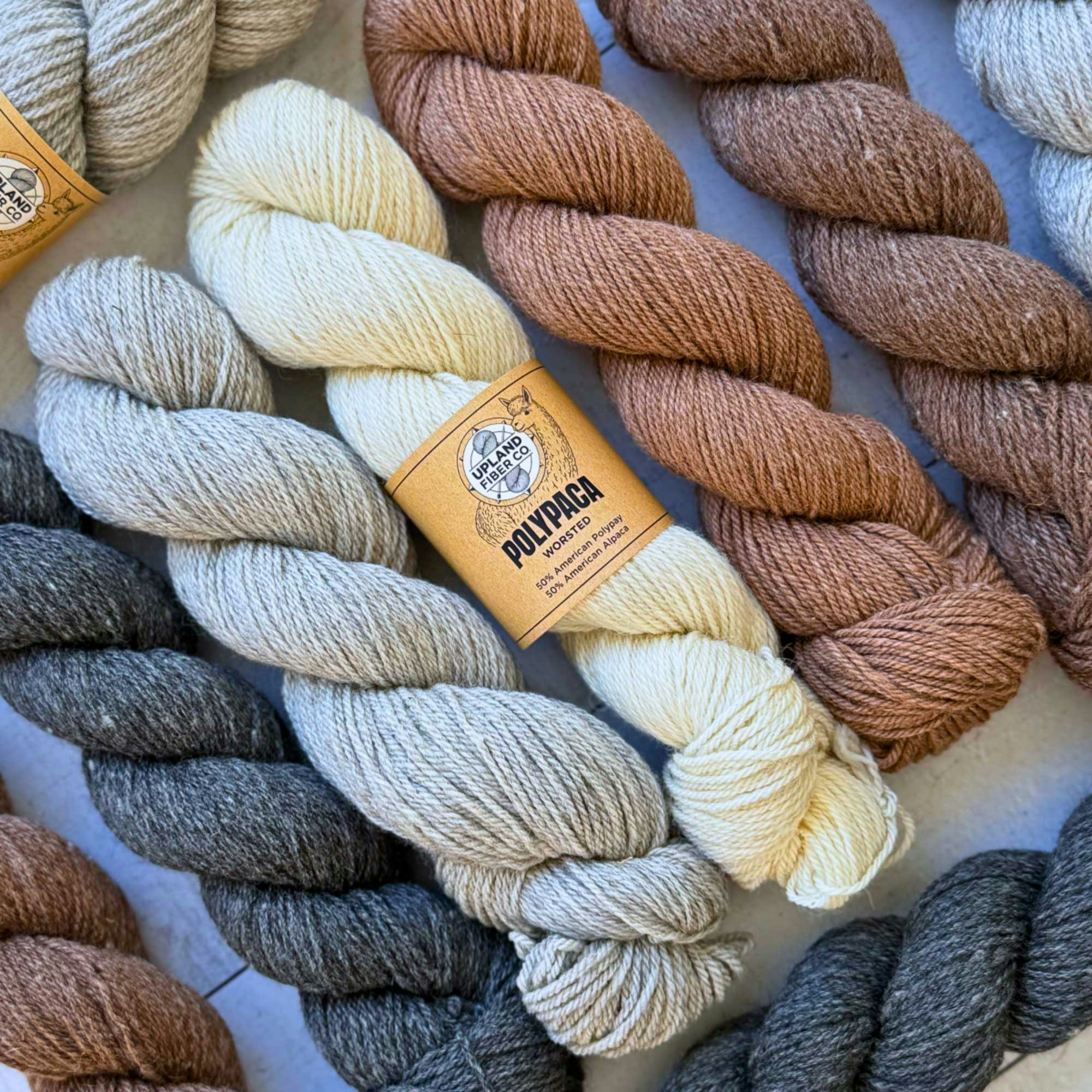
The latest addition to the lineup is Polypaca. He wanted to offer an undyed yarn in a range of naturally occurring shades. Polypay is an abundant but underappreciated wool that provides resilience and sharp stitch definition, while alpaca adds drape and natural color. In a 50/50 worsted-weight blend, the result is a yarn with timeless appeal.
Michael approaches his work with eager curiosity and a deep appreciation for the expertise and dedication of the people who make Upland Fiber Co. yarn. “The imperfections, and the little slubs, and whatever they are, these are what shows you there has been more human interaction with the yarn,” he said. “There’s so much more human involvement with these yarns, these things that are milled in a smaller way. That shows in the yarn. That’s part of the character. That’s part of what makes them beautiful.”
Upland Fiber Co. yarns can be found at fiber festivals throughout the mid-Atlantic and Northeast, and on their website at uplandfiberco.com.