
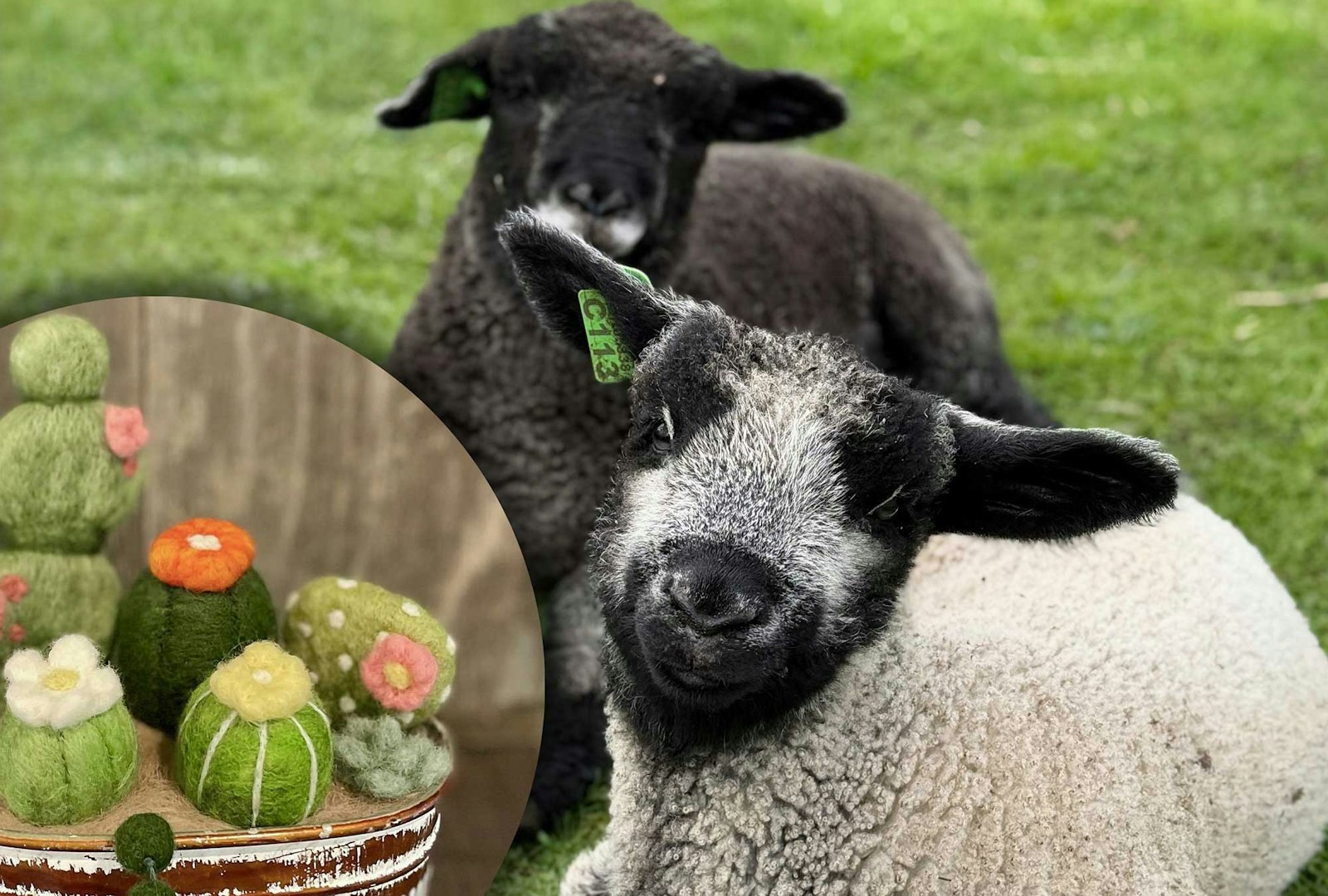
Editor’s note: The Portland, Oregon area hosts a vibrant natural-fiber art scene, with a robust community of natural dyers, a growing farm-to-needle fiber movement, and a lively maker culture.
We’ve asked Emily Lymm, Portland-based fiber artist, natural dyer, and the founder of Wool & Palette, to tell us more about some of the dedicated local fiber artists and what goes into making their beautiful yarns. This week, we focus on shepherd Audrey Comerford, who owns Wee Woollies Fiber Arts, a small sheep farm and wool business in the scenic Willamette Valley.
Next week in Part 2, we’ll profile Sea Change Fibers, a prominent, sustainably-focused indie yarn brand whose nature-inspired, jewel-toned colorways are highly sought after. And we’ll give you a snapshot of Vibrant Valley Farm, known for operating the only seed-to-pigment indigo program in the US, promoting sustainability and slow textiles.
Here’s Emily . . .
Meet Wee Woollies Fiber Arts
Owner: Audrey Comerford
Location: Turner, Oregon, 50 miles south of Portland
Click below to view images in full-screen mode.
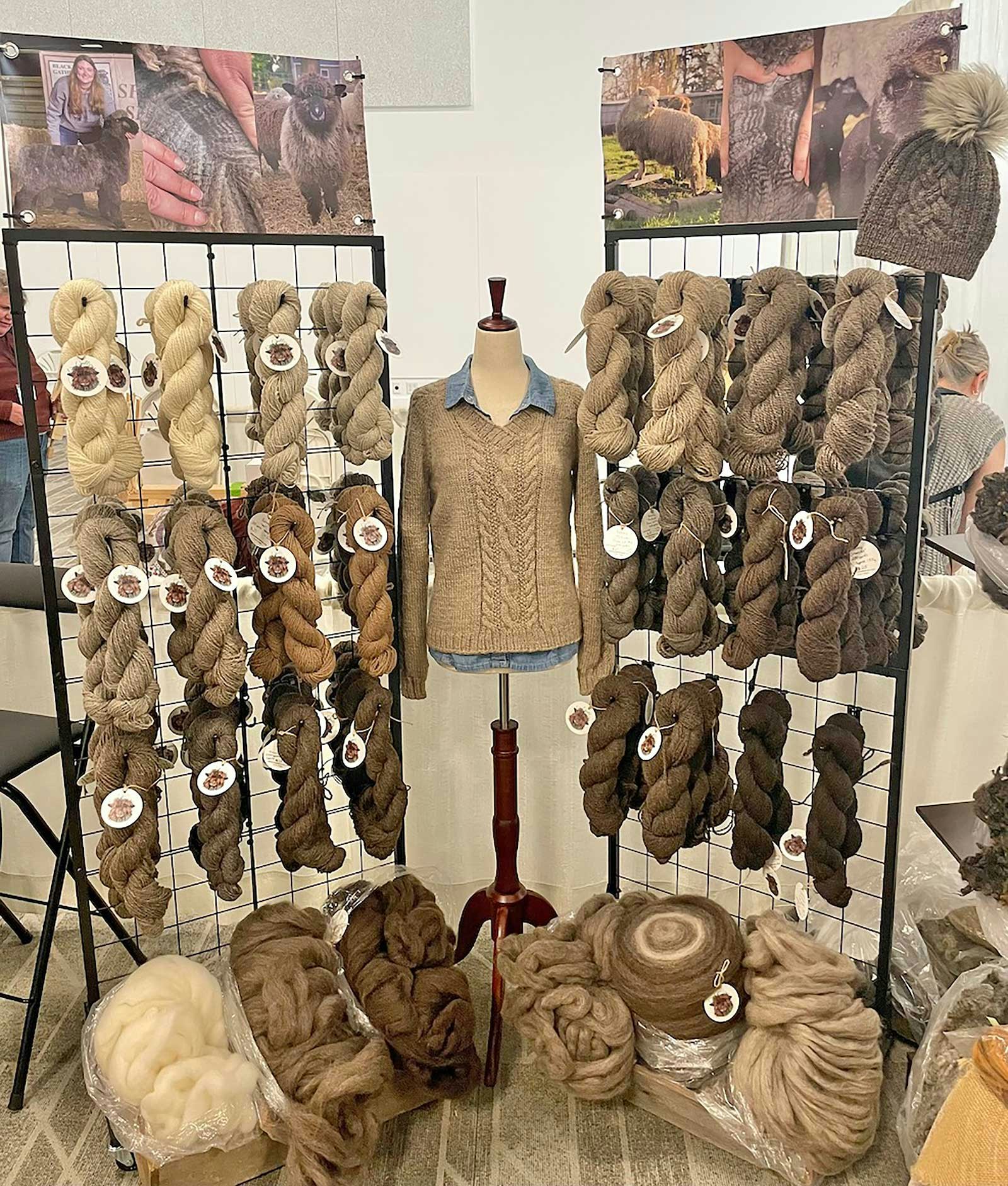
At Wee Woollies Fiber Arts, every skein has a name. That name belongs to the sheep that grew it.
It’s a small detail, but it tells you a lot about owner Audrey Comerford. Before a skein ever lands in a knitter’s hands, there are years of care behind it. Lambing season. Winter storms. Summer heat. Breeding decisions. Fleece evaluations. The kind of work most people never see when they pick up a skein of yarn.
Audrey didn’t set out to raise sheep. Though she grew up surrounded by Oregon agriculture, it was fiber arts that pulled her back to the land. What began with needle felting grew into something bigger. An obsession with wool. A flock of Romney sheep. A business built around the connection between animals, agriculture, and making.
Spend a few minutes talking with Audrey, and it becomes clear that the yarn is only part of the story. She knows her sheep well enough to name the yarn after them. And when you understand everything that goes into producing a single skein, it starts to make perfect sense.
 Romney sheep come in all sorts of colors and patterns, including white, gray, dark, moorit, badger, and spots.
What do you wish people understood most about your business?
I wish more people understood the work that goes into producing fiber and yarn from a flock of sheep that you own yourself. The number of hours that go into one skein of yarn is staggering.
If the fiber is from a ewe, that means I have been up with her in the middle of the night while she is lambing, watching over her as she raises her lambs to keep an eye on their well being, checking on her during the hot summers to make sure she has shade and cool water, keeping a constant eye on the condition of her body in case of hidden illness, buying and feeding hay when our pastures stop growing, getting her to shelter as a fall or winter storm approaches, and handling many other issues that pop up.
All the while, she is growing the fleece that will be sheared in winter before she lambs in February. Her fleece will get sheared off by a local shearer that we hire. I’ll then spend time skirting the fleece and deciding on what to do next depending on the quality: sell it raw to handspinners, send it to the mill to turn into roving or yarn, use it as felting fiber, or (if it is the very last stop) turn it into compost for my garden, which, luckily, we don’t have too much of.
 Audrey says “We show our Romney lambs and yearlings at local events. This is Elmer, one of our Romney ram lambs at the 2024 Black Sheep Gathering.”
Depending on the mill’s capacity at the time, it can take six months to a year to get the yarn back. I am fortunate to have a relationship with a mill here in Oregon that has a faster turnaround time, but that is not always the case. And once I finally get the yarn back and hold that skein in my hand, all of the work flashes through my mind.
How do we convey that to the customer, to sum up all the work, when I’m asked why our yarn costs more than that from the big, commercial companies? It has been interesting to watch the recent shift as more people ask questions and learn about what it takes to produce the product from start to finish, and I hope that education continues.
Your yarn and roving are gorgeous and I love that you sell it by the sheep’s name. What are the things you do on the farm to ensure their fleeces are consistent from season to season?
Having consistent fleeces is an important part of what we do. Because our flock is small, I rely heavily on each fleece the sheep produce. Management and monitoring are key pieces to keeping the sheep healthy. I make sure they have plenty of the correct feed for the different times of year.
Because we also breed the ewes for breeding stock, their nutritional needs change depending on whether or not they are raising lambs, and what stage of that they are in. Keeping a sheep happy and stress-free helps keep its fleece strong and reduces the risk of a break in the fiber. I only use strong, good-feeling fleeces for our roving and yarn. As with a lot of things, having a good base improves the quality of the final product.
Another important part of having consistent fleeces and products is animal selection. What we select will set the tone for not only the fiber we get from that sheep, but also any future generations that come from that individual.
 Fleece quality is an important part of the animal selection process. According to Audrey, the fleece should be consistent, have a good hand, a good lock structure, and, as a bonus, a lovely luster, as this one does. Parting the fleeces is one of her favorite parts when looking at sheep.
I am very focused on fleece consistency and quality in our sheep and will select for those traits in both the animals I keep and those I sell to other producers. Overall, the sheep must have good confirmation and be a sound animal that is able to eat, walk around, and basically be a productive sheep. The fleece must be consistent from front to back of the sheep, have good crimp characteristics (Romney fiber should look like crinkle-cut French fries), and have a good hand or feel. And I love it if it’s got some luster to it. A Romney should also produce around 10–12+ pounds of wool per year, and this is another metric I track. Starting off with good animals helps make management easier for a shepherd in the long run, and in turn that shows up in the product that ends up in customers’ hands.
What is it about your business that keeps you excited to wake up in the morning and keep doing it even though it’s so physically and emotionally demanding?
I wish I knew what drives me and this obsession—it is something I can’t get out of my head. Even when I think I can’t do one more event or go through one more lambing season, the idea of stopping even part of this business is never a serious thought.
I grew up surrounded by agriculture in the Willamette Valley. My father was a horticulture extension agent and my grandparents ran a large Christmas tree business for over 50 years. Growing up, livestock never entered the picture for me. I tried to run away from agriculture by earning a liberal arts degree and putting myself on a different track. Funny thing was, I learned to needle felt when I was 18 and never quit doing it. Creating and selling the Woollies led me to realize I wanted to produce the fiber and raise the sheep.
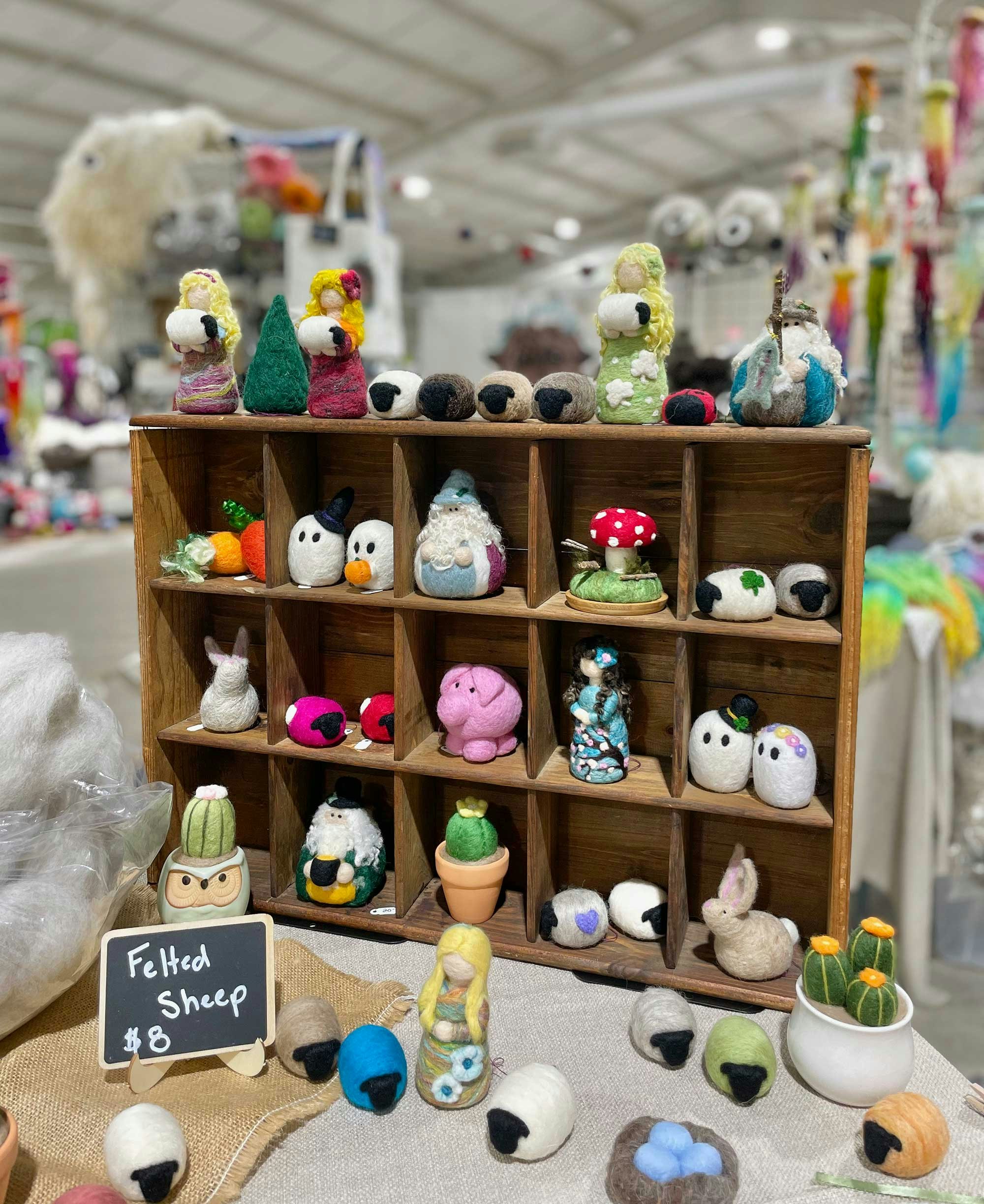
 A group of recently felted items from Audrey‘s Themed Figures collection sits in front of a stack of roving from her Romney sheep.
By going to the fiber festivals, I realized I wanted to be a part of the local fiber arts community, which had been so kind and helpful to me. So really, art led me back to agriculture. That intersection between creating, the land, the animals, and the community is what drives me. I think those who do fiber arts are a special group of people, and I am so thankful to be a part of it.
You sell a lot of products online—from yarn, roving, and wool dryer balls, to felted creations, and even branded merch! What events can we find you at this year?
I will be at several in-person events around the Pacific Northwest this year, and I will even be bringing sheep to some of them. You can find me and the Woollies at Black Sheep Gathering, Flock Fiber Festival, Oregon Flock and Fiber Festival, and Salem Fiber Arts Guild Annual Sale. All of our events are listed on our website at weewoolliesfiberarts.com/events.
Catch up with Wee Woollies Fiber Arts in all the places!
- Website: weewoolliesfiberarts.com
- Instagram: @wee_woollies
- Facebook: @Wee Woollies Fiber Arts
- Bluesky: @wee_woollies
- TikTok: @wee_woollies