
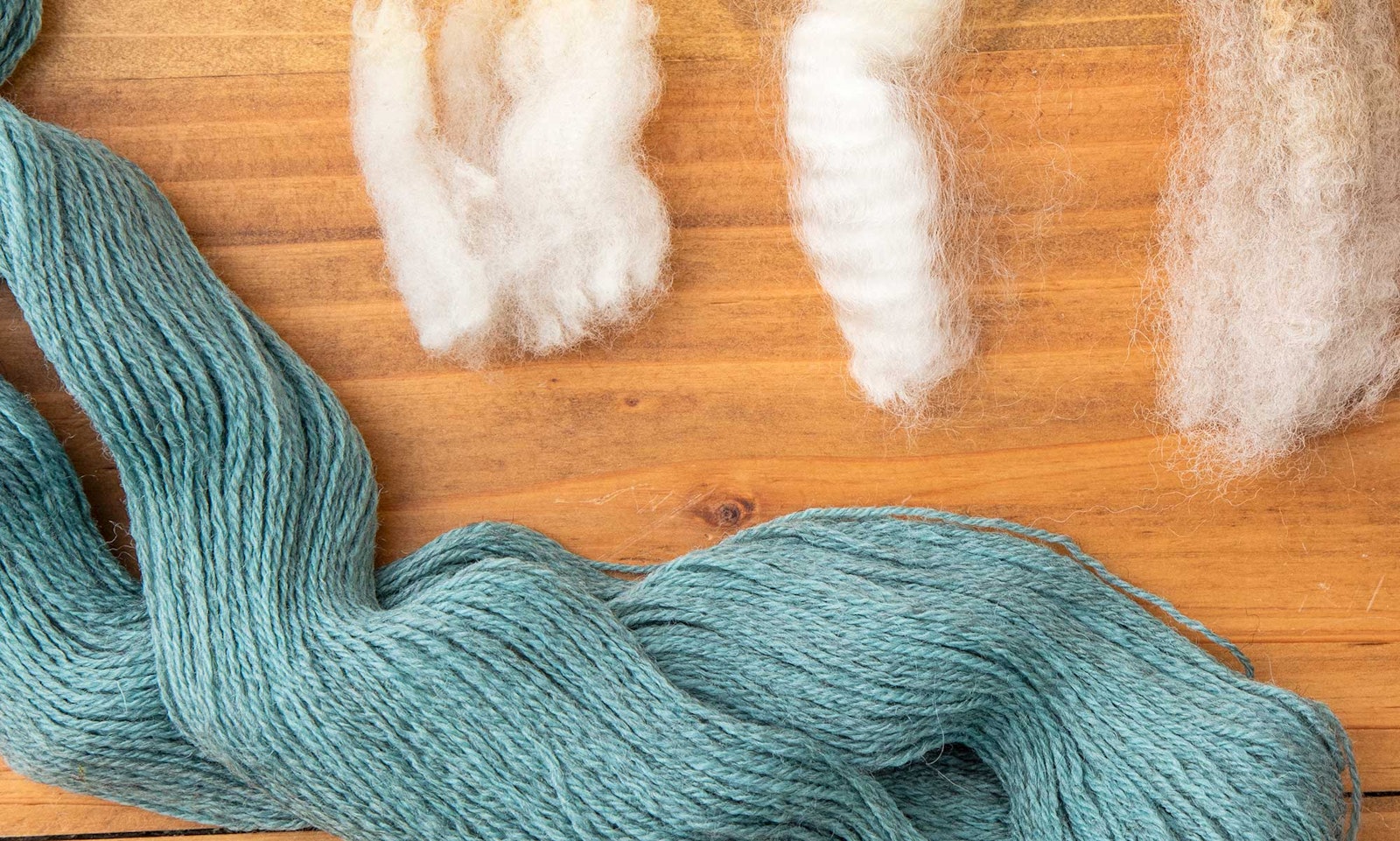
The Summer 2026 issue of Farm & Fiber Knits features The House of the Seven Gables Socks by Mimi Seyferth. Learn more about the three breeds that make up the* Rambler sock yarn by The Woolly Thistle—Dorset, Corriedale, and Romney—and get a sneak peek at the socks inpired by the house in the famed Nathaniel Hawthorne novel.
When selecting sock yarn, durability is my top priority. I learned this lesson the hard way with a loosely spun, two-ply Merino yarn marketed as “sock weight.” The socks wore out alarmingly fast—despite the label, this yarn was suited for shawls and other accessories that wouldn’t endure much wear.
I also look for non-superwash yarn whenever I can, ever since noticing a distinct difference in how it performs—seeming to wick moisture more effectively and offering better memory than its superwash counterpart. I’m especially pleased when I find yarn with no synthetic fibers at all, which is increasingly rare in a market where most sock yarns contain at least some nylon.
Yarn thickness matters too. My favorite everyday socks fit comfortably in my regular walking and hiking shoes. While thick socks can be cozy, I’d rather not buy larger shoes just to accommodate them!
That might seem like a lot of requirements, and it can be frustrating to meet them all in a world where superwash Merino seems to be the norm. But I was delighted to discover The Woolly Thistle’s Rambler Yarn, a clever blend of Dorset, Corriedale, and Romney wools, all superwash-free to boot.
 The mossy green shade of Woolly Thistle’s Rambler Sock yarn perfectly suits the storied coastal town of Salem, Massachusetts—the evocative setting of The House of the Seven Gables by Nathaniel Hawthorne.
But First, Staple and Crimp
Staple and crimp are two factors spinners often talk about in spinning, but by the time wool becomes yarn, they’re almost invisible. What are they and why do they matter?
Staple is the length of the fiber, measured in how much grows on the sheep between shearings (usually a year). This might also be referred to as a lock. Much like we think of our own hair falling in locks, wool also forms distinct locks. Crimp refers to the pattern of waves or curls in each lock. The combination of crimp and staple length impacts yarn’s overall elasticity, drape, texture, and durability.
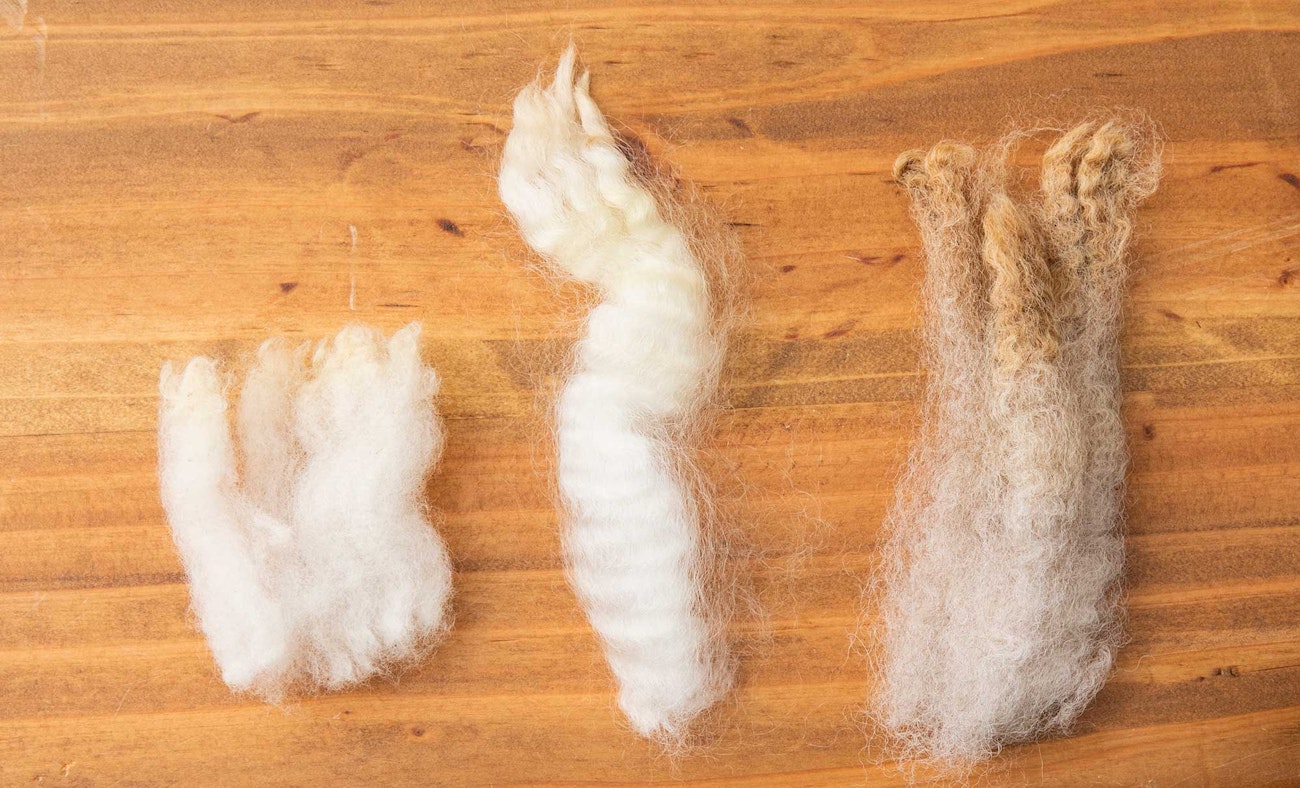
Notice how all three fibers have slightly different lengths and different amounts of crimp. By blending all three together, Rambler Yarn lets each one contribute its unique qualities to the final yarn.
Why These Fibers Work for Socks
Rambler sock yarn is a blend of 80% Dorset, 10% Corriedale, and 10% Romney wools. Each of these fibers lends a little bit of its own unique character to the yarn, and they all add up to something special.
Dorset Wool
 Dorset wool’s short but dense, crimpy fibers provide durability, elasticity, and felting resistance, making it ideal for superwash-free socks that stay snug and comfortable.
Dorset is a shorter-stapled wool with dense, crimpy locks that are resistant to felting, a must-have in a superwash-free sock blend! Even though the staple length is on the shorter side, this wool is durable because Dorset’s dense, crimpy locks also give spring and bounce to the mix—essential for socks that don’t slip down your heels halfway through a hike.
Corriedale Wool
 Corriedale wool offers versatile softness with an open crimp for body and a longer staple length that enhances durability, making it well-suited for comfortable, resilient sock yarn.
Corriedale, one of my favorite fibers, is a medium wool that is known for its versatility. Its more open crimp structure lends a bit of body to Rambler sock yarn. The longer staple length also adds a bit of durability, while still maintaining next-to-skin softness.
Romney Wool
 Romney wool, prized for its long staple length and felting resistance, adds durability and a subtle gray depth to yarn blends.
Romney is another favorite fiber among many knitters and spinners. Named for the Romney Marsh in southeast England, these sheep come in a variety of colors. The Romney wool used in Rambler is gray, lending a gentle depth to the color of the blend. Romney wool’s long staple length gives it durability, and it is also resistant to felting.
Spinning Matters
As a spinner, I also take note of how sock yarns are spun. Remember that two-ply “sock” yarn that fell apart quickly? Not only was it at a disadvantage from having only two plies, but each ply was underspun and underplied—likely to enhance the perceived softness of the yarn.
In contrast, Rambler Yarn has three plies that are spun with the durability of socks in mind. It’s also on the finer side of the sock yarn spectrum, meaning I won’t have to worry about my socks being too thick.
Sourcing
All three wools featured in Rambler Yarn—Dorset, Corriedale, and Romney—are sourced from American wools in the Southern Adirondack Fiber Producers Cooperative. The yarns are spun at Battenkill Fibers Carding & Spinning Mill in New York. Available from The Woolly Thistle in 15 colors, Rambler Yarn is a must-try for any dedicated sock knitter.
Knitters Note
We’ve heard from some knitters and seen some comments on Ravelry that Rambler blooms and relaxes quite a lot after blocking, developing a softer hand. Try a quick swatch and wash it to see what you think!
Resources
- Learn more about Battenkill Fibers Carding & Spinning Mill in The Yarn Chronicles.
- Find out why Dorset is a great alternative to superwash wool in Is Down Wool Reisistant to Felting?
- Learn more about Rambler at TheWoollyThistle.com.
- Find the pattern for the House of the Seven Gables Socks in the Summer issue and in the Farm & Fiber Knits Library.