Subscriber Exclusive
Made in Nebraska: The Yarn That Built a Mill
When four truckloads of used spinning machinery arrived in rural Nebraska, few could have predicted they would launch one of America’s most beloved yarn companies.
When four truckloads of used spinning machinery arrived in rural Nebraska, few could have predicted they would launch one of America’s most beloved yarn companies. <a href="https://farmfiberknits.com/made-in-nebraska-the-yarn-that-built-a-mill/">Continue reading.</a>
https://farmfiberknits.com/cdn-cgi/image/format=auto/https://www.datocms-assets.com/101500/1771537058-brown-sheep-prairie-spun.jpg?auto=format&w=900
It is hard to imagine that any knitter in the United States isn’t familiar with Brown Sheep Company. If you’ve been part of the felting craze, you’ve surely used it! But how much do you know about Brown Sheep Company itself? Crafted in Mitchell, Nebraska, using American wool, Brown Sheep yarn reflects a century-long family commitment to the land, sustainability, and ethical production, connecting knitters to a rich tradition. And no, there isn’t a “brown” sheep—it’s the family name!
From Sheep Farm to Spinning Mill
The Brown Sheep story began over a century ago when E.W. Brown purchased farmland in the North Platte River valley, close to the Wyoming border. For generations, the family raised sheep and farmed the challenging Nebraska soil. By the late 1970s, however, American farmers confronted an economic crisis more severe than any since the Great Depression. Harlan Brown, grandson of E.W. Brown, was at a crossroads.
Perhaps the inspiration to produce his own wool took shape when Harlan’s college-bound daughter Peggy Jo had to leave her new spinning wheel at home. Looking for a way forward, Harlan found used spinning equipment being sold off from shuttered textile mills in the Southeastern US, and in January 1980, four truckloads of machinery arrived in Nebraska—without manuals. Drawing on ingenuity and resourcefulness honed through years of farming and ranching, Harlan figured out how to assemble and operate the equipment. By July 4th, this sheep farmer had spun his first yarn. Potential customers were skeptical, however, and Harlan was told everything from plain “no” to “you must have stolen that yarn.”
 Preparing the yarn for the dye vat.
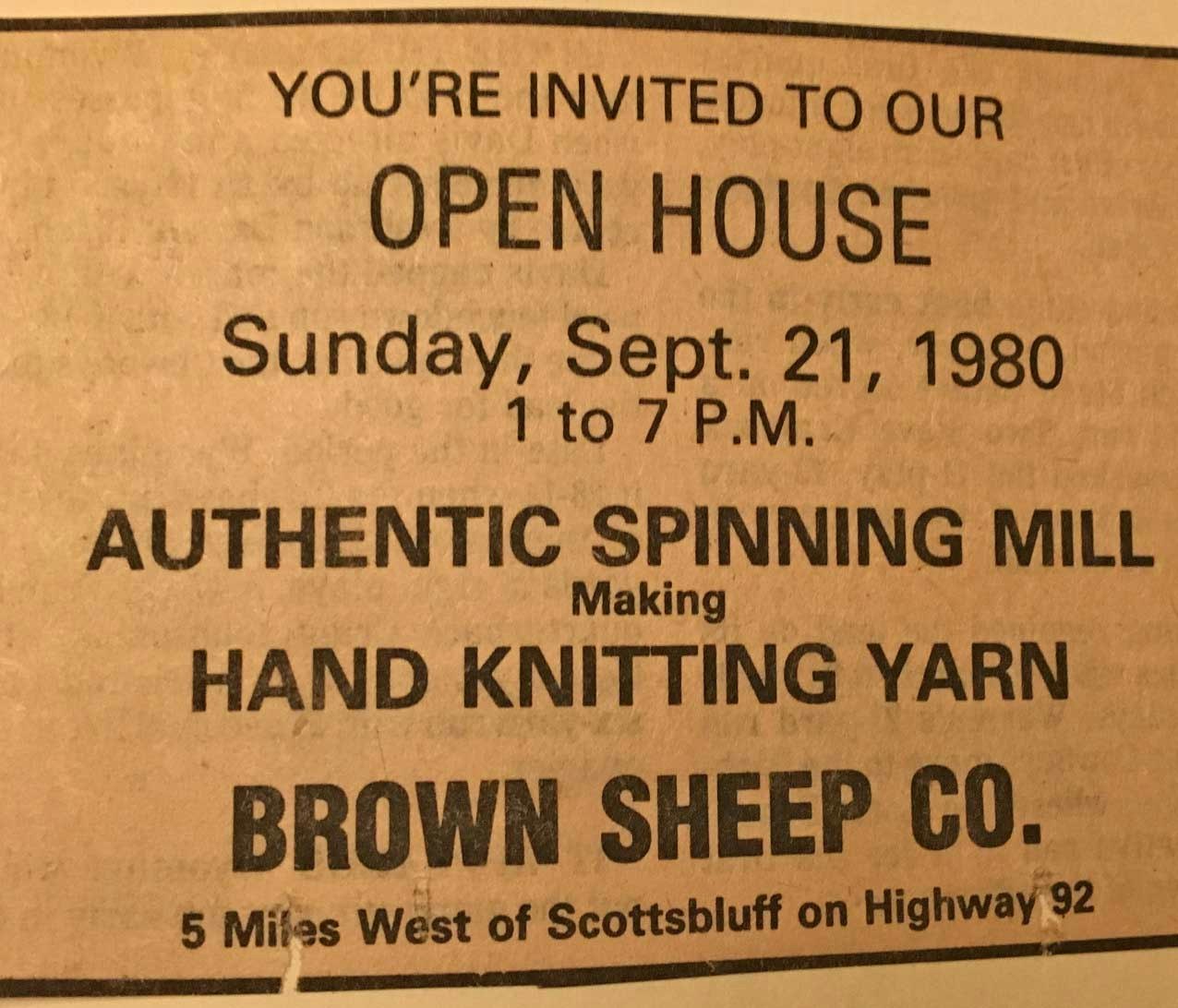
Around that time, Harlan placed an ad in the 1980 issue of Spin Off magazine that read:
SUBSCRIBER EXCLUSIVE
It is hard to imagine that any knitter in the United States isn’t familiar with Brown Sheep Company. If you’ve been part of the felting craze, you’ve surely used it! But how much do you know about Brown Sheep Company itself? Crafted in Mitchell, Nebraska, using American wool, Brown Sheep yarn reflects a century-long family commitment to the land, sustainability, and ethical production, connecting knitters to a rich tradition. And no, there isn’t a “brown” sheep—it’s the family name!
From Sheep Farm to Spinning Mill
The Brown Sheep story began over a century ago when E.W. Brown purchased farmland in the North Platte River valley, close to the Wyoming border. For generations, the family raised sheep and farmed the challenging Nebraska soil. By the late 1970s, however, American farmers confronted an economic crisis more severe than any since the Great Depression. Harlan Brown, grandson of E.W. Brown, was at a crossroads.
Perhaps the inspiration to produce his own wool took shape when Harlan’s college-bound daughter Peggy Jo had to leave her new spinning wheel at home. Looking for a way forward, Harlan found used spinning equipment being sold off from shuttered textile mills in the Southeastern US, and in January 1980, four truckloads of machinery arrived in Nebraska—without manuals. Drawing on ingenuity and resourcefulness honed through years of farming and ranching, Harlan figured out how to assemble and operate the equipment. By July 4th, this sheep farmer had spun his first yarn. Potential customers were skeptical, however, and Harlan was told everything from plain “no” to “you must have stolen that yarn.”
Preparing the yarn for the dye vat.
Around that time, Harlan placed an ad in the 1980 issue of Spin Off magazine that read:[PAYWALL]
Sheep Company Starts Mill
The Brown Sheep Co. of Mitchell, Nebraska, has started a spinning mill. They have wools in gray, black and white and knitting and weaving yarns for sale. For more information write: The Brown Sheep Co., Rt. 1, Mitchell, NE 69357. Send $1 for samples.
Harlan’s first successful sales outing came at a Diné/Navajo trading post, where he displayed the yarn in the trunk of his old Buick. The weavers snapped it up, and a leap of faith became a thriving enterprise. Brown Sheep Company soon began supplying yarn to Navajo weavers in the Southwest and, eventually, to yarn shops nationwide. The relationship with the Diné continues; today 85% of all contemporary Navajo rugs are woven with Brown Sheep Lamb’s Pride and Top of the Lamb, and Brown Sheep is active with the Adopt a Native Elder Program.
Get a closer look! Click on any image to open it in full-screen mode.
Yarn Barn of Kansas owner Susan Bateman remembers Harlan’s visit to the store in Lawrence, Kansas, on that same road trip. She placed an order of Brown Sheep yarn, and the shop has carried it ever since for knitting, weaving, and other fiber arts. “We especially love the fact that they are just a state away, that all their wool is raised in the U.S., and that it is dyed on-site,” says Susan. “They make it easy to use their yarns for your project.”
A Family Legacy
By the late 1990s, Harlan’s daughter, Peggy Jo Wells, and her husband, Robert, had left successful careers to join the family business. They systematically modernized the operation, replacing most of the original used machinery with state-of-the-art textile equipment. With a background in scientific research, Robert developed an innovative, environmentally friendly water recycling system for the mill’s dyeing operations, reducing water consumption in an arid region where every drop counts.
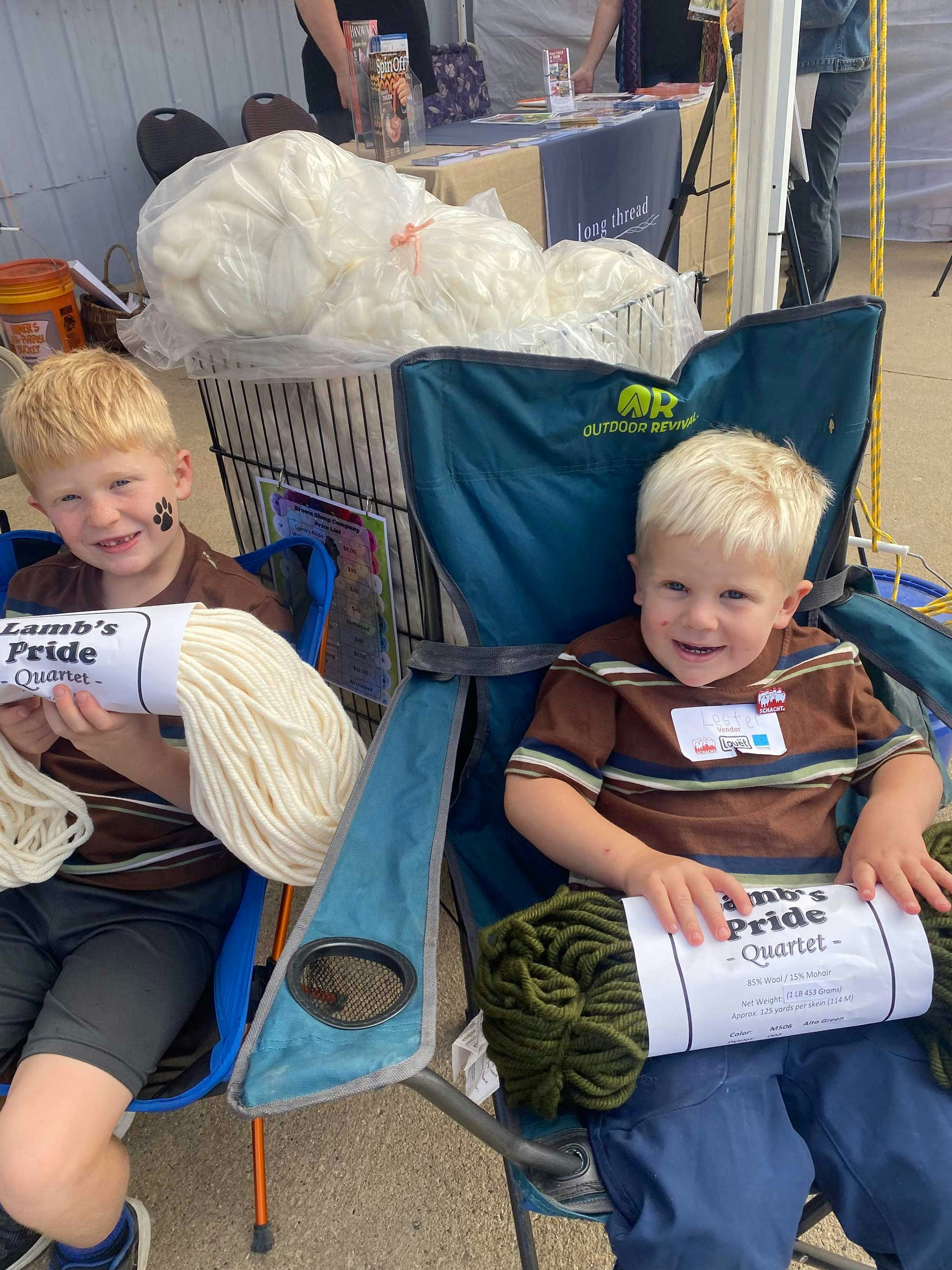
In 2015, the third generation joined the business when Peggy Jo and Robert’s son Andrew Wells came aboard. On a weekend break from college, when Andrew was giving tours of the mill, he met a young woman who was visiting with her mother. “I just came to the mill for a tour,” laughs Brittany Wells, now Andrew’s wife. “I never thought anything more would come of it than just learning about the yarn, but here I am ten years later.” Andrew now personally selects wool for Brown Sheep’s signature yarns. A talented weaver and designer, Brittany brings creative vision to the company. Their young sons are the fourth generation connected to this family enterprise, having already served as models.
 Brittany and Andrew Wells, with their two young sons, are following in the family tradition of manufacturing quality wool yarns.
The Philosophy Behind the Fiber
While many yarn manufacturers chase ultrafine luxury fibers, Andrew Wells focuses on choosing soft wool in appropriate grades for the yarn’s intended purposes. The company sources most of its wool from Colorado and Wyoming, supporting American sheep farmers and ensuring the quality and traceability of their raw materials.
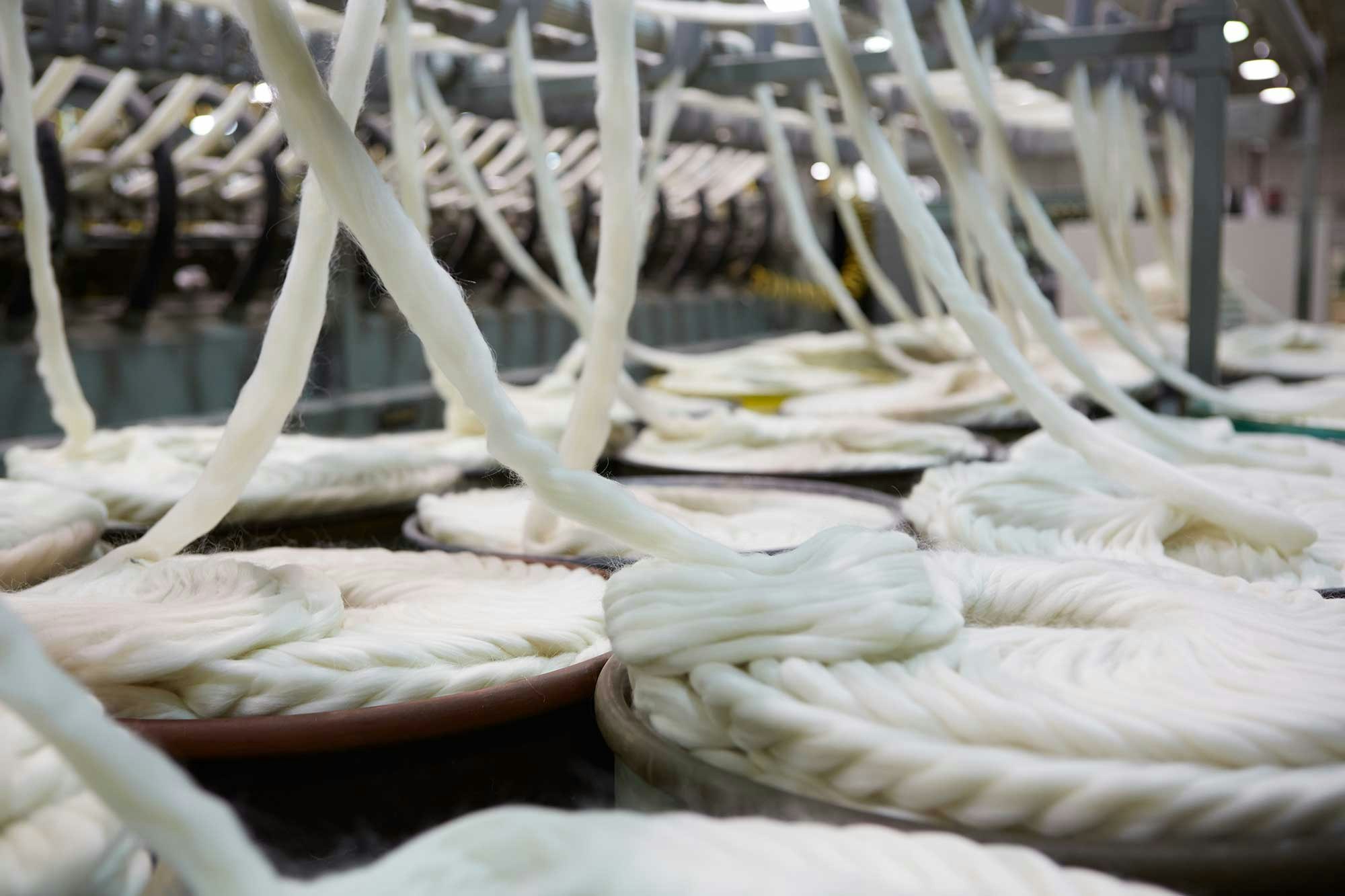
Processing is handled in-house as much as possible, from spinning through dyeing and packaging. This vertical integration allows for close quality control and long-term consistency. The company even stores a sample length of each dye lot for years, just to make sure that each skein of Lamb’s Pride or Nature Spun will match the same colorway that you bought years ago.
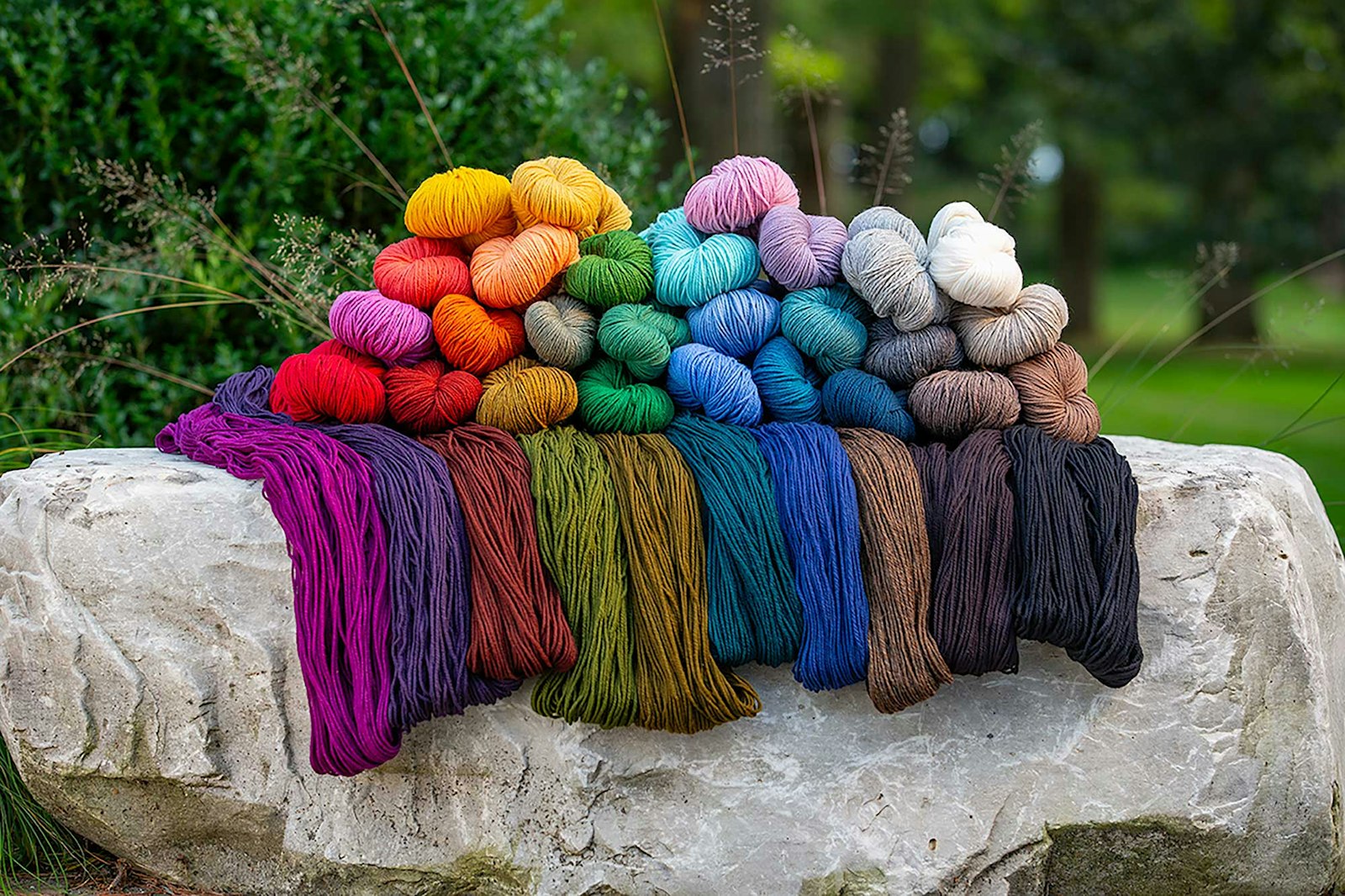
 Brown Sheep Company dyes an extensive range of colorways, using a process that filters the dyebaths and conserves hot water.
The Yarn Lines That Built a Reputation
Of Brown Sheep Company’s 12 yarn lines, none is more recognizable than Lamb’s Pride. This distinctive single-ply blend of 85% wool and 15% mohair has been the core of their operation. There are over 90,000 Lamb’s Pride projects on Ravelry! Many knitters recall learning to knit with it. When I teach, I keep a stash of Lamb’s Pride Bulky on hand for class demonstrations; the wool-mohair blend shows stitches clearly and holds up well to ripping and re-knitting. Nature Spun, the other mainstay, is made from carefully selected soft fibers sourced from the Front Range of Colorado and Wyoming.
Harborside Aran, the company’s newest yarn, was developed by Peggy as a tribute to the traditional yarns of the British Isles. Peggy noted that finding the right twist for the 4-ply Columbia/Rambouillet was tricky, but she succeeded. I designed the Chore Jacket in the premier issue of Farm & Fiber Knits with Harborside Aran. It gave the textured bands great stitch definition, and the stockinette was smooth and springy. It also held up well to being ripped out and reknit. (My design process is never smooth sailing!)
 Mary Lou designed the Chore Jacket using Brown Sheep’s Harborside Aran. Photo by Gale Zucker
I think Prairie Spun DK is my favorite Brown Sheep yarn. It’s a 100% wool yarn, with tight plies that help stitches and texture pop, but is soft and light. I swatched quite a few stitch patterns with it when designing the Blazing Star Mitts, and each looked better than the last. I’m dreaming about a sweater in Prairie Spun, as it would be a perfect weight, have a lovely drape, and wear well. It deserves a bigger fan club!
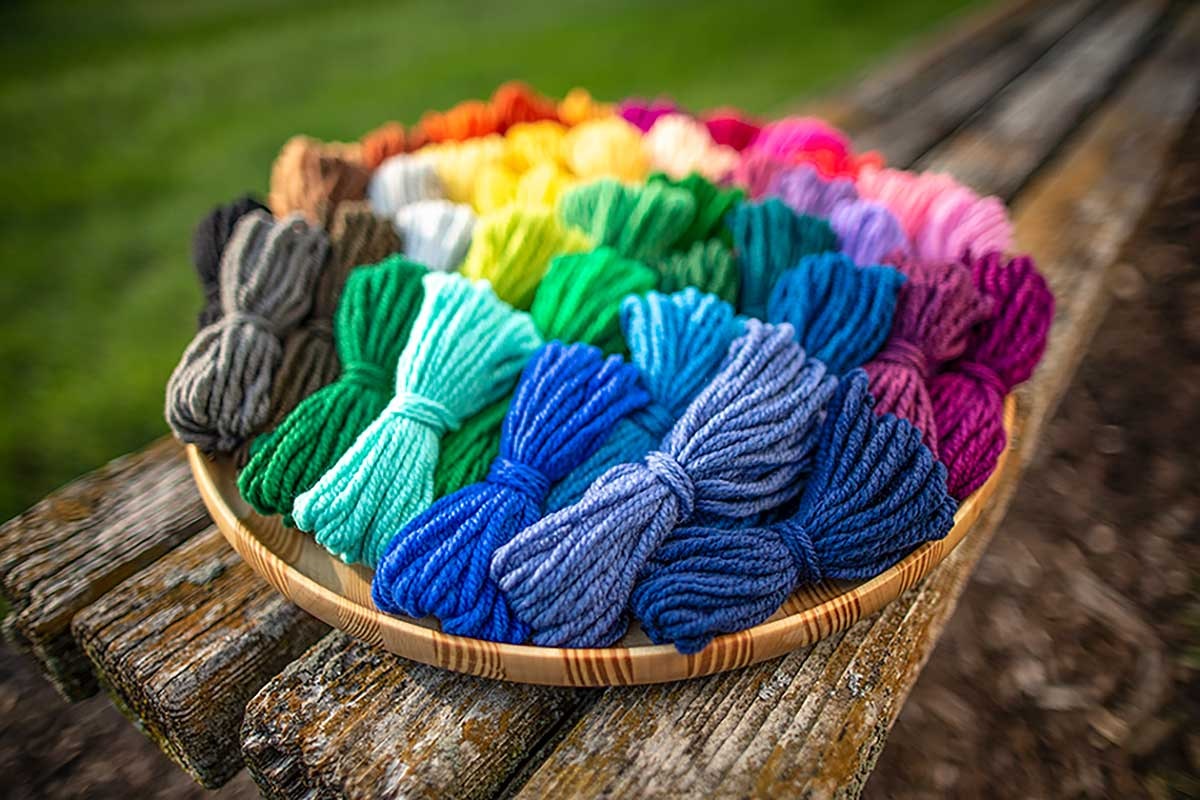
Beyond its knitting yarns, Brown Sheep Company also produces roving for spinning and felting, needlepoint yarn under its Waverly Wool line (450 colors!), and yarn on cones intended for weavers. The Cotton Fleece and Cotton Fine lines blend cotton with wool to create light, elastic yarns for summer garments and weaving.
 Brown Sheep’s dyed wool roving is perfect for felting and spinning.
Why Brown Sheep Company Matters
In an era of fast fashion and disposable goods, Brown Sheep Company stands apart for its commitment to local wool, local labor, and local craftsmanship, giving knitters the knowledge of where their yarn comes from and whose hands made it. As Andrew Wells explains, “We aim to make a superior product without spending a fortune, providing a quality yarn that is reasonably priced.” Although there is a great deal of yarn sold online, Andrew says he believes that the local yarn shop is the heart and soul of the industry, as wool needs to be handled to be appreciated. “Buying yarn is an experience, not just a transaction.”
Learn more about the Brown Sheep Company
Visit the Brown Sheep website to learn more, including where to purchase their yarn.
Listen to the Long Thread Podcast
Hear Andrew and Brittany talk about the process of making high-quality wool yarns, the impact that Brown Sheep Company has in the American craft landscape, and what makes them more excited than ever to carry on the family tradition in the Long Thread Podcast.
Subscribers! Get the Pattern Now
Mary Lou Egan designed the new Blazing Star Mitts using Brown Sheep Prairie Spun DK. Get it now in the Farm & Fiber Knits Library.
 Mary Lou Egan designed the Blazing Star Mitts using Brown Sheep‘s Prairie Spun DK. Photo by Gale Zucker