
Subscriber
| Collections | Jane Austen Collection |
|---|---|
| Author | Kate Larson |
| Format | Article/Tutorial |
This requires a 'Farm & Fiber Knits Subscription' to view. Log in to access or subscribe today to unlock all of the premium content available.
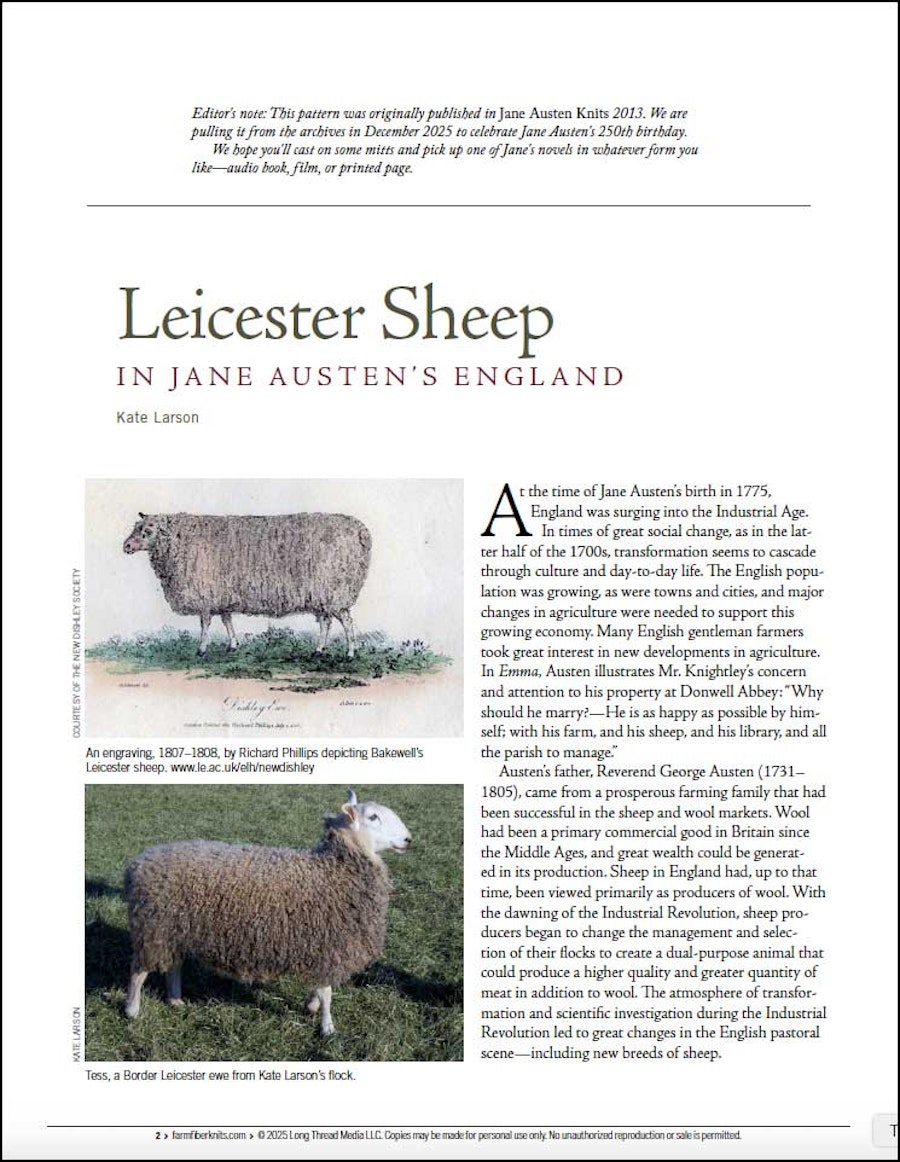
LoginEditor’s note: This article was originally published in Jane Austen Knits 2013. We are pulling it from the archives in December 2025 to celebrate Jane Austen's 250th birthday. We hope you’ll cast on some mitts and pick up one of Jane’s novels in whatever form you like—audio book, film, or printed page.
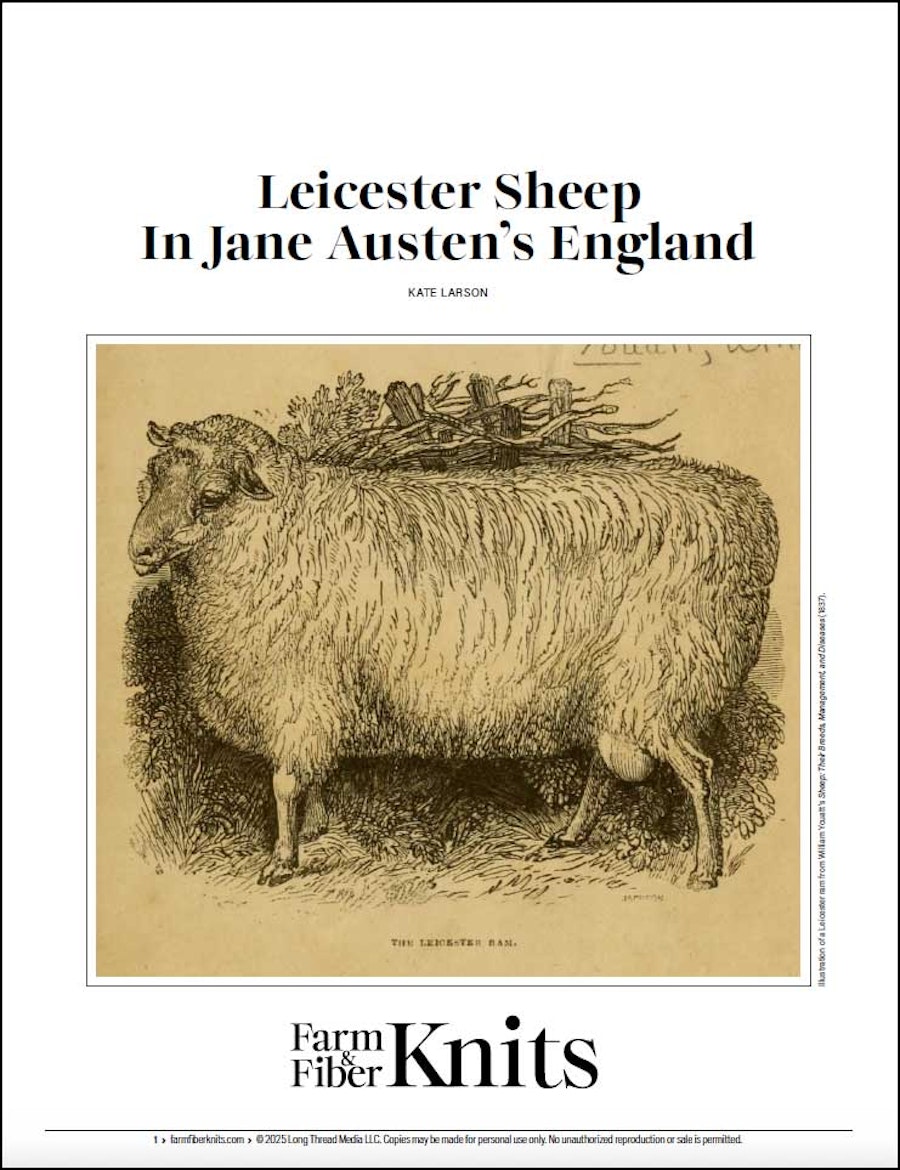
In the era of Jane Austen, agricultural and industrial changes reshaped England’s countryside. As wool producers adapted to the demands of a growing population and emerging markets for meat, progressive farmers like Robert Bakewell revolutionized sheep breeding. Austen’s family history and letters reveal how closely sheep and wool were woven into everyday life. Tracing the rise, influence, and near disappearance of the Leicester and its descendants, this article connects Austen’s world of farms and novels to the enduring legacy of longwool sheep and the revival of handspinning and small-scale fiber production today.
About: Kate Larson (she/her) is Senior Editor of Farm & Fiber Knits. For nearly as long as Kate has been handspinning and knitting, she has been helping others find their paths as makers and forge deeper connections with the landscapes that produce the wool and cotton, flax, and silk that they hold in their hands. While Kate has published a book, many articles and patterns, and several instructional videos, she especially loves celebrating the work of other fiber folks. The editor of Spin Off from 2018–2025, she directs spinning events in addition to editing Farm & Fiber Knits. If you can’t find Kate, she’s most likely in the barn having a chat with her beloved Border Leicester sheep.
All items in the library are intended for personal use. Please do not distribute without written approval.