
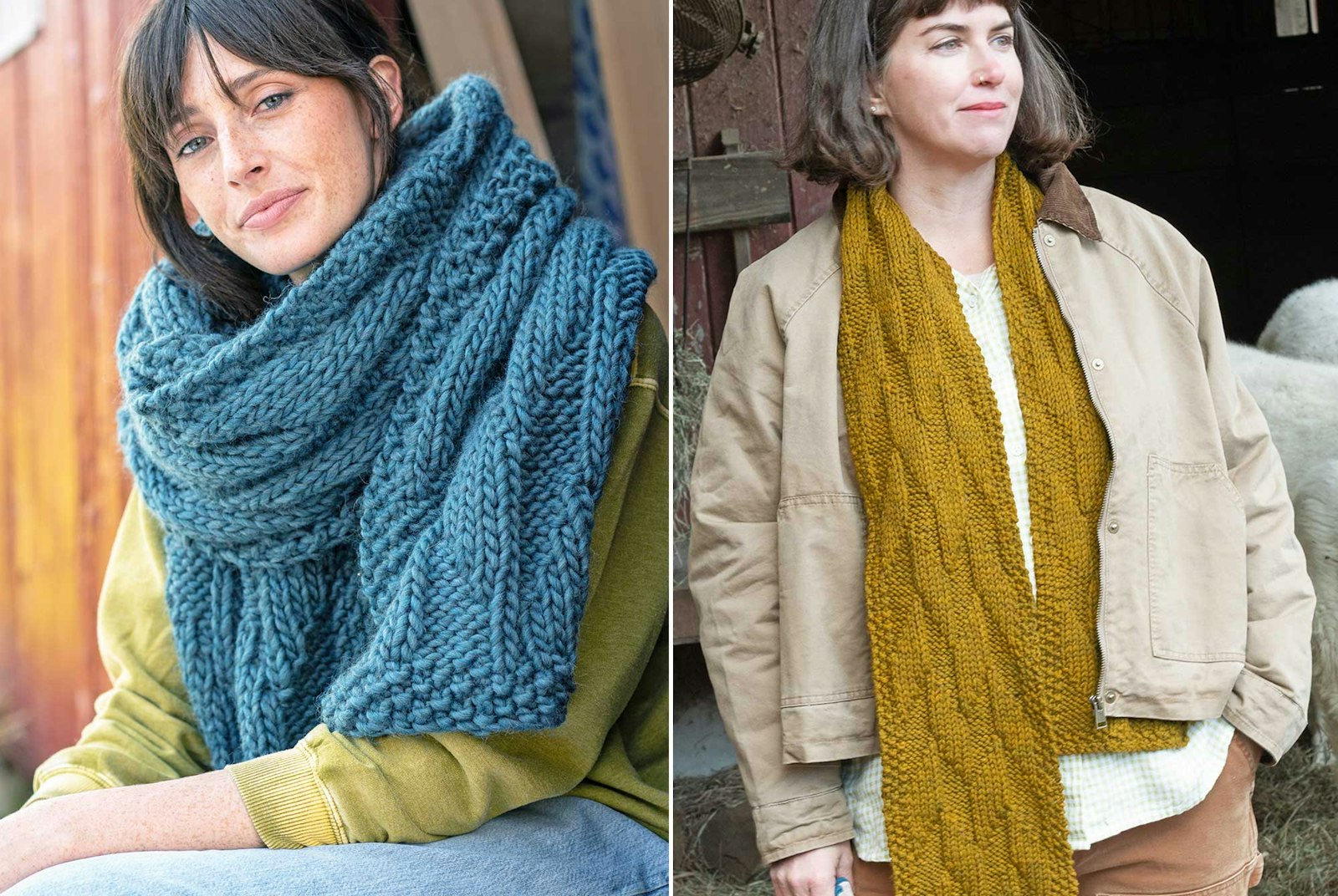
It’s one of the first lessons every knitter learns: knit a swatch to match the pattern’s stitches and rows per inch. A well-designed pattern relies on that gauge to create the right size, shape, and feel. Yet every once in a while, you just have to break away from the pattern gauge and chart your own path.
To learn why and how to swatch, see Jenny Monteleone’s video tip How to Count Stitches in a Gauge Swatch.
Just to be clear: You knit at a different gauge at your own risk.
Before you decide to go your own way gauge-wise, ask yourself:
- What problem am I trying to solve? Do I want a different fit, a different fabric, or a yarn substitution?
- Am I willing to do some math (and take good notes)?
- Does the pattern include colorwork, cables, or other row-by-row instructions?
- Will I have enough yarn at my new gauge?
Here are my top 3 reasons you might choose to knit off-gauge—and what to watch out for if you do.
1. You want a different fabric.
I like my mittens to be bulletproof. When I pull them on my hands, I want them to keep out any breezes, and I want to pack snowballs without my hands getting wet! Some designers prefer a slouchier, more flexible fit in mittens. When I knit a swatch that feels a little too loosey-goosey for my winter needs, I go down a needle size and swatch at a tighter gauge.
When I knitted Star Athena’s Columbia Mittens, I found that the fabric was a bit too open for my personal taste. For a pair that I could wear to shovel snow, I used the same High Desert yarn from the pattern with a size 6 needle instead of a size 8.
Get a closer look! Click on any image below to open it in full-screen mode and to learn more.
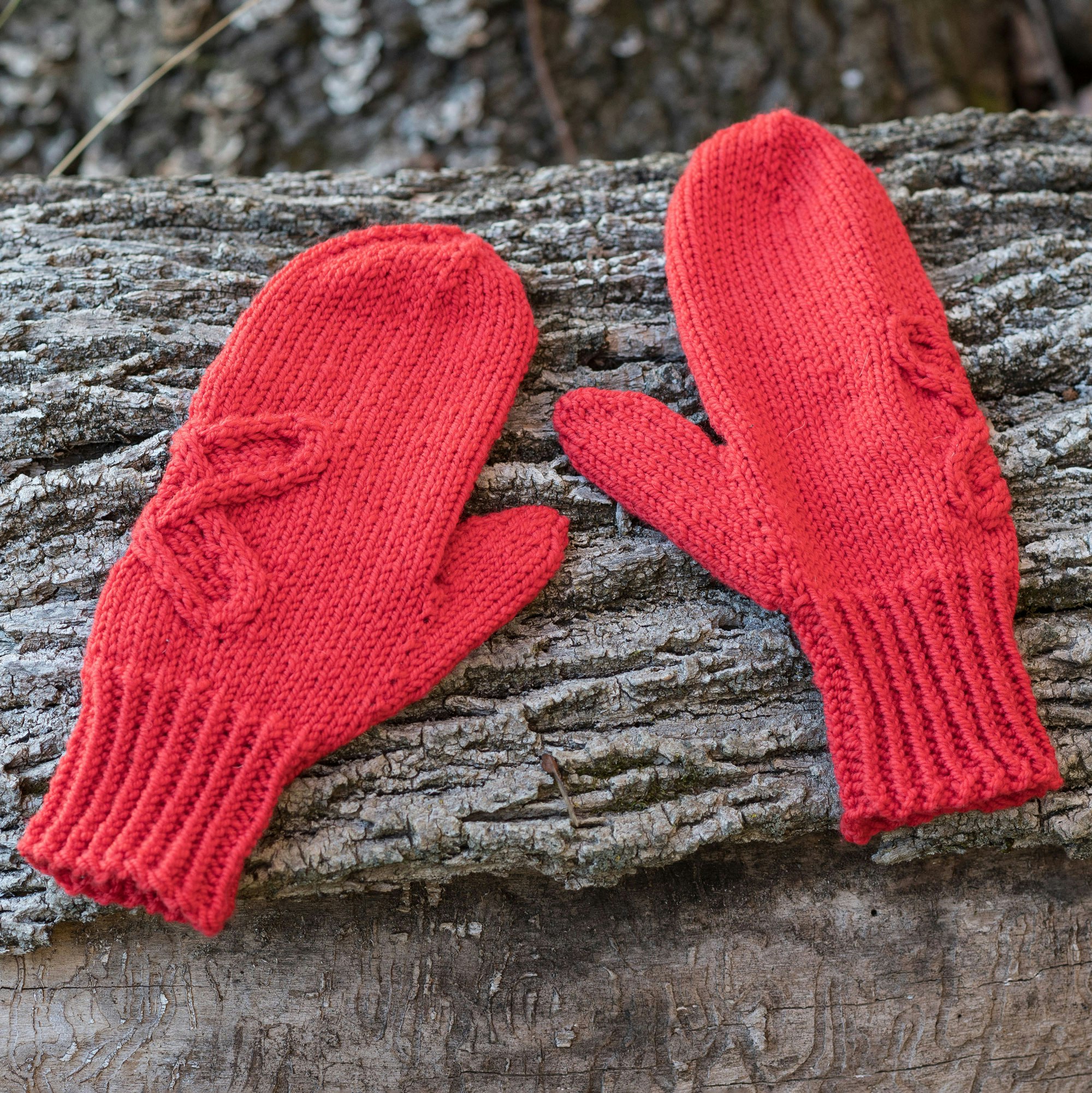
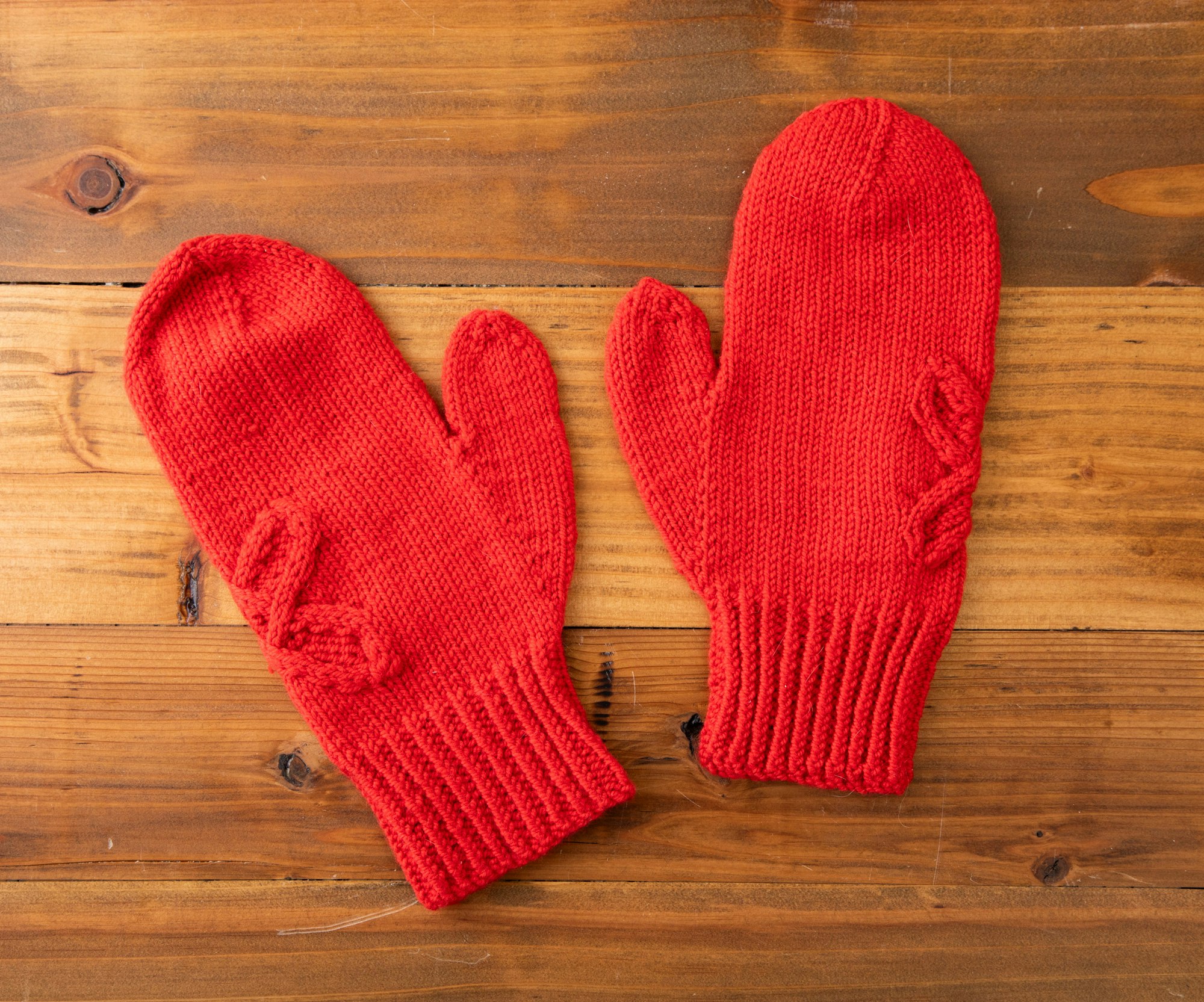
Because the tighter gauge made smaller mittens, I did the math and determined that I needed to cast on 4 extra stitches and work more rows and increases in the thumb gusset. The mittens knitted at the tighter gauge were dense, windproof, and ready for shoveling snow.
If you need more or fewer stitches at your new gauge, the easiest fix is to see if the pattern includes other sizes. If your tighter gauge makes the garment too small, can you knit the next size up? Or can you knit a smaller size at a looser gauge?
Caution: When the knitted fabric shrinks in length and width, it also gets thicker. If it grows in length and width, it becomes thinner. Knitted fabric is three-dimensional, so make sure you like the results in all dimensions.
2. You want to change the fit.
If the pattern you love isn’t available in the size you need, you might be able to tweak the gauge to make it larger or smaller. In something as large as a sweater, a tiny change in the gauge can make a huge difference in fit.
Imagine a sweater that calls for 5 stitches per inch, and the finished chest circumference is 40", or 200 stitches. You’ve knitted a generous swatch, and you’re getting 5¼ stitches per inch.
200 stitches ÷ 5¼ stitches per inch = 38.1"
200 stitches ÷ 4¾ stitches per inch = 42.1"
With just ¼-stitch difference per inch, you can make the sweater about 2" larger or smaller.
This approach works best for small adjustments and elastic fibers that can be shaped in blocking.
Caution: We mainly count stitches per inch, but don’t ignore row gauge—especially in sweaters, where yoke depth and armhole depth depend on row gauge for their proportions. Cables and colorwork can be especially tricky, because it’s more difficult to adjust length when the pattern depends on a certain number of rows. If the pattern has a schematic, use it to determine if you will need to adjust the length of gussets, hats, and sleeves.
3. You’re using a different yarn.
When you want to substitute yarns, it can be tempting to force the new yarn into the original gauge. But just because you can knit bulky yarn at 5 stitches per inch doesn’t mean you should. Instead of choosing needles that will get you gauge at all costs, swatch to find the happiest combination of yarn, pattern, and needles, and adjust the pattern from there.
 These four yarns would each work with the original stitch gauge of the Wee Cardi, but they might give you a different row gauge—so block and hang your swatch carefully. Photo by Matt Graves
Changing yarn can also mean changing fiber type, structure, and loft. Even at the same number of stitches per inch, a springy wool yarn might have more rows per inch than a drapey silk, so you’d need to adjust the length of the project to compensate. Alpaca is known for stretching lengthwise when worn, so plan for the finished project to have fewer rows per inch—and hang your swatch to see whether the stitch and row gauges change under the weight of the yarn.
Caution: Your gauge isn’t the only thing that will change—make sure you’ll have enough yarn! A tighter gauge usually requires more yarn. Keep in mind that if the new yarn is a different fiber or different structure, it may take more or less yarn to finish the project.
If you choose to follow your own gauge, be ready for some experimentation as you make the size and fabric you want. With a good swatch and calculator, you can master this new terrain.
Find the following patterns in the Farm & Fiber Knits Library:
- Loon Lake Scarf, by Jen Geigley
- Columbia Mittens, by Star Athena
- Wee Cardi, by Norah Gaughan
Plus, read more about Anne‘s swatch study for the Loon Lake scarf on page 68 of the Spring 2026 issue.