
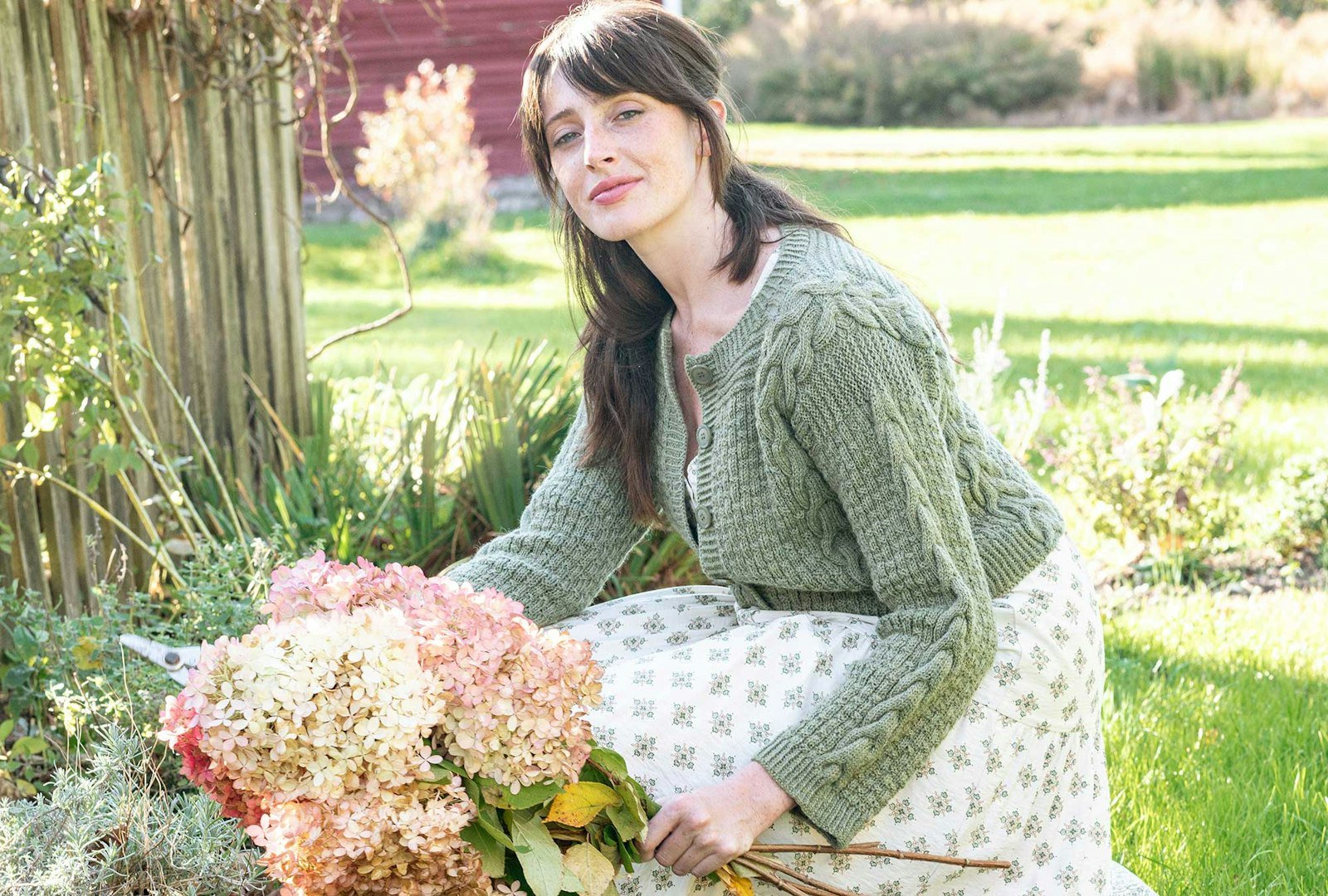
What do you do when you fall for a pattern whose recommended yarn is unavailable, discontinued, or simply not the right fit? Finding the perfect substitute yarn can feel intimidating, but once you know what to look for, it’s a skill you can use for almost any knitting project.
In this guide, we’ll use the Wee Cardi as our example, showing you how to compare yarns, evaluate fiber and gauge, and choose a substitute. You’ll feel more confident applying this toward anything you might want to make!
Start with a close look at the recommended yarn
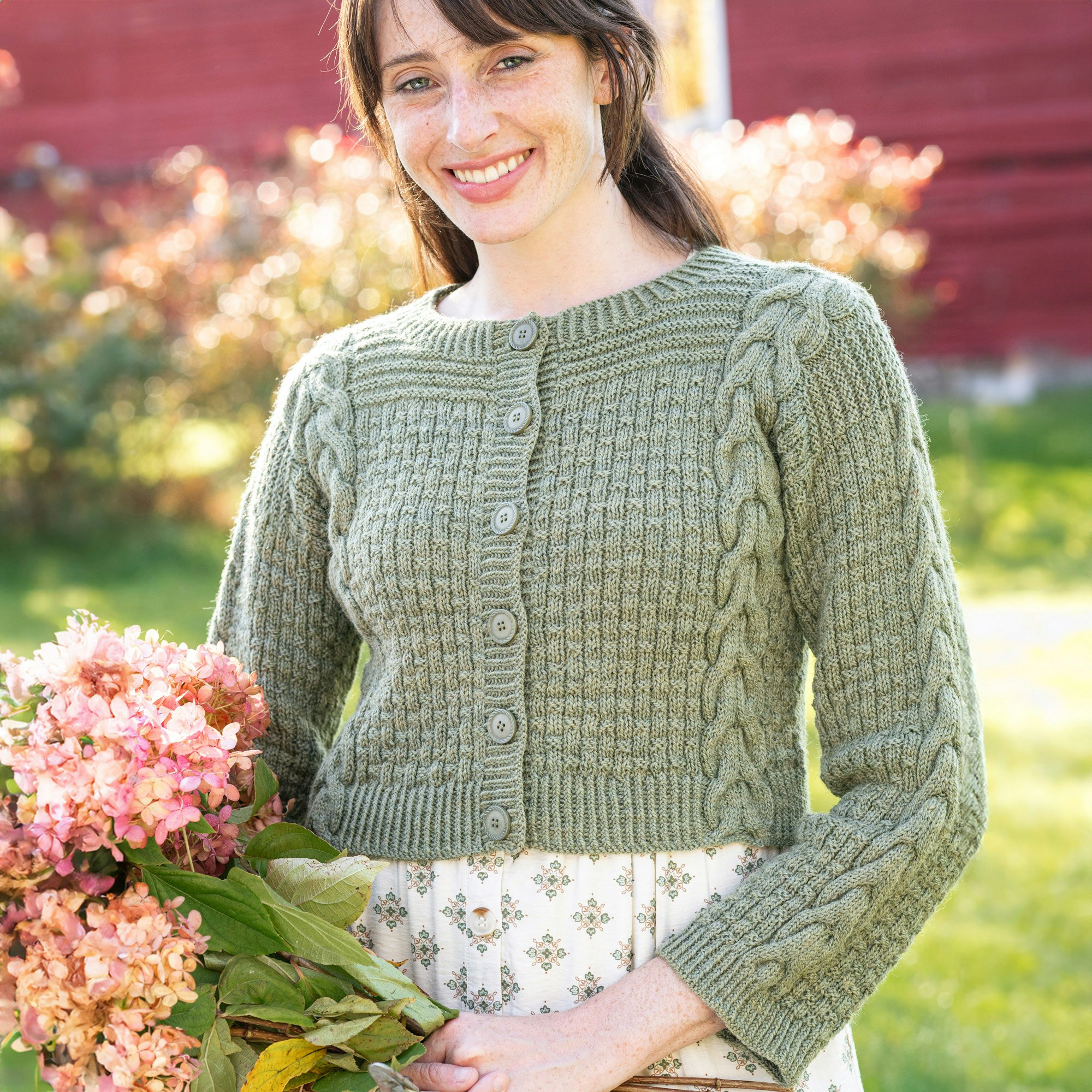
Norah Gaughan designed the Wee Cardi for Taconic Twist, a yarn that blends wool from the Wing & A Prayer Farm flock in southwestern Vermont with other fibers from the region. Taconic Twist is milled and naturally dyed in small batches.
 The Wee Cardi was knitted in Wing & A Prayer Farm Taconic Twist (100% wool [Merino, Wensleydale, Cotswold, mohair]; 268 yd (245 m)/100 g; sportweight.
Depending on how many skeins Farmer Tam has available and what size you’re knitting, you may need to find an alternative yarn before you cast on. Consider these four approaches to finding a substitute (along with an example for each). Make sure to sample these (and any other substitutions) before casting on for the whole sweater.
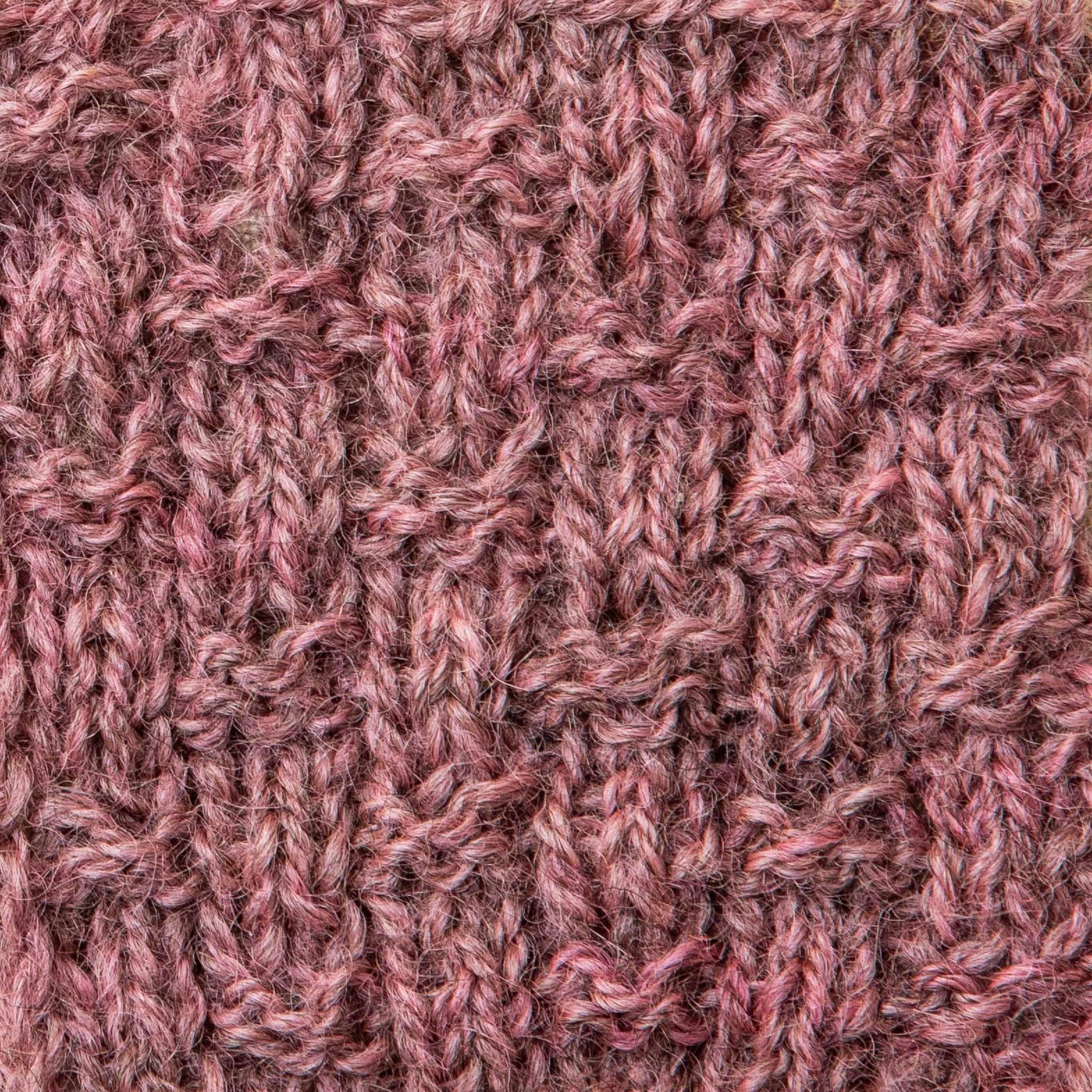
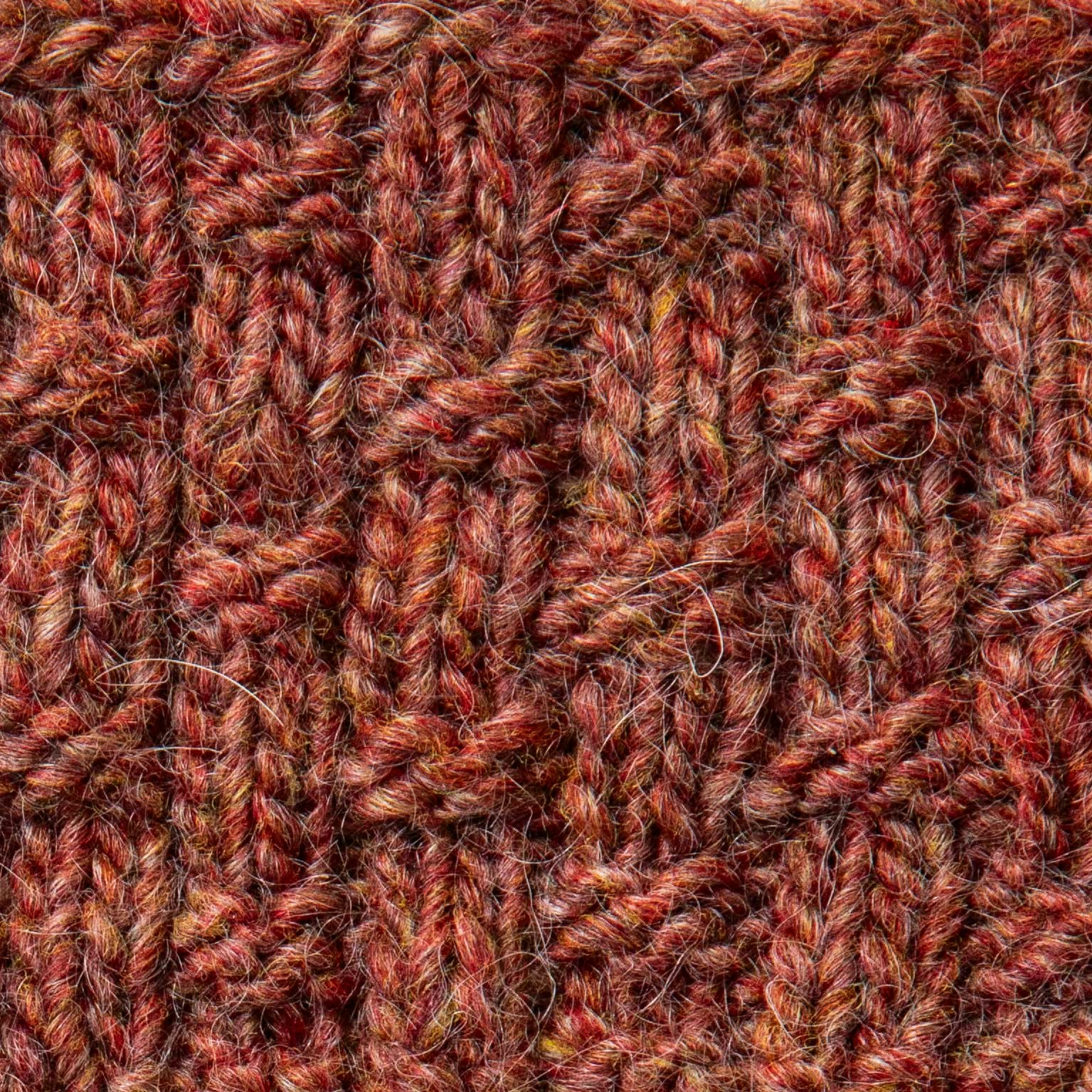
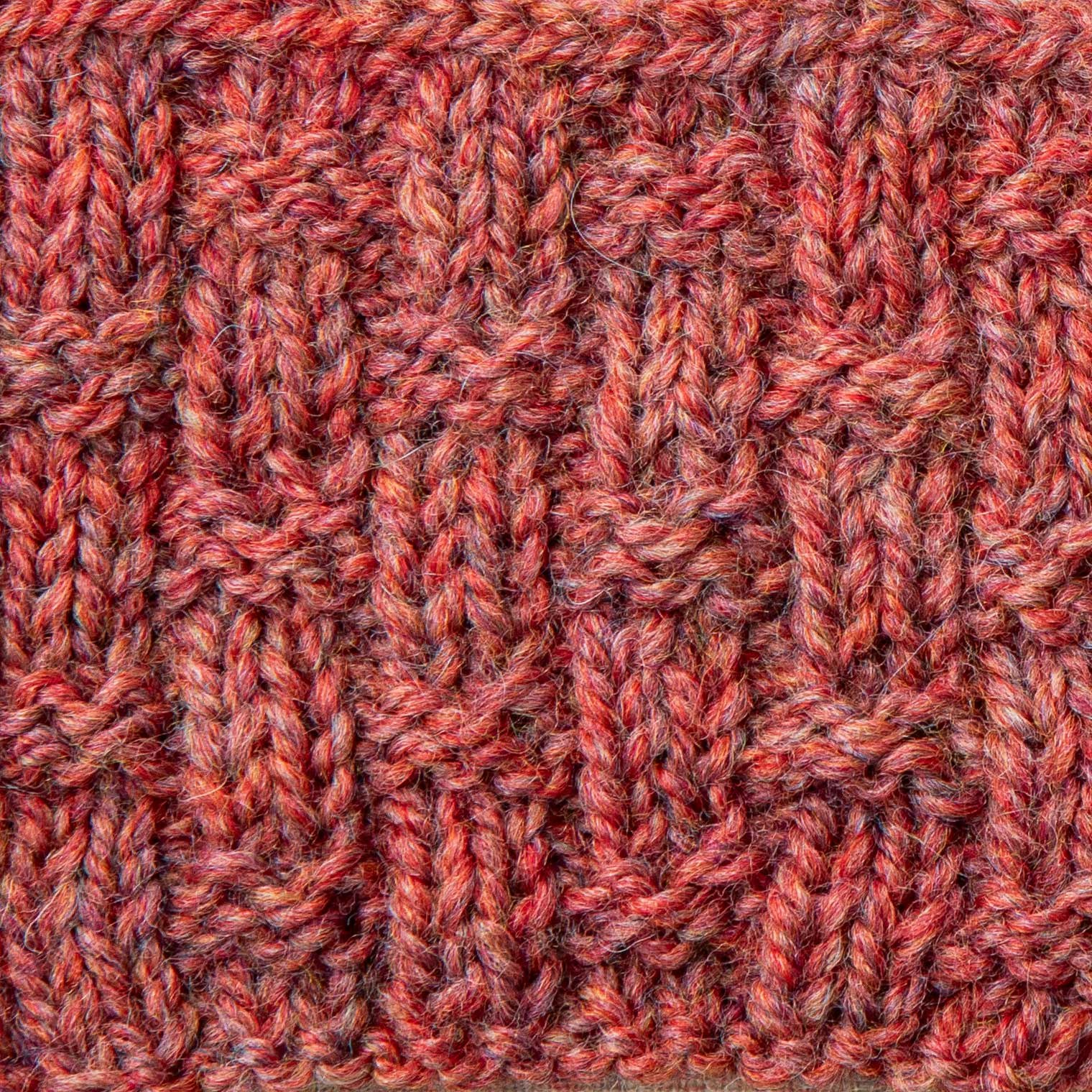
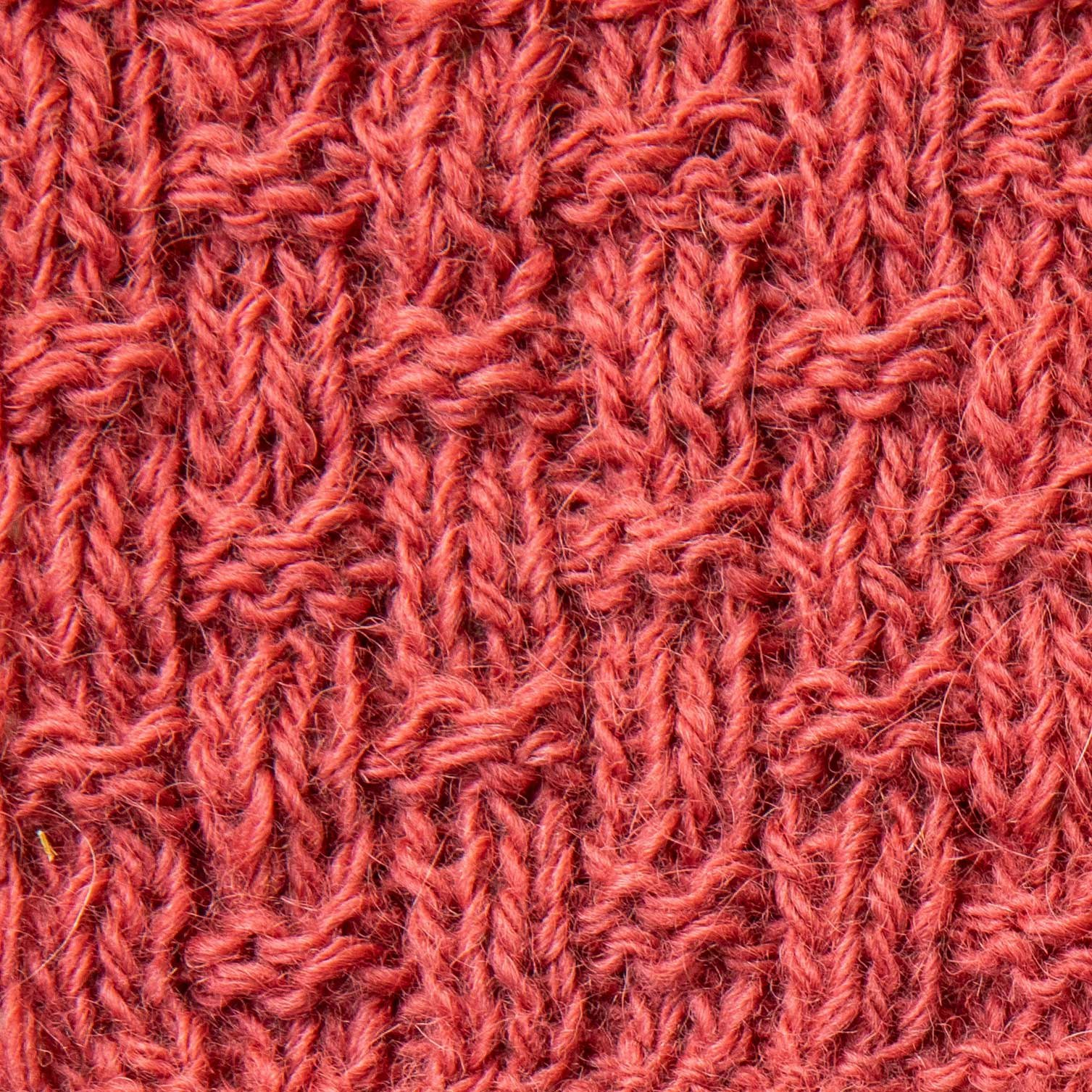
 We’re sampling four alternative yarns for the Wee Cardi (clockwise from top left): Wing & A Prayer Farm The Happiest Yarn, Green Mountain Spinnery Mountain Mohair, Ístex Einband, and Kelbourne Woolens Scout. Photos by Matt Graves
Tips for choosing a substitute yarn
(Click on any image to get a closer look.)
1. Ask the farmer or dyer for an alternative
When there weren’t enough skeins of Taconic Twist available on her shelf, shepherd Tammy suggested The Happiest Yarn, a 100% Clun Forest yarn with the same grist (yards per pound). Spun from medium wool and with a relaxed two-ply structure, it works up at the same gauge and has similar drape to the original.
Above, left: Wing & A Prayer Farm The Happiest Yarn (100% Clun Forest; 268 yd [245 m]/100 g; sportweight)
2. Look for a similar fiber blend
Green Mountain Spinnery Mountain Mohair also includes finewool, longwool, and mohair (and is from just a few hours away from Wing & A Prayer!). One difference: Mountain Mohair is a singles yarn, not plied, and it fills out the stitches; even worked at the same gauge, a sweater in this yarn will be warmer and have more body. The mohair gives the yarn a gentle drape.
Above, right: Green Mountain Spinnery Mountain Mohair (40% Targhee, 30% medium wool, 30% fine mohair; 140 yd [128 m]/50 g; DK weight)
3. Choose the same yarn structure
Spun from a medium wool, Kelbourne Woolens Scout has a relaxed two-ply and almost the same weight as Taconic Twist. Scout comprises softer, finer fibers, making the fabric bouncier than the original. You may need to experiment with needle size and blocking to get the correct row gauge (or purchase extra yarn and work to the length you prefer).
Above, left: Kelbourne Woolens Scout (100% wool; 274 yd [250 m]/ 100 g; DK weight)
4. Consider doubling up
Lopi yarns are spun from both the fine inner coat and long outer coat of Icelandic sheep, giving a similar fiber profile to Taconic Twist. We held two strands of lopi-style laceweight singles together to yield a DK-weight equivalent. Before washing, the doubled yarn is stiffer and more three-dimensional, but washing softens the swatch.
Above, right: Ístex Einband (100% wool; 273 yd [250 m]/50 g; laceweight)
Why can’t I just look at stitches per inch?
Although most of us start by comparing gauge when we want to substitute yarns, the structure of the yarn and fiber content are just as important in making a successful substitute. Is the original yarn airy, drapey, and loose, or is it springy, bouncy, compact, and energetic? Is the surface smooth or textured? Lustrous or matte? Is the color solid, heathered, hand-dyed, or tweedy? Learn what you can about the original yarn, then picture the finished project you want.
You’re going to be spending a lot of time with your project, so devote some concentrated attention to choosing the right yarn. It will be the difference between something that just checks the gauge box and a project you’ll love to wear.
What weight is this yarn?
Most balls and skeins of yarn include a suggested gauge, needle size, and yarn size category such as laceweight or bulky. This is only a suggestion! There are sport, DK, and worsted-weight yarns that can be easily knitted at the same gauge, and the recommended needles are just what the manufacturer’s test knitters used to make the fabric they intended. Don’t assume that two yarns labeled with the same weight and gauge will behave similarly in fabric. Test out the yarn on the needles—and don’t forget to block your swatch.
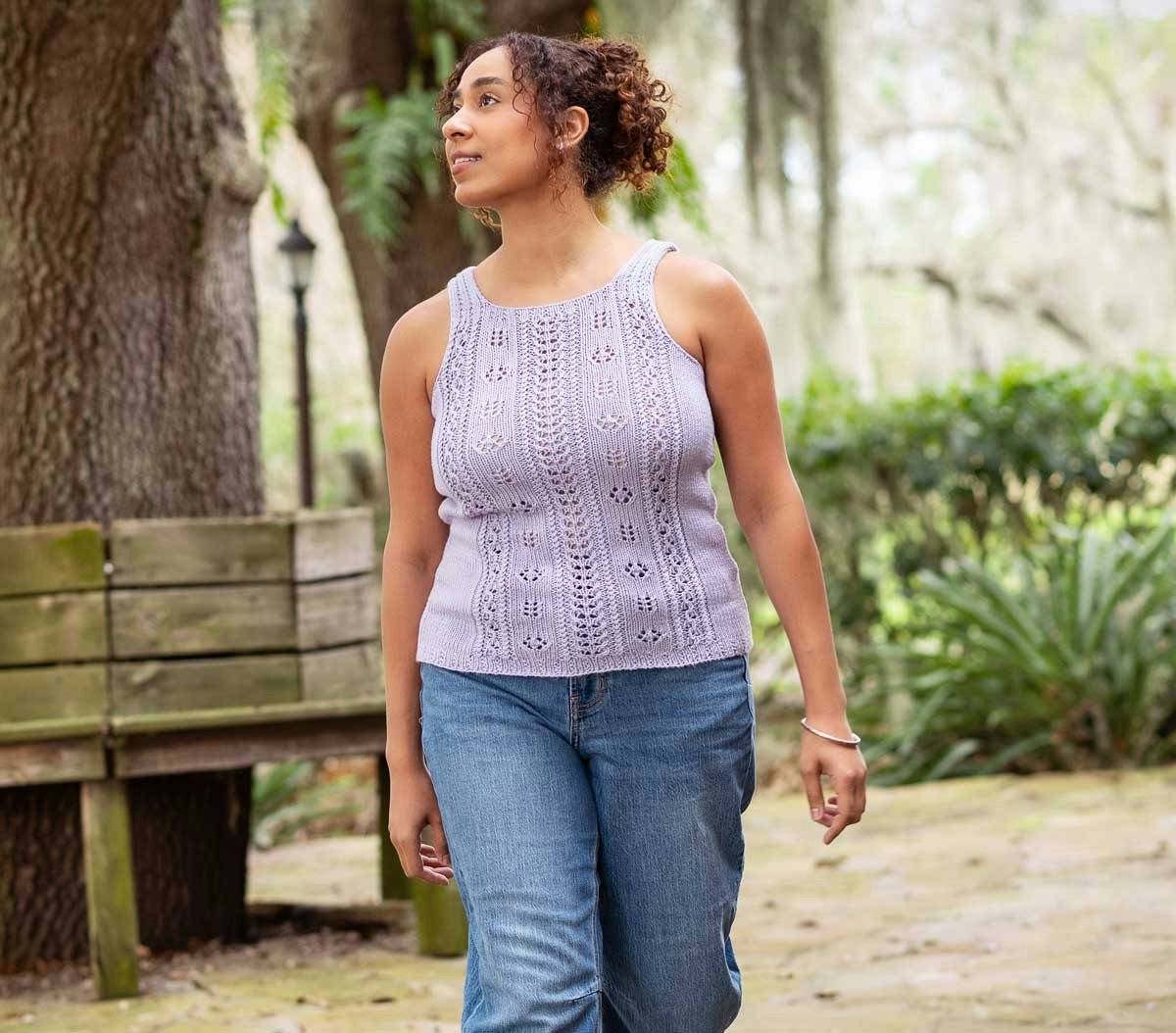
We love exploring more yarns for designs! Explore more yarns for the Bloomin’ Tank by Jenny Williams in the Summer 2026 issue.