
Have you ever visited a place so magical that you dreamed of moving there permanently?
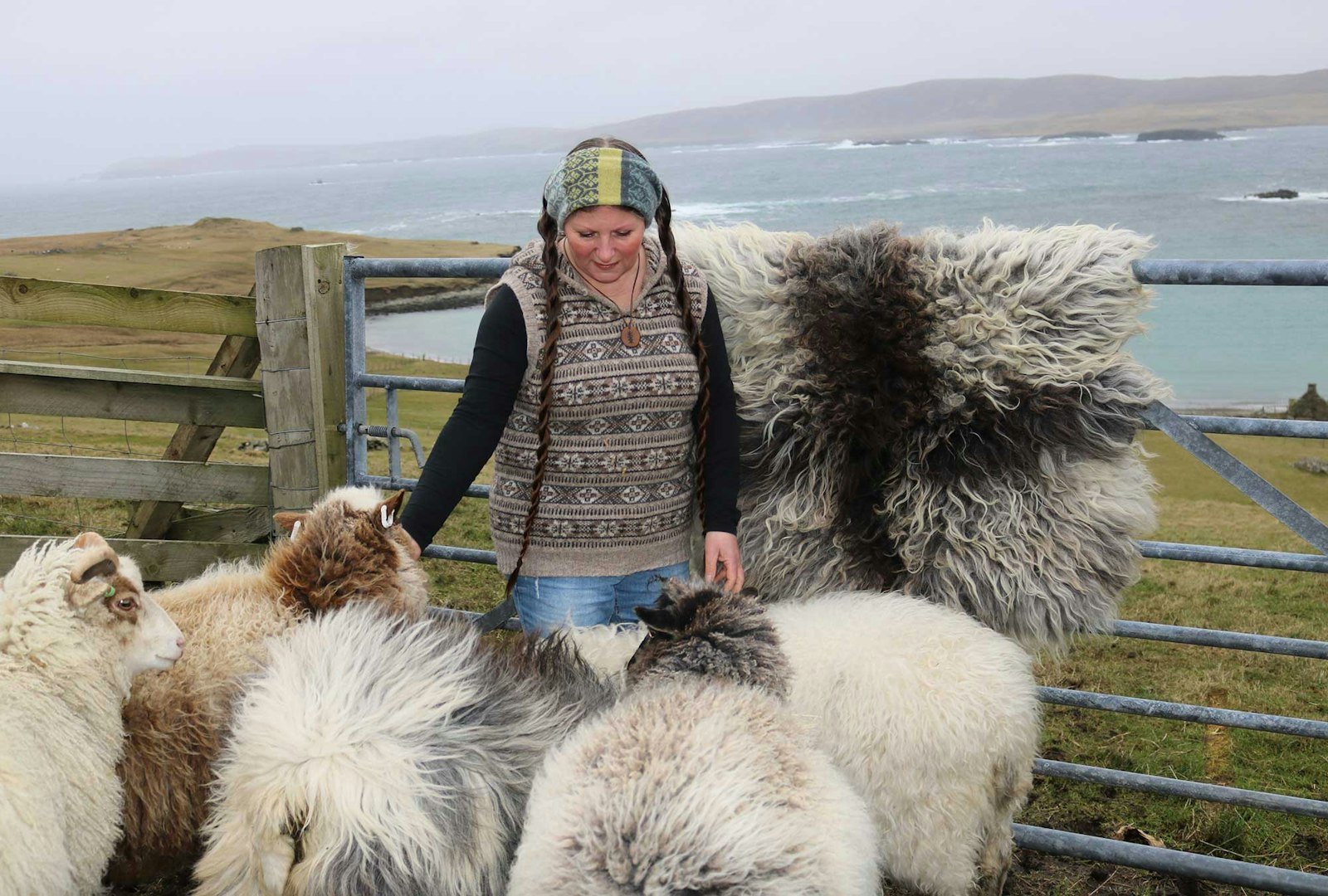
Helen Hart wakes up every morning in a peat-warmed farmhouse, gazing out on a flock of Shetland sheep, the ruins of an Iron Age broch, and the constantly shifting winds and water for which Shetland is famous. Her life today is a dream come true.
A Growing Hunger for a Simpler Life
Once the headmistress of a British independent school (in the US, we’d call it a private school), Helen loved her students and loved teaching. However, with the rise of email came new assumptions that school staff were always available, always “connected.” The more pressure there was to be online, the more deeply she experienced a disconnect from the natural world.
Her grandfather had taught her to knit when she was a very young girl and in school she had felt drawn to natural fibers and fashion design. Still, as her career grew, she found she no longer had the space in her life to devote to creative hobbies.
 Helen‘s passion for the Viking period drew her to the Shetland islands, where she eventually moved in 2016.
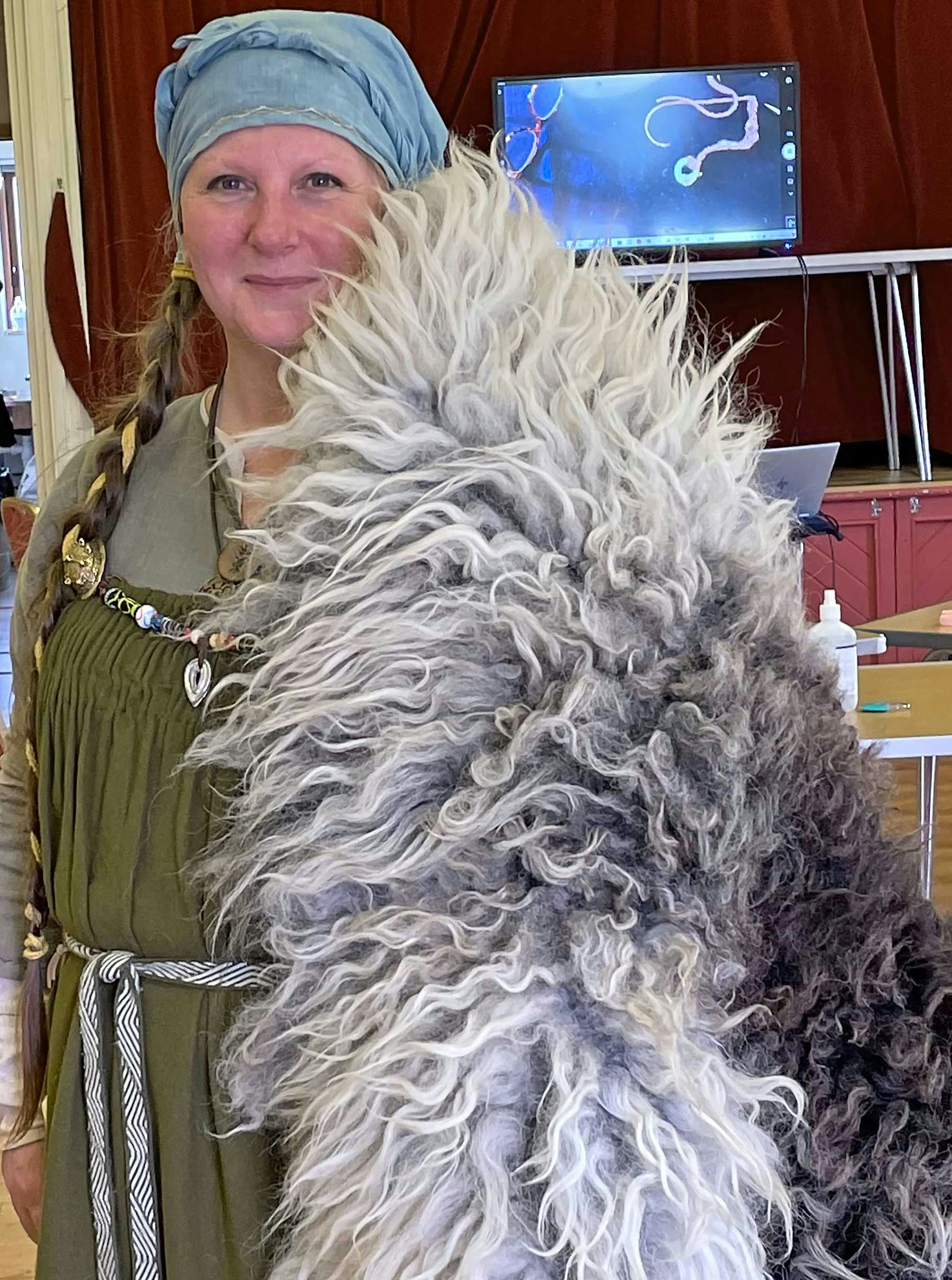
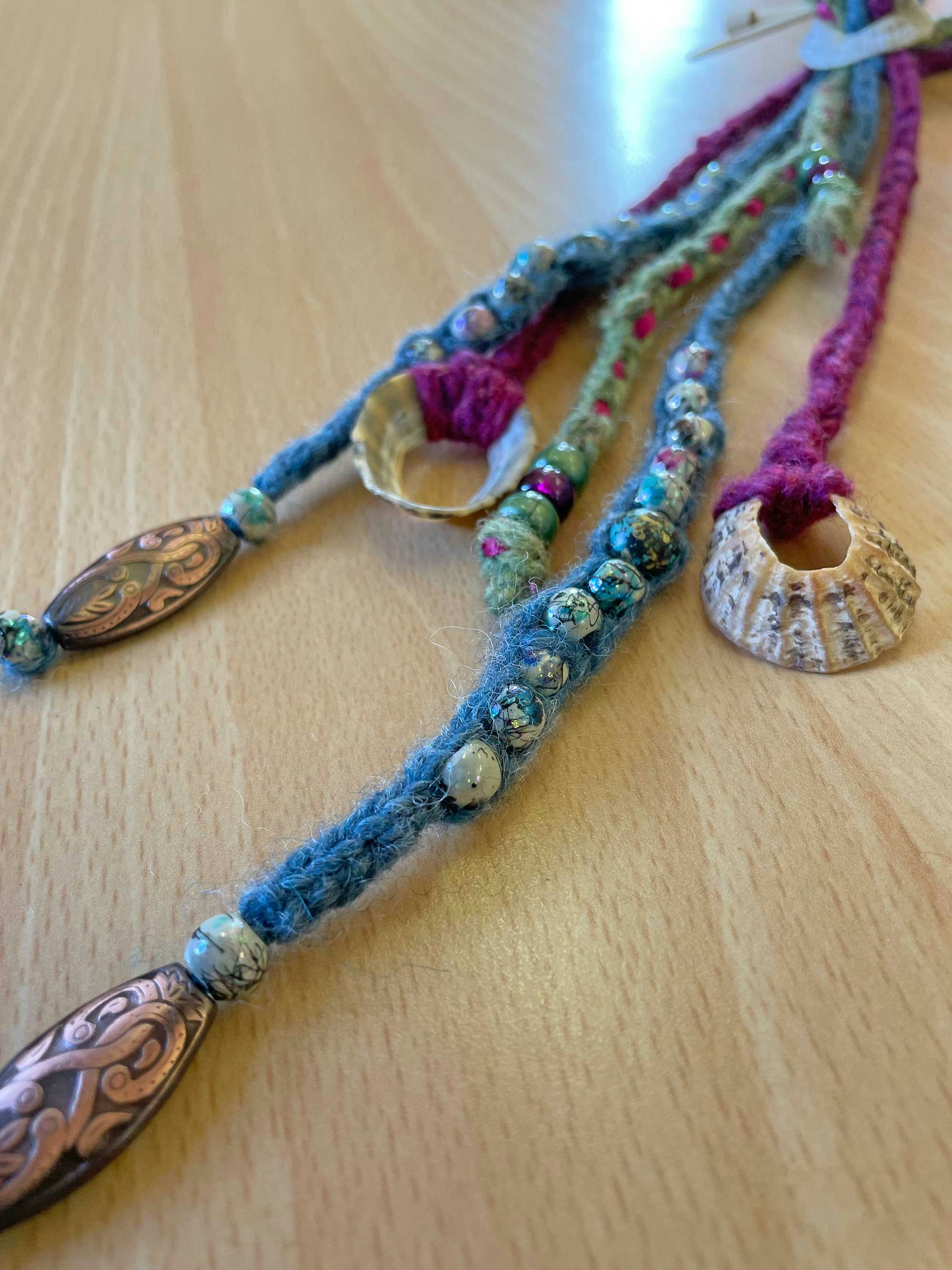
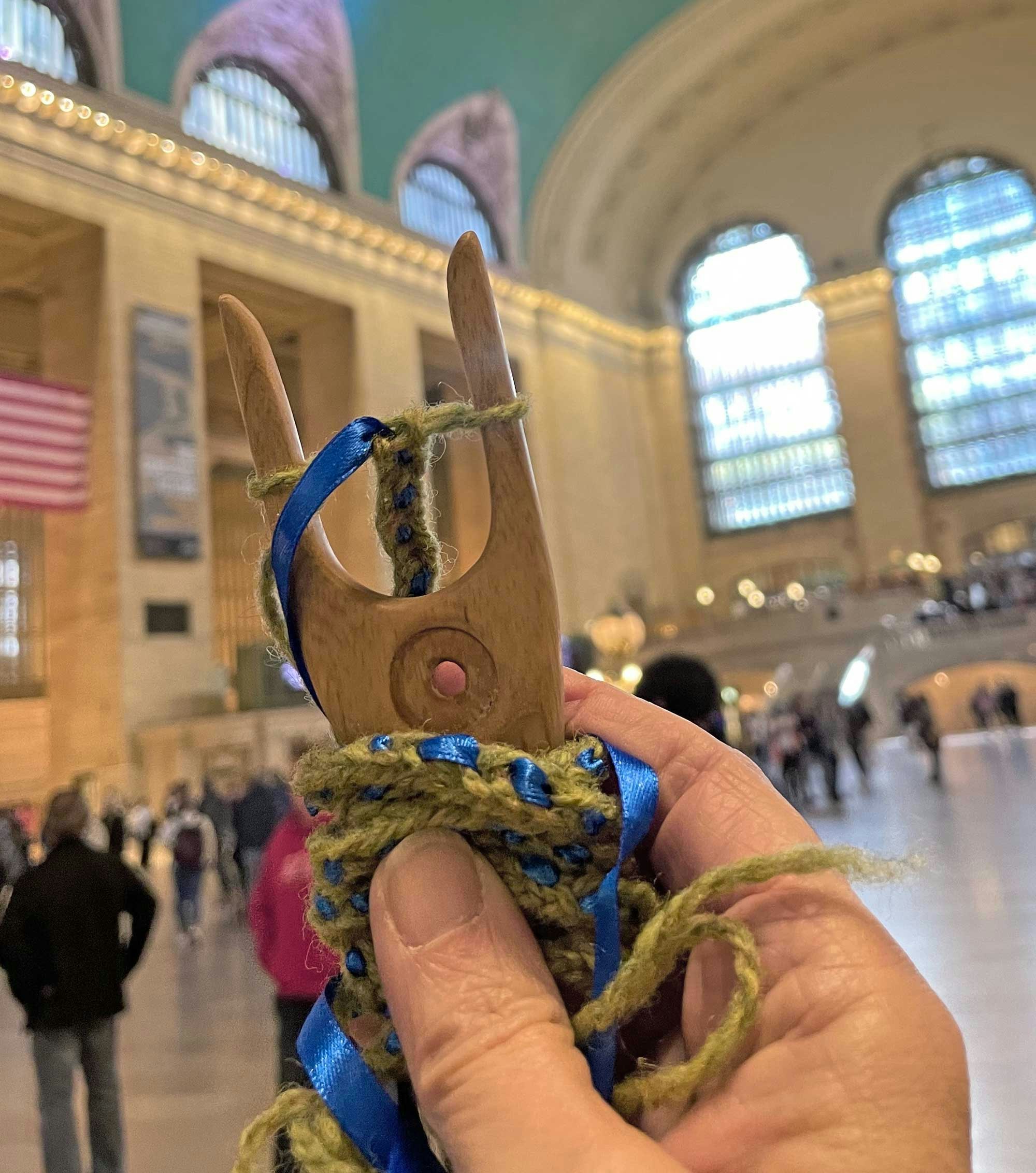
In her vacation and free time, Helen discovered simplicity and a reconnection to the earth through Viking reenactment communities and events. Making her own clothing, camping outside, learning Viking crafts like nalbinding and lucet braiding, and spending time away from technology—these things fed her spirit and refreshed her.
And then, a quirky decision to put down her phone and visit Shetland on vacation changed everything.
After two and a half days of travel, Helen stepped off the ferry onto Unst, the northernmost island in Shetland, and was immediately smitten. “When I landed in Unst, something happened to me. Everything went super quiet, and it was just me, and the sky—I just knew this is where I was meant to be.”
 Helen always dreamed of a simpler life, living off the land. When she first visited Unst, she knew she was home.
Creating a Sustainable Life in Shetland
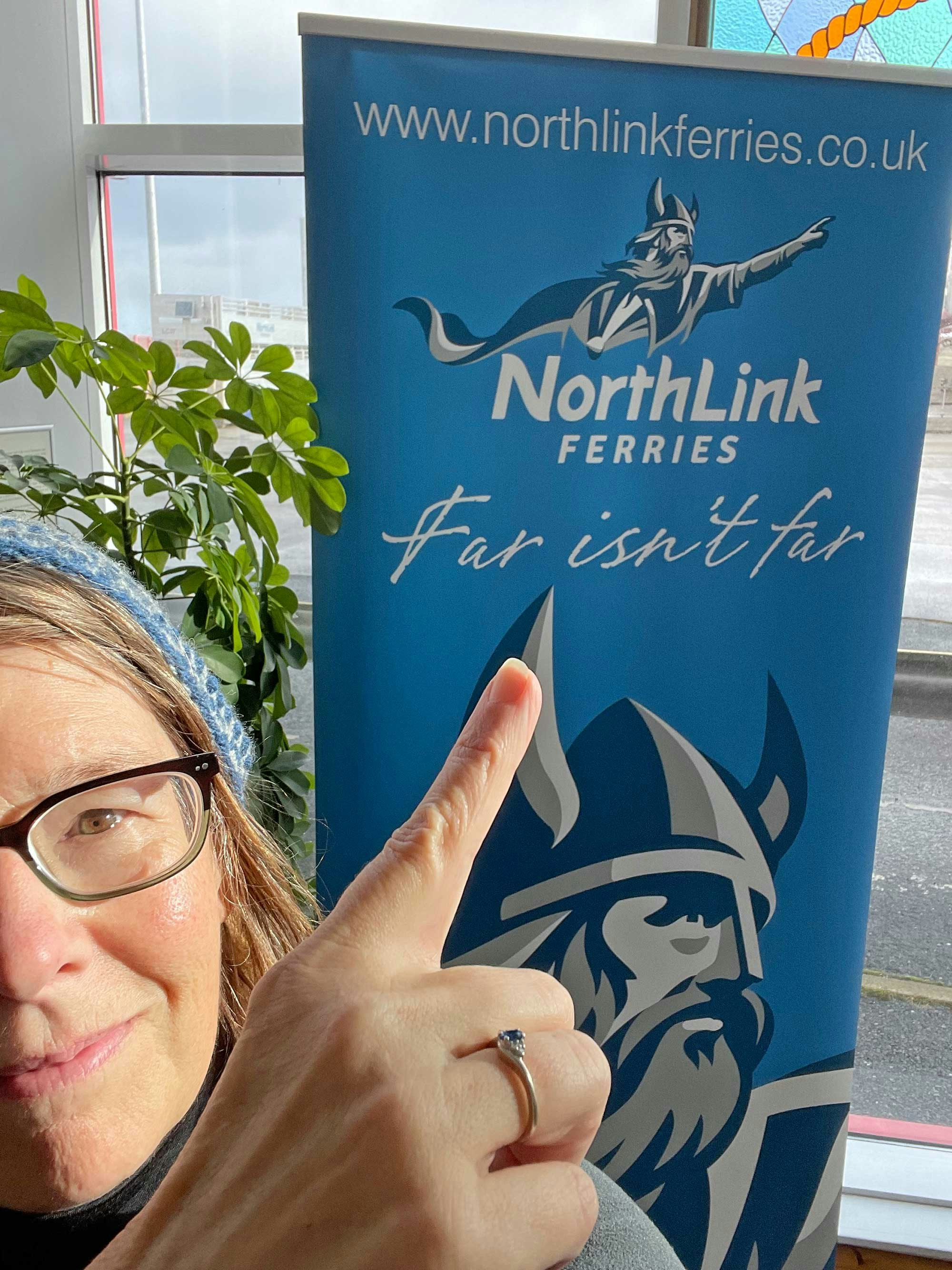
Fast forward a few years, and Helen and her partner Jason have made a whole new life for themselves on Yell, one of the 16 inhabited islands of the 100 that make up the Shetland archipelago. While Jason, with his background as a paramedic, works with the ferry system that connects the islands, Helen tends their flock of Shetland sheep on South Brough Croft.
Living on a Shetland croft means embracing an interconnected way of life in a land where hubris literally will not stand up against the force of nature. The windy season lasts over six months, and although the capital Lerwick has officially recorded high winds over 100mph, the Royal Air Force radar station on Unst at Saxa Vord has recorded winds of 197 mph. In December through February, wind gusts between 100 and 150 mph are not unusual.
Build a building too high or large and the weather will humble you.
And the wind isn‘t the only challenge. At 60° North latitude, Shetland is equivalent to St. Petersburg, Russia, or Whitehorse, Yukon Territory. Daylight lasts less than six hours on the winter solstice. Summer visitors experience the opposite, a phenomenon called the “simmer dim,” where daylight lasts almost 19 hours and even the darkness is not fully dark.
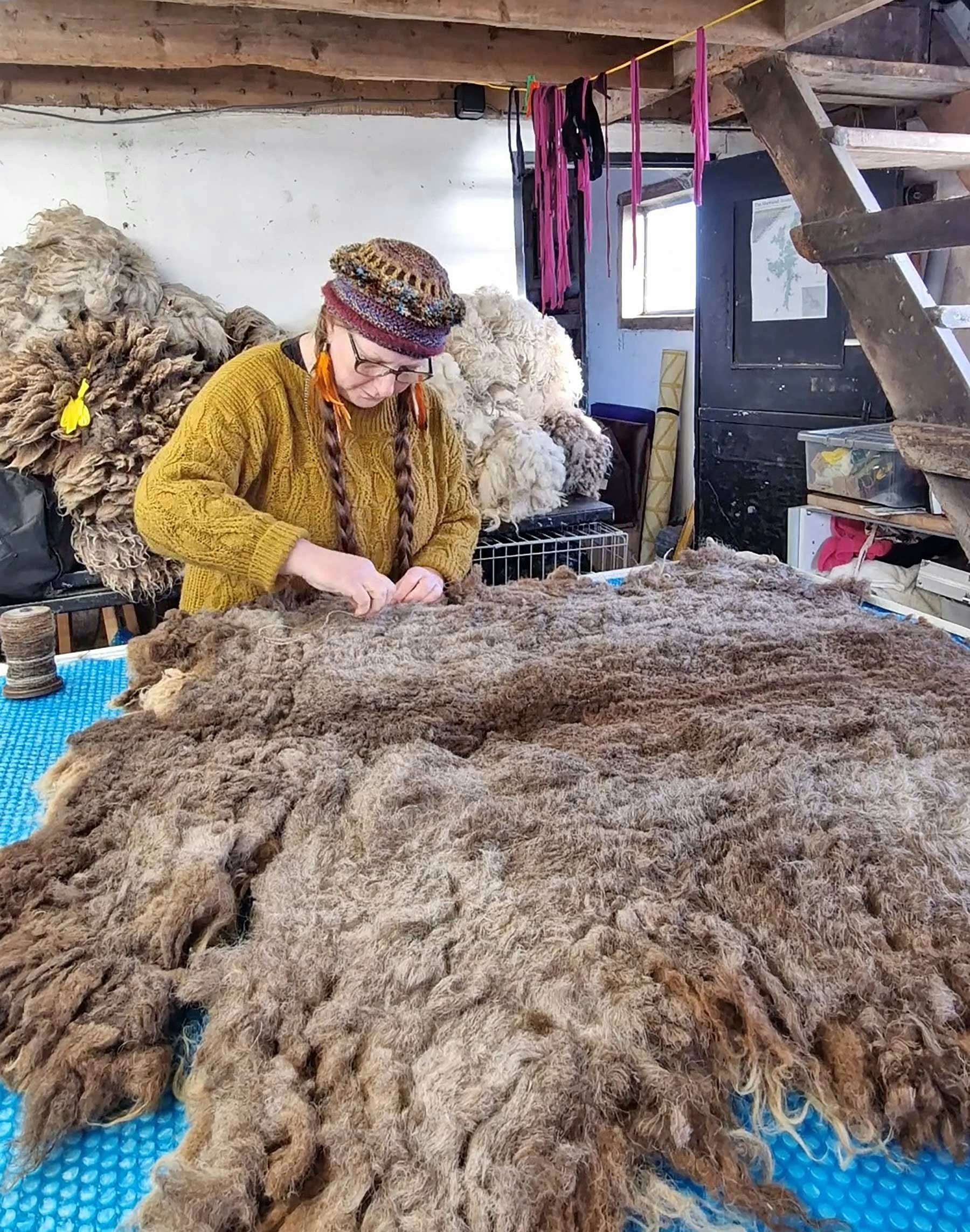
That said, find ways to live a sustainable life, integrated with the weather and the landscape, and you can thrive. Helen’s creative spirit and curiosity has led her to create a small business selling ethically sourced “sheep fleece” rugs. These gorgeous, lush rugs resemble fine sheepskin rugs, but Helen calls her creations “Oo Without the Ow” (“oo” being the Shetland dialect word for “wool”).
Get a closer look! Click any image in the gallery below to open it in full-screen mode.
Turning Shetland Wool into Something Extraordinary
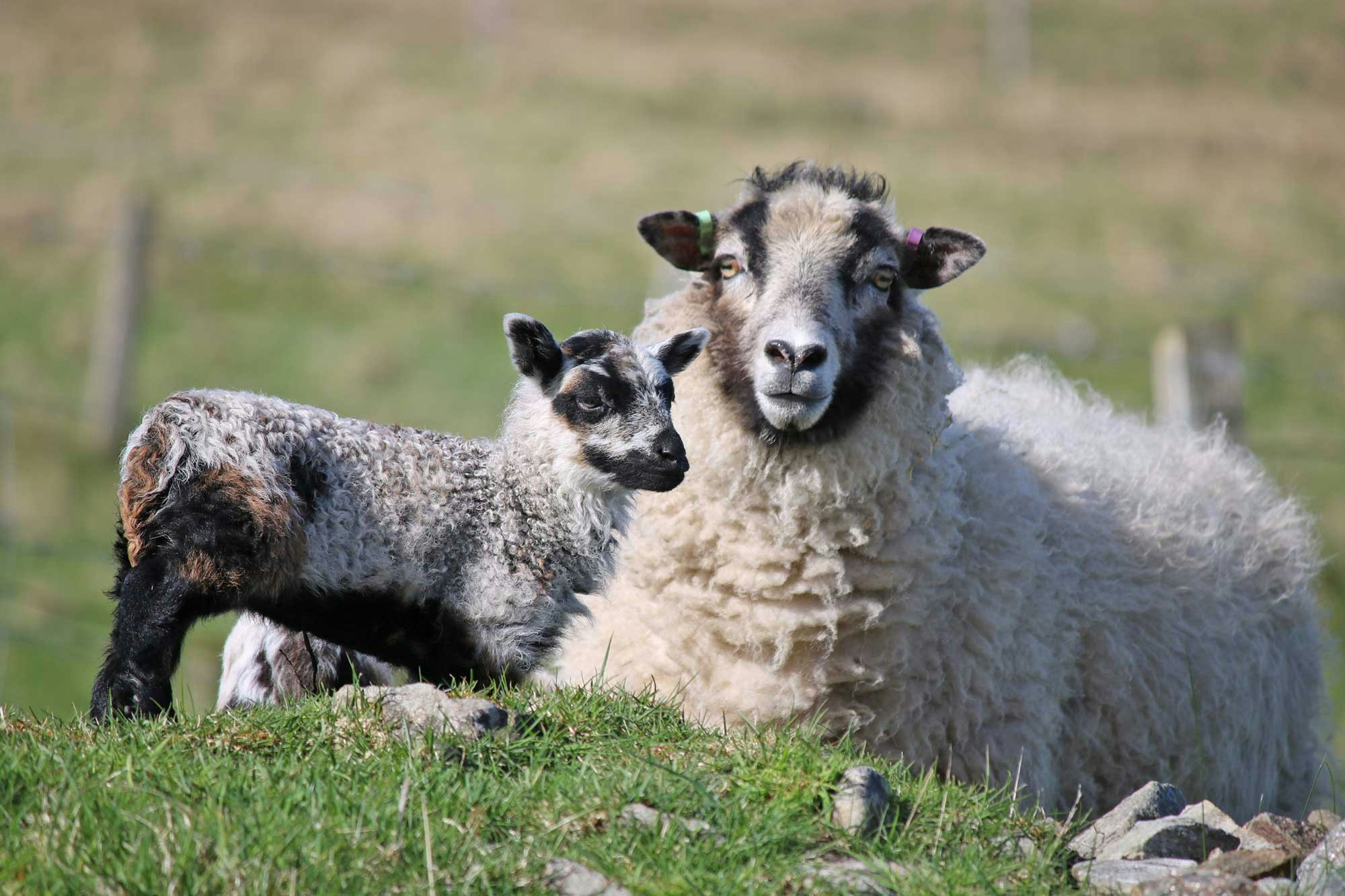
A Shetland sheep can often be rooed instead of shorn with shears. The sheep live out of doors year round and in the winter their grazing material is more scarce and less packed with nutrition, creating a “break” in their fleece. Then as spring and longer days arrive, hormonal changes occur to stimulate the growth of a new strong fleece. When shearing time comes in the spring, many Shetland sheep can then have the fleece gently tugged off by hand, a process called rooing.
Helen takes each fleece and hand-felts the back of it. This holds the fleece together in much the same way as a sheepskin would, but without sacrificing the sheep—thus, Oo without the Ow!
When not tending sheep, cutting peat, weaving, knitting, spinning, or dying, Helen continues to teach. When I took her class on lucet braiding at Shetland Wool Week in 2022, it was clear she had both the passion and the patience of a skilled teacher. She also is in demand as a tour guide, especially for groups interested in Shetland’s Viking history or in crafts and textiles.
Finding Your Own Path Through Craft
Shetland may not be an easy place to live in the sense of modern conveniences, but life on the croft offers a relationship to the land that is healing to the soul.
As Helen says, “That's why I love Shetland—we live in a very symbiotic way. I look across to the remains of the broch, which is a 2,000-year-old building, and that view—there’s a few wire fences that have been put up in past years—but that view will have been the same for 2,000 or 4,000 years.”
Helen has inspired me to dream big, and to take small steps in the direction of those dreams. Maybe we won’t wake up on a sheep farm next month, but we can start small. Knit a hat, use the weeds by your house to dye something, pick up a drop spindle or little loom, connect with nature. Take one step in the direction of the craft, fiber, culture, or lifestyle that excites you.
Dreams can come true, and Helen Hart is living hers!
Follow Helen Hart to learn more:
Web: HartOfShetland.co.uk
Facebook: @HartofShetland
Instagram: @hart_of_shetland