Subscriber Exclusive
Caring for Naturally Dyed Yarn: Why Soap Matters
What you need to know before washing your naturally dyed knits. Preserve the depth, nuance, and beauty of natural palettes with this expert advice.
What you need to know before washing your naturally dyed knits. Preserve the depth, nuance, and beauty of natural palettes with this expert advice. <a href="https://farmfiberknits.com/caring-for-naturally-dyed-yarn-why-soap-matters/">Continue reading.</a>
https://farmfiberknits.com/cdn-cgi/image/format=auto/https://www.datocms-assets.com/101500/1775580667-lymm-natural-dye-header.jpg?auto=format&w=900
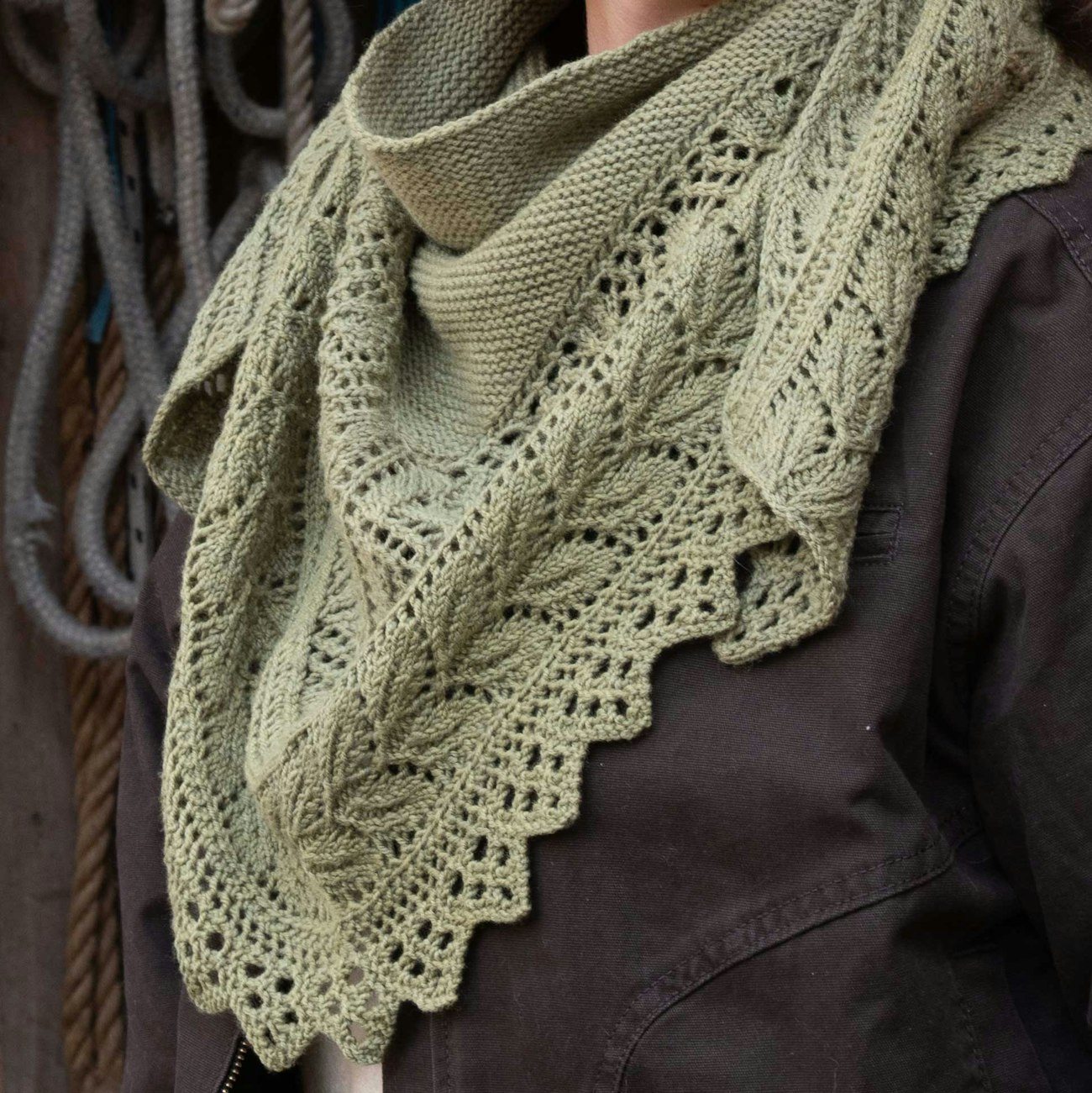
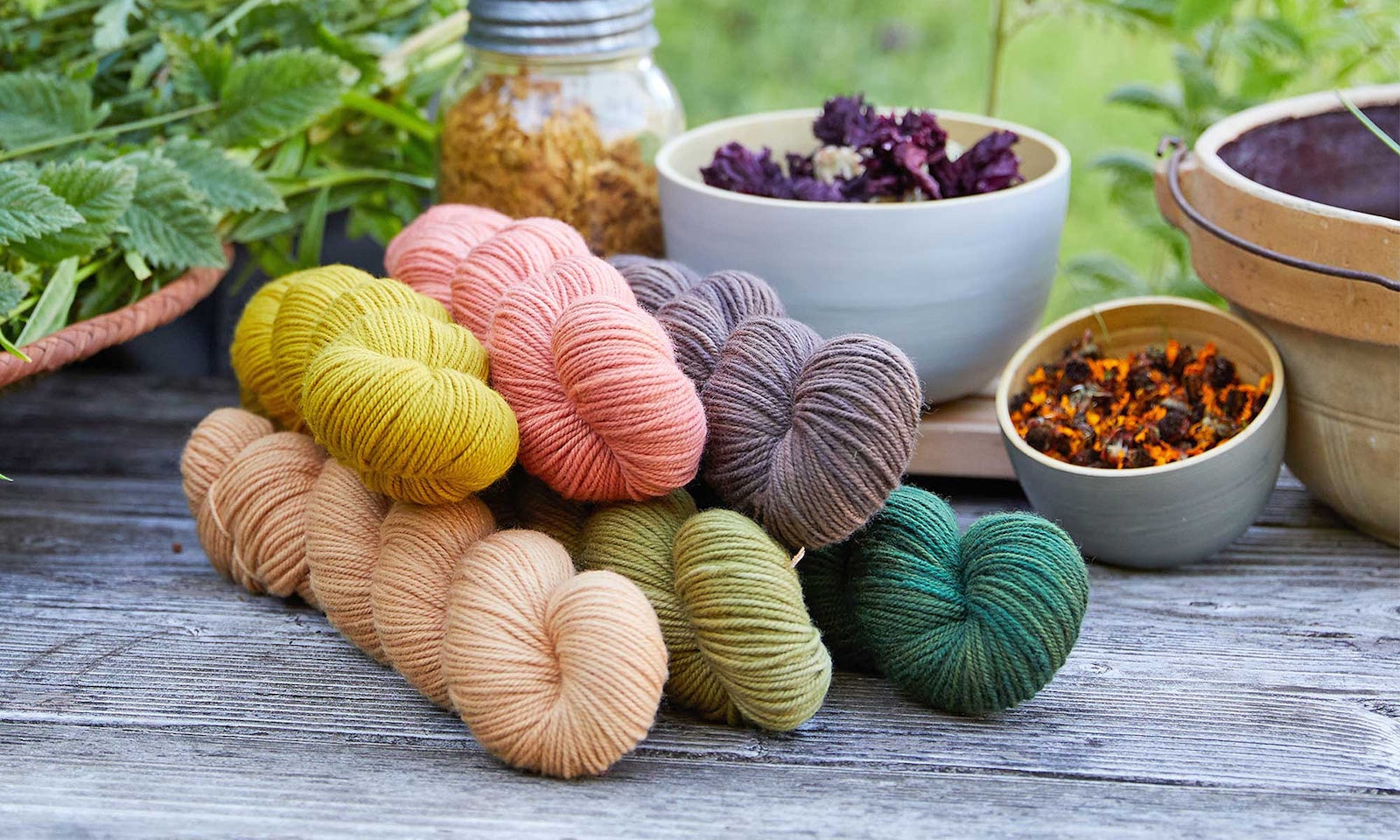
When you choose to create something with naturally dyed yarn, you’ve set your intentions. This is a special project made from consciously crafted materials gathered from nature—sunny yellows from marigolds, moody purples from logwood, rich reds from madder root, and so much more.
What many people don’t realize is that how you wash that piece can directly affect the color the dyer worked so hard to create. When we wash our handknits, most of us fill a sink with water and grab some soap. Both of these things—water and soap—can impact color. To understand why, it helps to think in terms of everyday kitchen chemistry.
 Gentle soaking in cool to lukewarm water helps preserve both the wool fiber and the natural dye bonds that give your yarn its depth of color.
What is Soap Actually Doing?
At its core, soap is designed to lift dirt and oils away from fiber. It does this by surrounding particles and allowing them to be rinsed out with water. But soap also has another important property: pH.
On the pH scale:
- 7 is neutral (pure water is close to 7).
- Below 7 is acidic, think lemon juice (highly acidic), vinegar (less acidic).
- Above 7 is alkaline, like baking soda (less alkaline) or washing soda (highly alkaline).
Most traditional soaps and many wool washes lean slightly alkaline.
[PAYWALL]
Micelle Magic
Soap works because each molecule has two different ends.
One end is attracted to water. The other is attracted to oils and dirt.
When soap is added to water, these molecules organize into tiny structures called micelles. The oil-loving ends gather in the center, trapping grease and dirt, while the water-loving ends face outward into the water. Remember the concept that water and oil don’t mix? These molecules are self-organizing, making soap lift dirt off the fiber and wrap it in a structure that allows it to be rinsed away.
Micelles don’t know the difference between dirt, oil, or a loosely bound dye molecule. If a dye becomes more soluble due to a pH shift, micelles can surround it and carry it into the rinse water. That’s often what you’re seeing when water becomes tinted during washing.
What happens when you use more soap, you get more micelles, which means more cleaning power, but also more potential to remove dye. Hence, you only need a few drops!
This is why conditions such as pH, temperature, and soak time are so important when treating your garments. We want to control how aggressively the molecules are removed from the fiber.
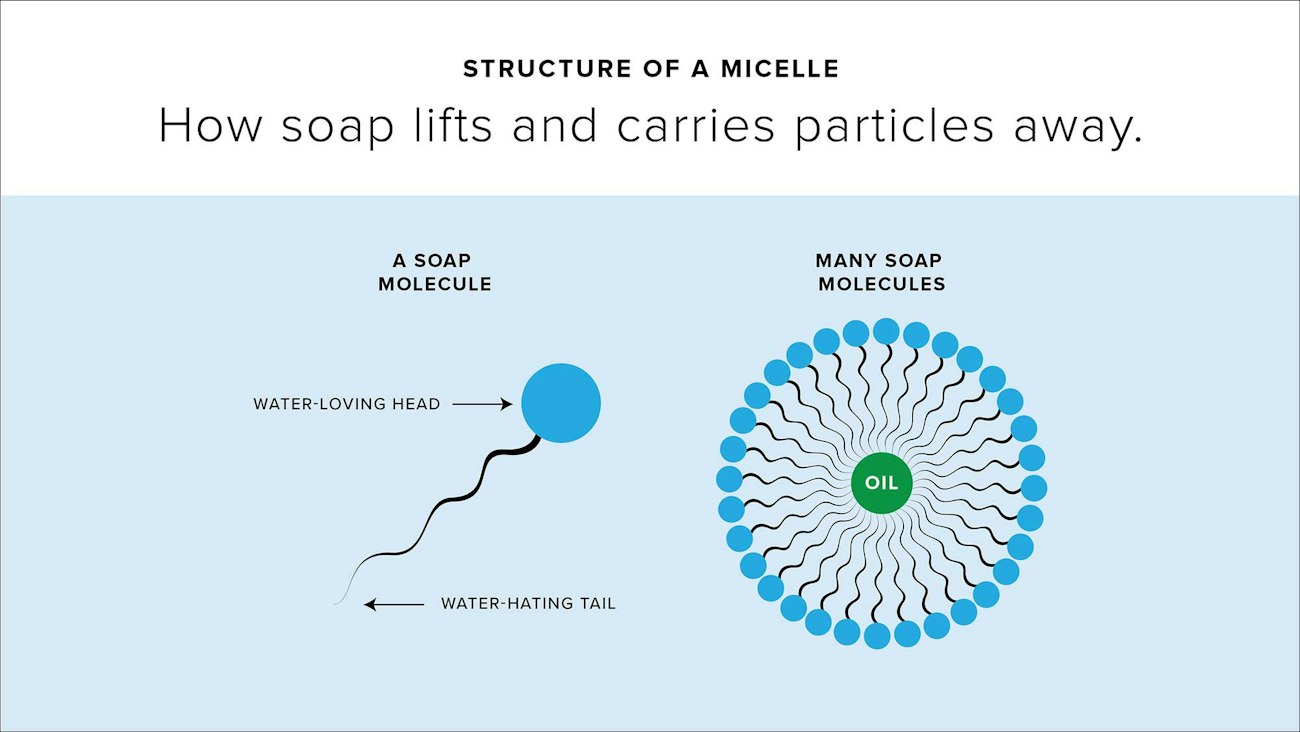 Soap molecules surround and lift away oils and particles by forming tiny structures called micelles, allowing them to be carried away in water.
Why pH Matters for Natural Dyes
Natural dyes are not just sitting on the surface of the fiber. They are held in place through a combination of strong mineral bonds from mordants like alum, iron, or copper, along with tight interactions with plant compounds like tannins, and the structure of the wool itself.
These bonds are stable, but they are also responsive to their environment. pH plays a surprisingly big role here.
When a dye becomes more soluble, it simply means it can dissolve into water more easily instead of staying attached to the fiber. A shift in pH can nudge the dye into a form that prefers the water over the wool.
That doesn’t mean the color suddenly disappears. But in more alkaline conditions, especially with longer soaking, a few things can start to happen:
- Some dye may begin to release.
- Metal and dye interactions can shift slightly, changing how color is held on the fiber.
- The overall color can lose clarity or become uneven.
You’re most likely to see this with dyes like madder, tannins such as cutch, and colors modified with iron or copper.
This responsiveness is part of what gives natural dyes their depth and complexity. It’s not a weakness. It’s what makes them feel alive.
Get a closer look! Click on images below to open in full-screen mode.
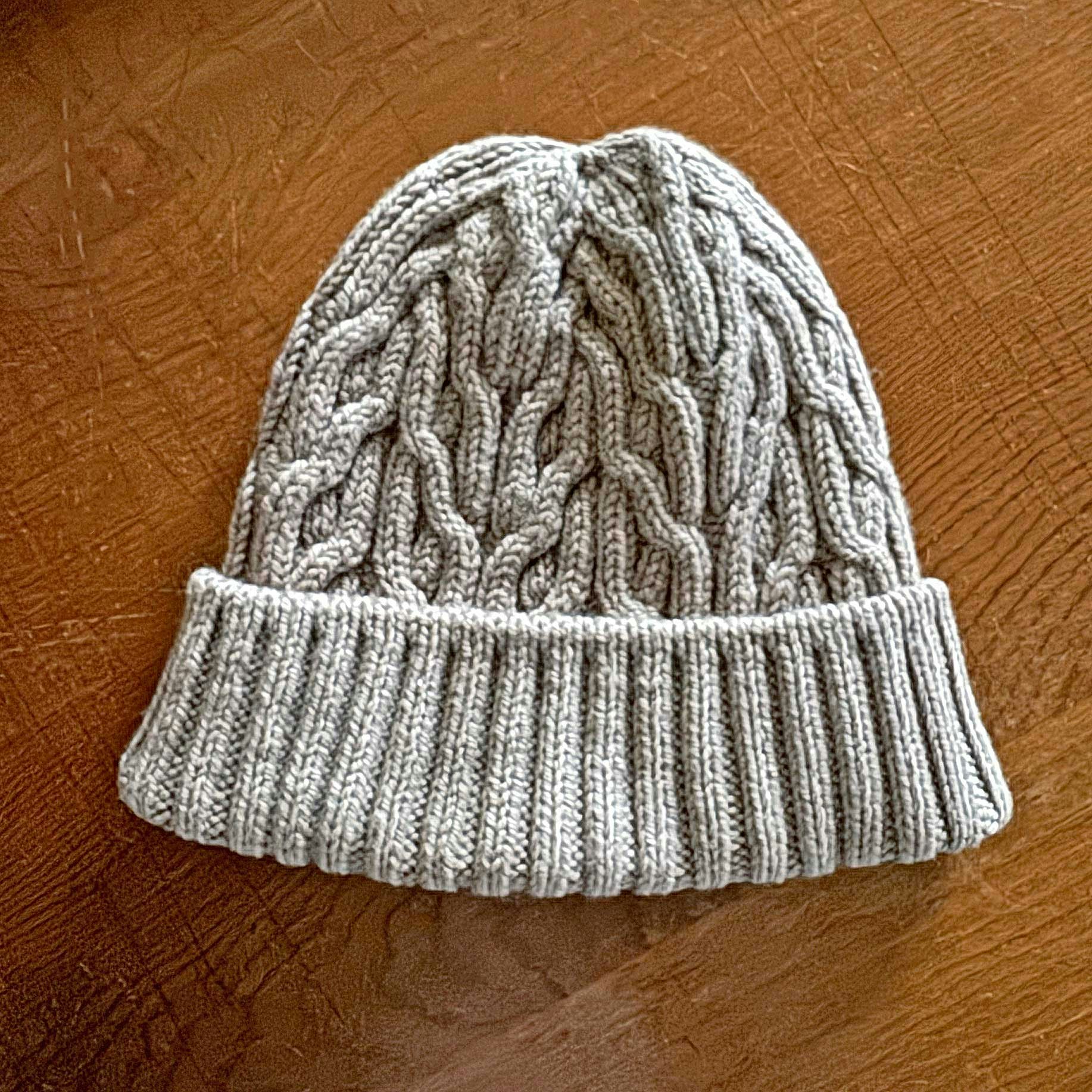
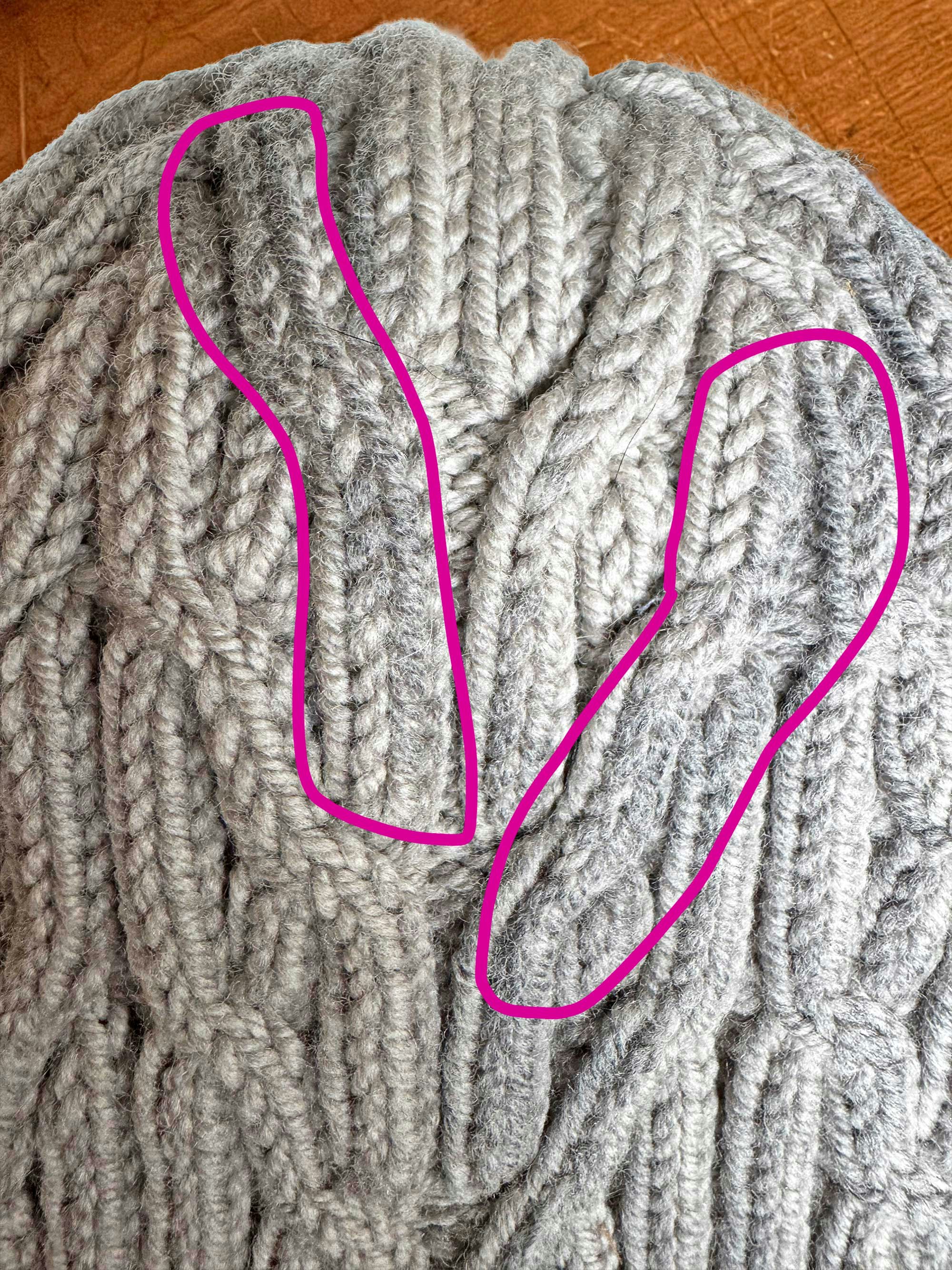
Results of extended soaking: before (left) and after (right), showing the subtle, uneven patches of color.
Extended soaking or higher pH washes can sometimes cause natural dyes to shift or release unevenly, leading to subtle patchiness.
Compare to Commercially Dyed Yarn
Most commercially dyed yarns use what are called acid dyes. These dyes are engineered to form very strong, stable bonds with wool, which makes them highly resistant to washing and changes in pH.
That is why many popular wool washes are widely recommended. They are designed to work well with these types of dyes.
Naturally dyed yarn is different. Because the color comes from plant compounds and mineral interactions, it can be more responsive to pH changes, especially during long soaks.
This does not mean it is fragile. It simply benefits from a slightly different kind of care.
Historically Speaking
Before synthetic dyes became common, all textiles were dyed with plants, minerals, and insects. People didn’t necessarily understand the chemistry, but they understood the behavior. Wool garments were washed gently, infrequently, and often in cool water with very little soap. These habits helped preserve both the fiber and the color, long before pH or dye chemistry were formally studied.
 Natural dyes create layered, complex color through plant compounds and minerals. This depth is what makes them so beautiful and worth preserving.
Wool Prefers a Slightly Acidic Environment
Wool is happiest in a slightly acidic to neutral range.
In that environment:
- The fiber cuticle stays smooth.
- The structure remains stable.
- Dye bonds are less likely to shift.
This is why many conservation methods, including those used for historic textiles, favor mild, low-pH washing conditions. This approach is still used to preserve delicate textiles and plant-dyed materials that are hundreds of years old.
A Simple, Reliable Washing Method
Caring for naturally dyed wool is simple once you understand the chemistry.
For best results
- Fill a basin with cool to lukewarm water, no hotter than 100°F.
- Add just a few drops of a fragrance-free, mild soap.
- Submerge your garment and let it rest for 10 to 15 minutes, tops.
- Gently squeeze out excess water without twisting.
- Roll in a towel to remove excess water and lay flat to dry in a well-ventilated area.
 A simple setup is all you need. Cool water, a few drops of mild soap, and a gentle touch.
What to Use—and What to Avoid
I recommend a few drops of unscented, eco-friendly dish soap (such as Seventh Generation), these have a lower pH. Or use a low-pH fiber rinse designed for delicate textiles (my go-to is Unicorn Baby, Beyond Soft). These options help preserve both the color and the hand of the yarn.
I suggest avoiding strongly alkaline soaps like laundry detergent, heavily fragranced wool washes, and long soaking times with any detergent.
Click to enlarge photos.
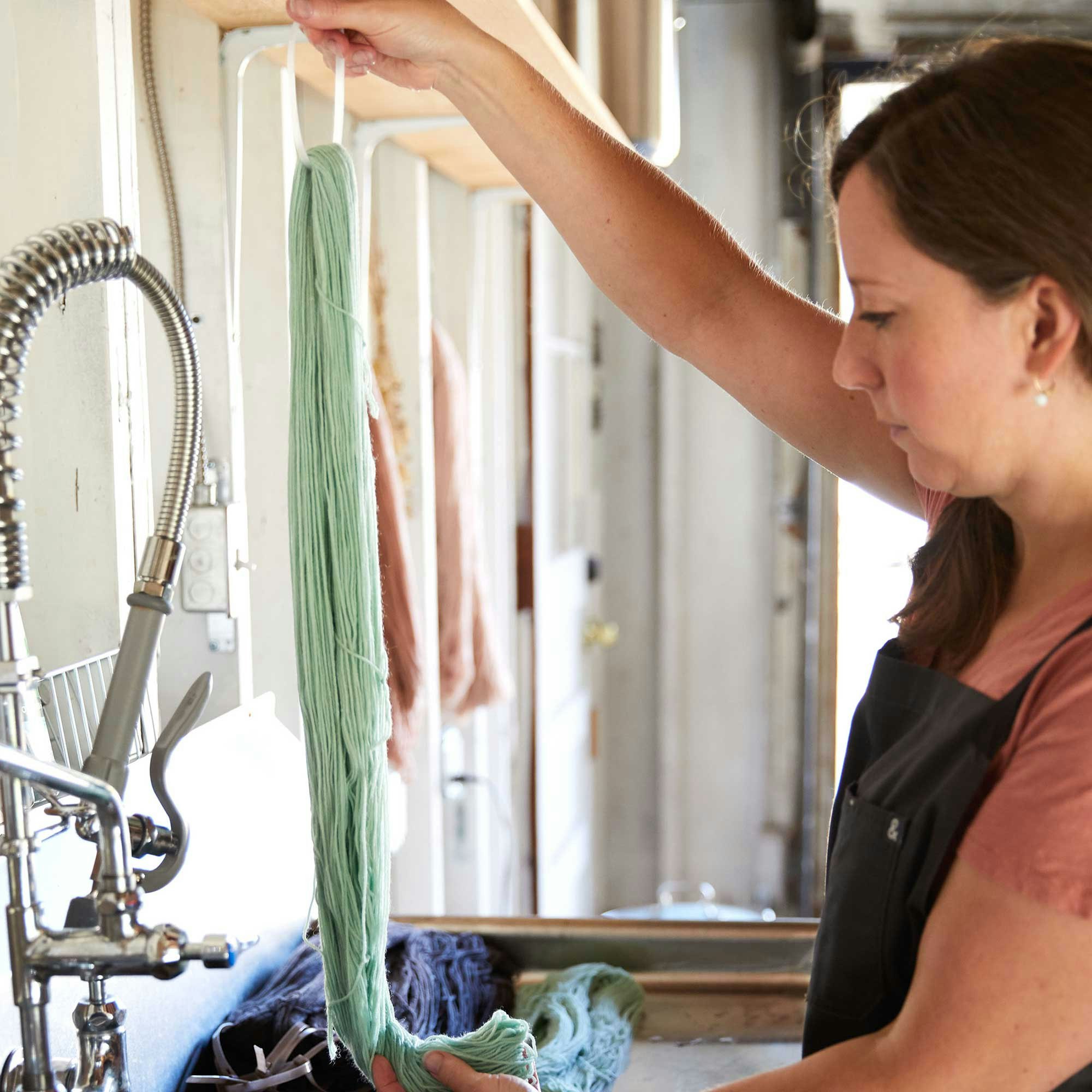
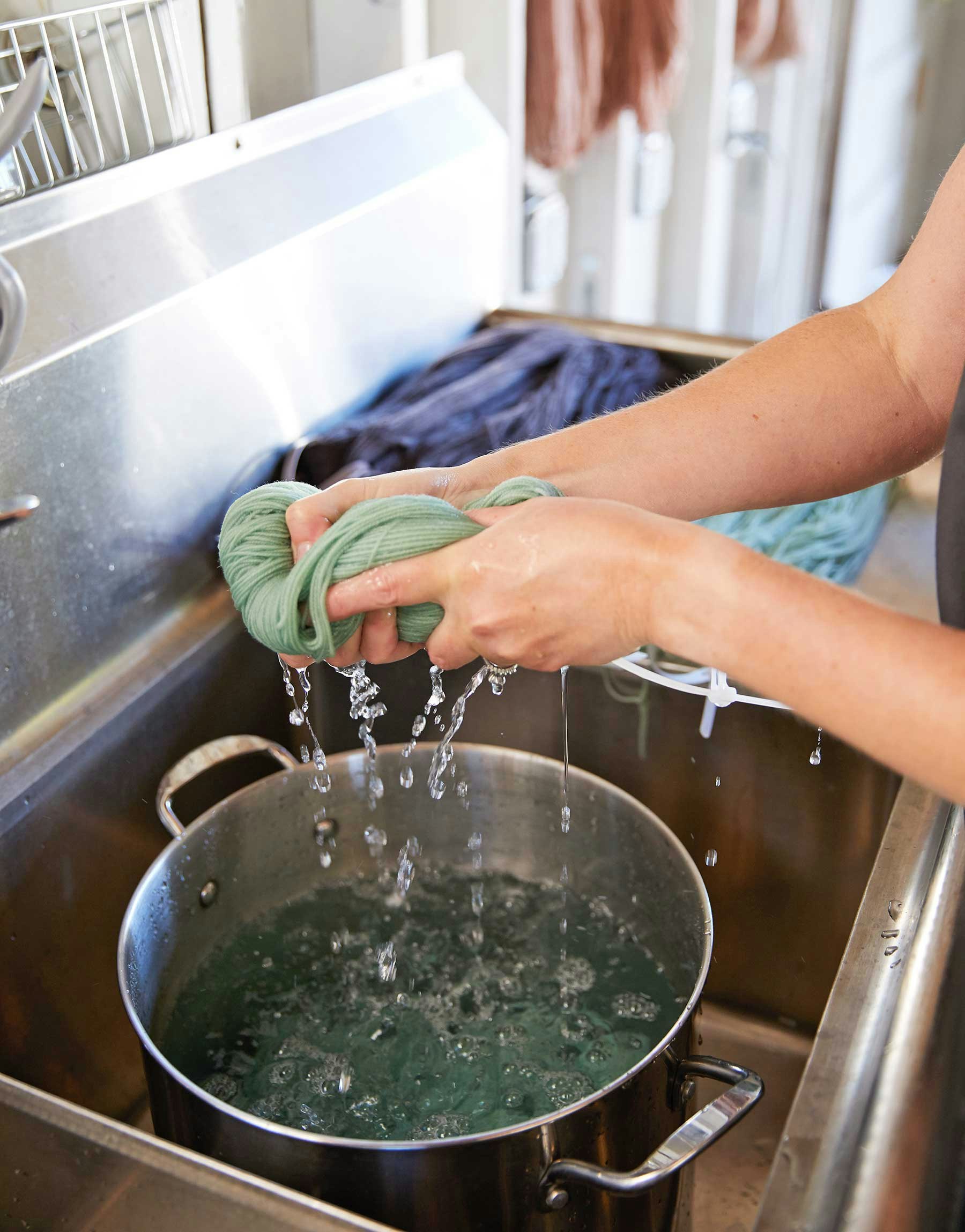
Emily inspects and washes naturally dyed yarn in the studio using lukewarm water and wool soap to preserve the yarn's depth of color. Photos by Amaren Colosi
Ready to Explore Natural Color?
Naturally dyed yarn is a collaboration between fiber, plant, and mineral. The colors are layered, nuanced, and alive in a way that synthetic dyes often are not.
With a small shift in how you wash your knits, you can help preserve that depth and beauty for years. Think of it as working with the chemistry that created the color in the first place.
Learn more about Emily and her naturally dyed yarn at woolandpalette.com.
Learn more!