
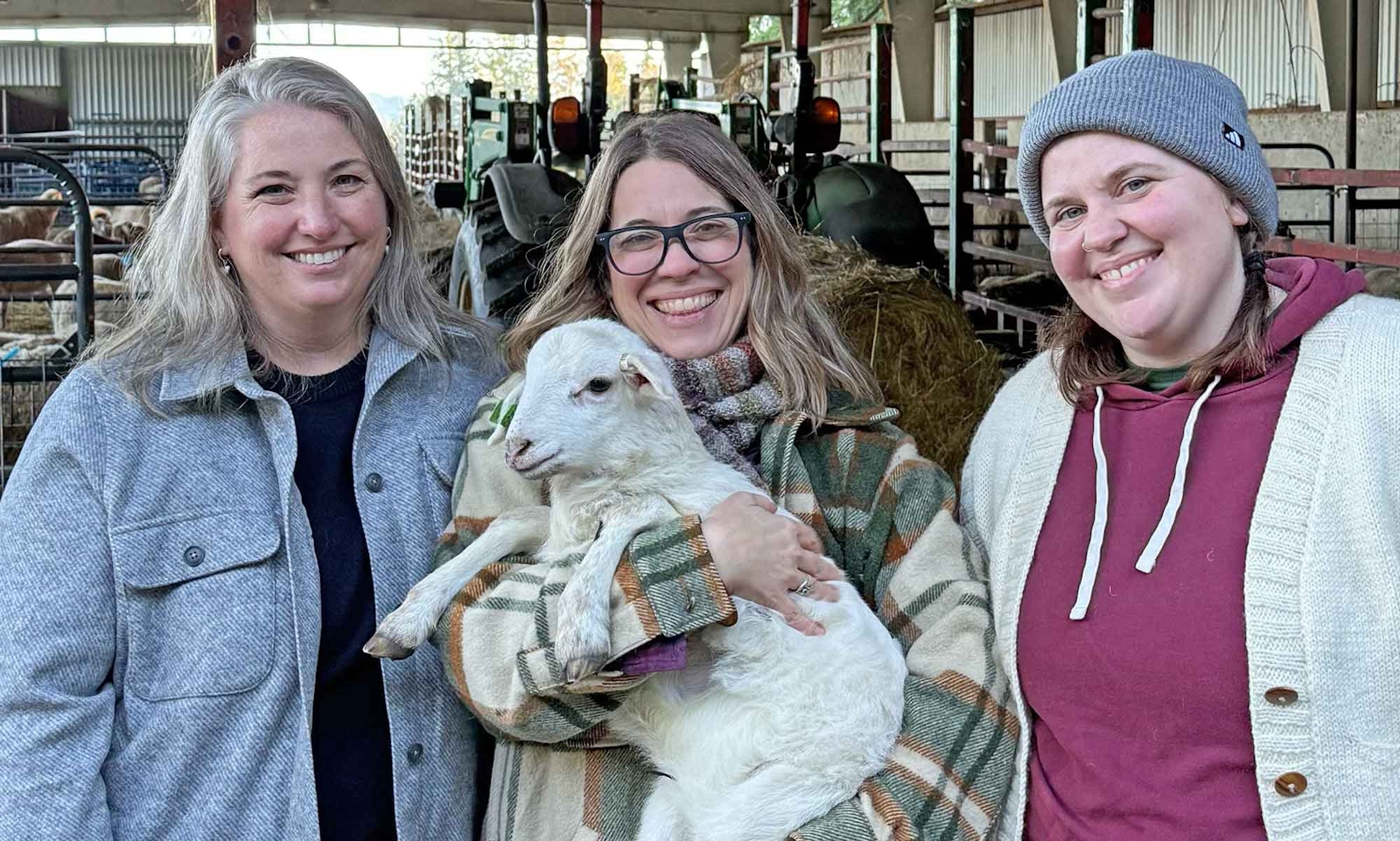
Editor‘s note: In a recent article, Jessica Schwab, co-owner of Skagit Woolen Works, gave us a detailed insider‘s look at how their mill turns fiber from San Juan Woolworks‘s annual shearing into a yarn that knitters can’t stop talking about—their Zephyr line. Now, Jessica and her business partner, Anna, have found that American Wool Month, hosted by Strikke Yarn & Supply, has given them the perfect excuse to go deeper. Rather than simply celebrating domestic wool, they set out to create a one-of-a-kind farm yarn that tells the story of a local flock, a historic farm, and a shared set of values. Here‘s Jess:
To create a custom, one-of-a-kind yarn that celebrates the wool of our region and highlights a unique flock is a particularly special project for us. This is an endeavor that honors the land, the shepherds, and the millers (that’s us) to showcase our collective values of promoting regional small-batch yarn, in partnership with the farm and a local yarn store.
This project was born of a desire to create an approachable, small-batch farm yarn exclusively for Strikke Yarn & Supply’s annual American Wool Month, an event that celebrates all things domestic wool every February.
Click on the images below to open in full-screen mode and to learn more.
Strikke Yarn and Their Mission
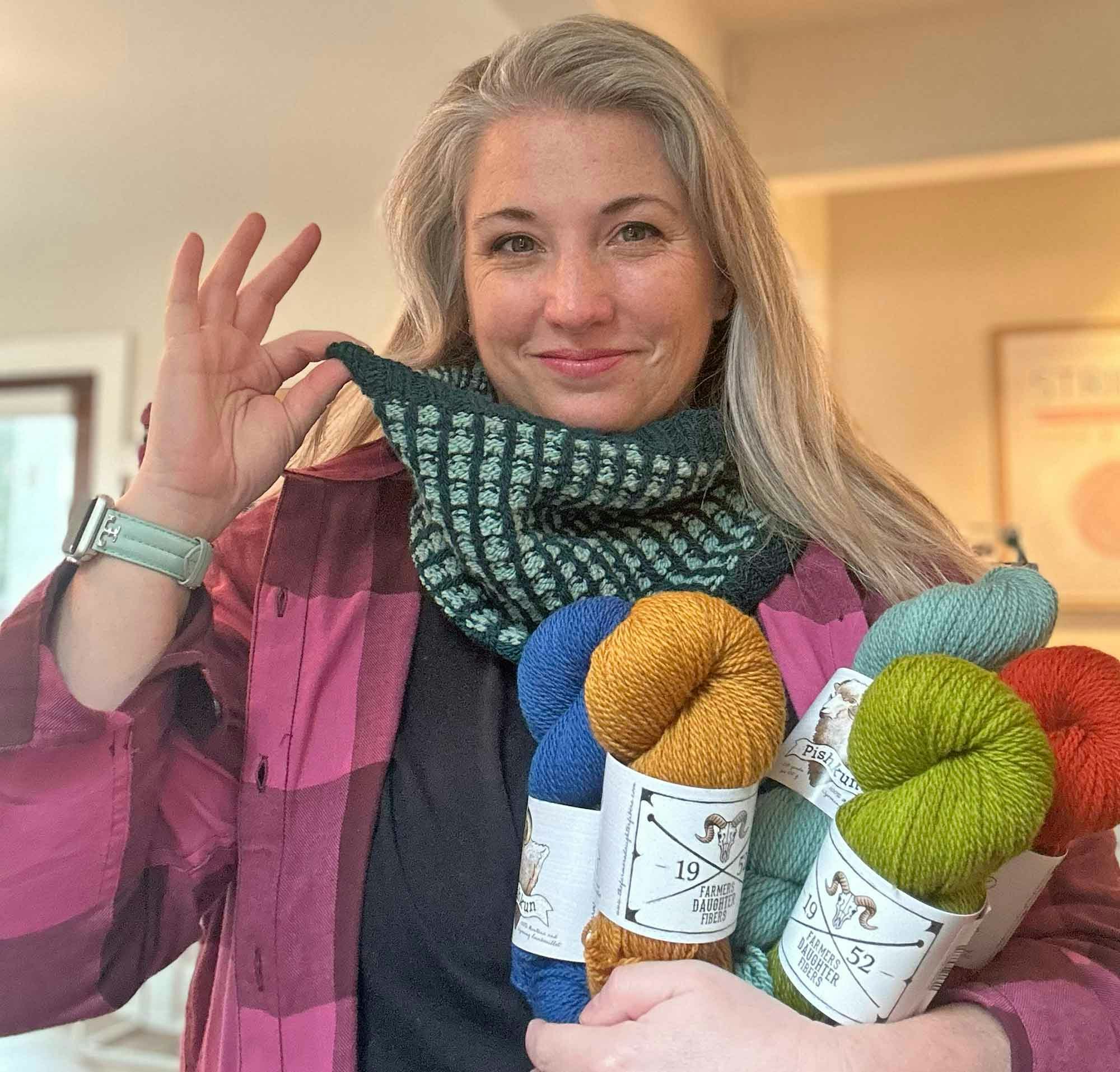
According to owner Lindsay Christiansen, “Strikke Yarn & Supply opened in the fall of 2023 in Bothell, WA. We began American Wool Month in February 2024 to support local farms and mills—in general, to educate customers on where their wool comes from, starting with the farm to the sheep, through production, and into the hands of makers. After meeting with Skagit Woolen Works, and others in the industry, this celebration of our farms and sheep has grown into a fundamental piece of our shop, adding to the carefully selected yarns from companies we’ve gotten to know and admire.”
We’ve been partnering with Strikke for two years in a row, offering lectures and classes during American Wool Month to provide customers with a deeper understanding of the challenges facing domestic wool production and processing. This year, we wanted to go one step further and offer a truly unique collaboration with a local farm.
 The Avondale flock in the field at their new home at Carnation Farms. Photo by Alex Hagiepetros
Last fall, I had the opportunity to attend shearing day at Carnation Farms, an historic farm in the Snoqualmie Valley, not far from Strikke. We’ve been processing the fiber from their mixed flock of Romney, Finn, and Romney/Finn crosses for a few years now, and early last year they acquired a flock of around 30 ewes from nearby Aspen Hollow Farm after their shepherd unexpectedly passed away.
 Shearing day at Carnation Farms last fall included the Avondales and their mixed flock of Romneys and Finns.
The History of Avondales
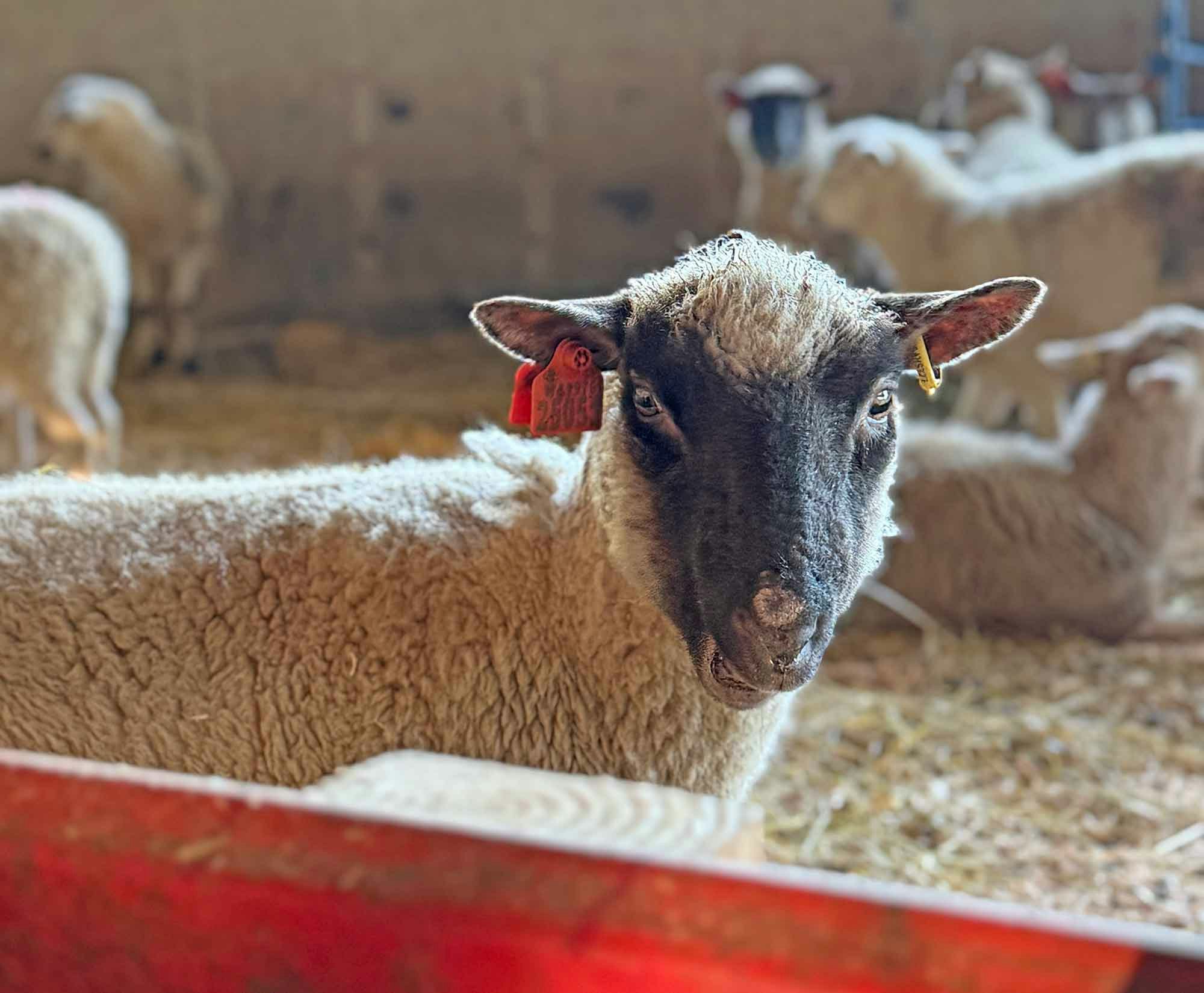
Carnation’s livestock manager Alex Hagiepetros says of these sheep: “Colloquially known as the ‘Avondales,’ these sheep were named after the road where Jeff Rogers, their shepherd and the creator of this breed, lived. The sheep were primarily bred for meat, with good usable fiber being a strong secondary goal. Much like several classic British breeds, a lot of care has been put into the development of this breed (selected over more than 20 generations) to create a sheep uniquely suited to the Snoqualmie Valley, one that thrives in this particular environment.” The Avondale flock is a mix of BFL, Clun Forest, and Suffolk, and you can see some of those characteristics in the fleeces, although they really are their own unique sheep at this point.
Bluefaced Leicester, or BFL, is commonly used in this region to improve the fiber quality. They’re known for their size and sweet curly locks with lovely sheen. Clun Forest are a little less common, and are in fact on the Livestock Conservancy’s Heritage Breed Conservation List. Considered a ‘triple-purpose’ breed good for dairy, meat, and fleece, they provide a medium, dense fleece with a downy, bouncy quality. Finally, Suffolk is a predominant meat breed in our area, but for fiber lovers, Suffolk can also be a sought-after fleece for its resistance to felting/shrinking, and bouncy, soft yarn. The majority of the fleeces showcase sheen and a slight curl from their BFL lineage, and the sheep themselves take after their Clun Forest and Suffolk heritage in look.
 A freshly shorn fleece from shearing day, displaying the beautiful qualities of this breed.
The Making of Beautiful Yarn
We brought the fleeces from the fall shearing back to our mill and divided them into two categories: one for yarn and one for roving. Our spinning frames need a consistent staple length, ideally in the 4–5" range, so we kept the longer-staple fleeces for yarn, and made roving out of the slightly shorter batch. We then blended a portion of the fleece with brown Romney, as that fiber is regionally abundant and provided similar qualities to the fleeces, giving us two beautiful natural colors.
 A mixture of clean locks on the infeed of our largest, century-old carder, 'Rosie'. This process blends and aligns the fibers into roving.
After dividing the fleeces, we scoured them and opted to send the clean locks directly to our big carder to begin the blending. While we often use our picker to pre-blend and open up the locks, some of the fleeces in this batch were from lambs (super soft!) and we didn’t want to overhandle those tender little fleeces. This way, the infeed on our carder could gently tease open the locks. Further blending for the yarn happens at the pindrafter, as multiple passes are made to create an even roving for spinning.
We spun this into a worsted-weight two-ply yarn, keeping the spin soft and lofty. The hand is wonderful; it feels plump and next-to-skin soft, ideal for the Meadow Thistle cowl pattern designed specifically for this yarn by Rachel Kieselburg. Our yarn is considered semi-woolen, as we have worsted spinners, and spin from roving rather worsted-prep (combed) roving which would be a true worsted-spun yarn. This way the yarn has strength but maintains a bit of loft.
 The final roving has been pindrafted multiple times to ensure an even spin; these coils are ready to head to the spinning frames.
The yarn is available exclusively through Strikke Yarn & Supply as a kit, along with the roving blend we made for handspinners as well. We included some spinning notes so that the yarn can be recreated for the design, or spun to the spinners’ preference. While our machines can’t do a true woolen spin, we think this roving would be a perfect candidate for it, trapping air for a warm, cozy yarn.
 Two natural colors of the 2-ply worsted-weight yarn, plus roving hanks for handspinning.
This project has been very near and dear to my heart; having started the mill just four years ago, it really feels like we’ve begun to find our niche for the region, and hopefully be of service to the farmers and the customers using our products. The support for small-batch, domestically produced yarn means so much right now, and we’re eager to continue our goal of open dialogue about the challenges facing the industry, with an eye toward a very hopeful future.
Resources
For more information about American Wool Month, visit strikkeyarns.com.
Read about the history and current work of Carnation Farms, visit carnationfarms.org.
Learn more about Skagit Woolen Works.